
Five years before Concorde's first flight, another majestic supersonic plane took to the skies and almost became the inspiration for an even faster passenger plane.
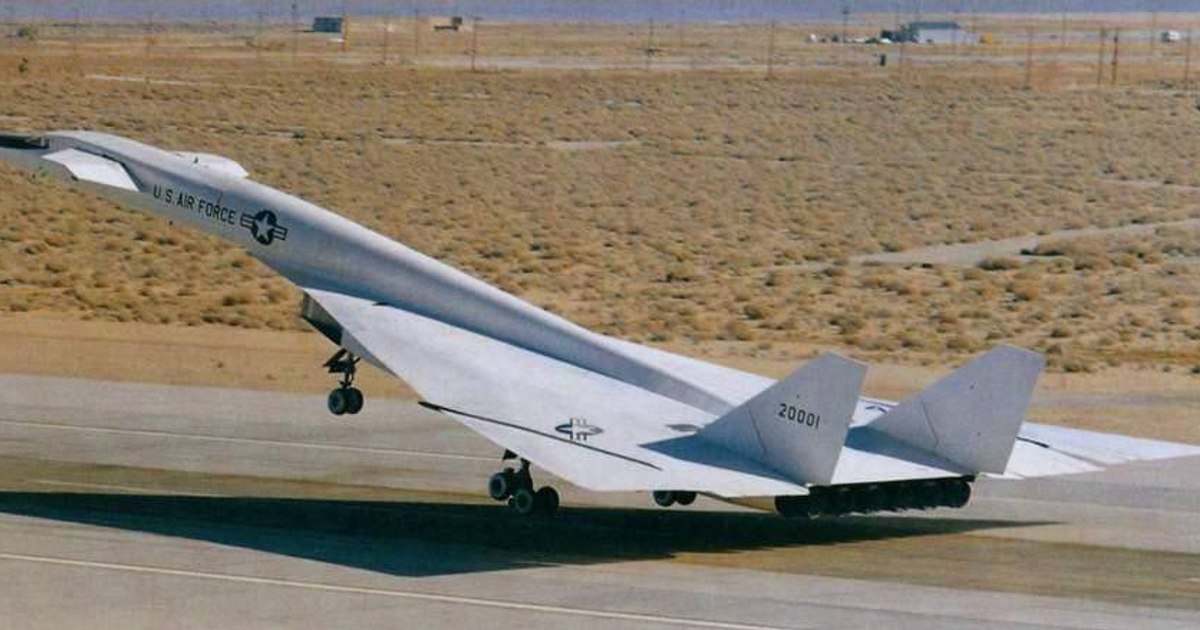
XB-70 Valkyrie PHOTO: X
It was the XB-70 Valkyrie, an experimental aircraft developed for the US Air Force. Its maiden flight – 60 years ago in September 1964 – ushered in a golden age for supersonic aircraft. Later, the plane would reach a speed of just over 3,000 kilometers per hour, almost 50% faster than Concorde, writes edition.cnn.com.
“The overall design of the XB-70 was a thing of beauty,” says Tony Landis, historian at the Air Force Materiel Command in Dayton, Ohio. “To think that such an attractive aircraft with its speed and altitude capabilities was built over 65 years ago is hard to fathom in today's environment of AI and computer-based engineering.”
The XB-70 program was not without problems: As a military aircraft, it was obsolete before it was launched, and its short life was marred by a tragic accident. Even regular flights put everyone on fire as all components of the aircraft were pushed to the limit.
However, its design made it an icon of supersonic flight: “To this day, people stop and stare at the Valkyrie, parked majestically at the National Museum of the United States Air Force, admiring its size and shape”says Landis. “Most people ask if it's a new design because they've never seen anything like it.”
The plane was born out of a competition between Boeing and North American Aviation, then a major aerospace manufacturer that was ultimately chosen by the Air Force in 1957 to develop a bomber capable of carrying nuclear weapons at Mach 2 and 60,000 meters altitude.
However, the downing of an American U-2 spy plane over the Soviet Union in 1960 prompted the switch from manned bombers to ballistic missiles, and in 1961 President Kennedy presented the future XB-70 as having little chance of penetrating successful enemy defense. As a result, just as North American was beginning to build the plane, the focus of the program shifted to high-speed flight research.
The first XB-70 – nicknamed the Valkyrie following a naming contest – was launched at Palmdale, California on May 11, 1964. With a wingspan of over 30 meters, six General Electric turbojet engines in the rear and a length of 185 meters, it was easily one of the most impressive aircraft ever built.
Among its distinguishing features were wingtips that remained horizontal at subsonic speeds but folded down at supersonic speeds to reduce drag. Its main design elements, such as the delta-shaped wings and long, thin fuselage, were reproduced by both the Concorde and its Soviet clone, the Tupolev Tu-144, which even had two “ducks” or fins just behind the cockpit – just like the XB-70 – giving pilots more control at low speeds.
“Throughout the 1960s, both the military and civilian sectors devoted enormous amounts of resources to the development of a supersonic transport,” says Landis. “In the early stages, almost every aircraft company based their initial design on the XB-70.”
As more information became available, Landis adds, these projects morphed into more refined designs, like Concorde, as well as others that remained on paper, like planned Concorde rivals envisioned by Lockheed and Boeing .
Once it was clear that the Valkyrie's bomber role was shelved, its designers came up with alternative uses for the aircraft: “North American engineers got very creative with many different uses for the airplane.”says Landis, “but the only variant that was seriously considered was the transport version for military and civilian use”.
Three variants were proposed, from a high-density one with a capacity of 158 passengers, to an arrangement “of luxury” which allowed 114 seats and included a seating area in the center of the passenger compartment.
“While the first XB-70 was returning to Palmdale for inspections and upgrades, North American took the opportunity to add fake window markings to one side of the aircraft to help market the transport variant. The windows were removed before the aircraft to return to flight tests”, says Landis.
It's hard to imagine what the passenger experience would have been like aboard such a plane, but according to Landis, it would have been very similar to Concorde: “Quiet, peaceful, with ample space between the seats. Because of the expense of operating the aircraft and the limited number of seats, the cost would most likely have been affordable only to the upper middle class and the wealthy.”
Most importantly, it would have been fast, making the connection between London and New York in just two and a half hours, compared to the three and a half hours Concorde usually takes.
Other proposed versions of the plane envisioned it as a launch pad for orbital spacecraft and even Minuteman missiles—but, like the passenger version, these never materialized.
The XB-70 program was further cut short by a fatal accident that occurred in 1966 during a General Electric photo shoot. The second, and more advanced, of the two existing Valkyries collided in mid-air with a smaller aircraft, an F-104N, killing its pilot as well as one of the XB-70 pilots, the other surviving with serious injuries.
The destroyed Valkyrie had only logged 46 flights, and the remaining one ended its career after 83 flights – many with NASA as a supersonic test bed – and just over 160 hours in the air.
The last of these flights took place on February 4, 1969, to transport the aircraft from what is now NASA's Armstrong Flight Research Center in California to Wright-Patterson Air Force Base in Ohio, where the aircraft entered the collection of the Air Force Museum .
While the program may not have lived up to its full potential, the legacy of the XB-70 remains valid, says Landis: “All large, high-speed aircraft projects benefit from the work done by the XB-70. And the data obtained from these research flights continues to influence the design of future aircraft.”
