
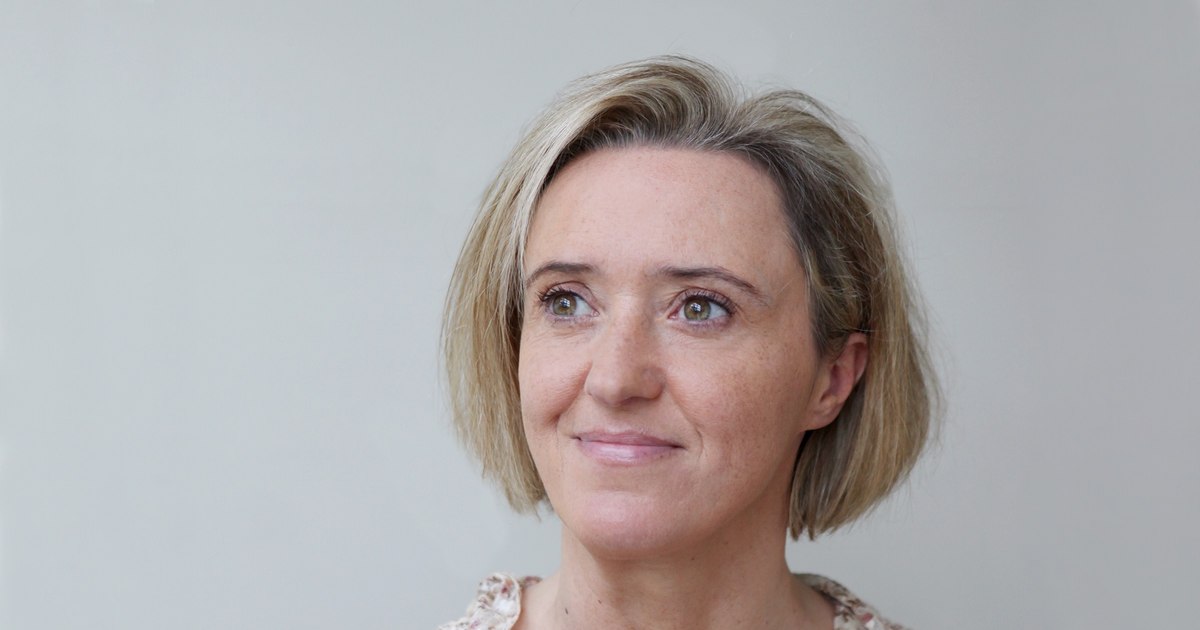
Liz Nugent is the author of the novel Ciudata Sally Diamond, which made waves internationally and was translated into 20 territories, including Romania. Before devoting herself fully to writing, Liz Nugent worked in film, theater and television.
Liz Nugent, author of Strange Sally Diamond
Each of her first four novels – Unravelling Oliver, Lying in Wait, Skin Deep and Our Little Cruelties – were number one bestsellers and Liz won four Irish Book Awards as well as the James Joyce Medal for Literature. The author currently lives in Dublin and for her latest novel, Strange Sally Diamond, she was awarded the Irish Book Award 2023 for “Best Suspense Novel”.
Liz Nugent reveals behind the scenes of her creative process and her hopes for readers who will explore the disturbing world of Sally Diamond.
What was the main source of inspiration behind the novel “Strange Sally Diamond”?
The character was inspired by Boo Radley from “To Kill a Mockingbird” by Harper Lee. It's not considered a crime novel, but I think it's one of the best examples. I first read this book when I was about 14 and was fascinated by Boo. At the end of the book, he saves the children's lives. He hardly leaves the house and never speaks, but his brother Nathan comes and goes as usual. I was interested in how two people can grow up in the same house and still end up so different.
What led you to explore themes such as childhood trauma and its consequences in adult life?
I'm very interested in the “nature vs nurture” argument. Every child thinks their home life is normal. It is only when they become teenagers and have the experience of being in other homes and seeing how other families interact that they may see their own homes as dysfunctional. In all my books, I examine childhood incidents that shape the adults my characters become.
What was the biggest obstacle you faced in the process of writing this book and how did you overcome the challenges?
I don't plan my stories. I always start my books right after an important incident, and then I decide if that is the beginning or the end of the story. The biggest challenge is always what will happen next? And how can I make this unpredictable?
What is the relationship between the title of the book and Sally Diamond's identity as a character?
Sally is only “strange” in the eyes of her neighbors at the beginning of the book. She appears to be deaf and mute. Shop at the same place and buy the same things. He has a limited amount of clothes, does not work and has no friends. By the end of the book, Sally is socializing and learning a lot through psychotherapy.
How did you manage to strike a balance between gradually revealing information and maintaining mystery in the novel?
I love it when the reader knows more than the protagonist. Sally has so much to learn about her own childhood, but that's nothing compared to what she eventually discovers about Peter. And at the end of the book, Peter's actions are shocking, but that was a surprise to me as well.
What inspires you to write about dysfunctional characters?
I wish I could write romantic fiction about normal, nice people, and I've tried, but every time, someone ends up dead or maimed or turns out to be a psychopath. I find it alarmingly easy to write about psychopaths. I think I also like reading about them.
What are some of the key themes or questions you hope readers will consider after reading “The Strange Sally Diamond”?
I hope readers will see from this book that being different is a quality to be embraced and not avoided. I wish they would think more before they judge people. I hope they'll question whether it's good or bad to trust a stranger, and that sometimes speaking your mind might not be the wisest thing to do.
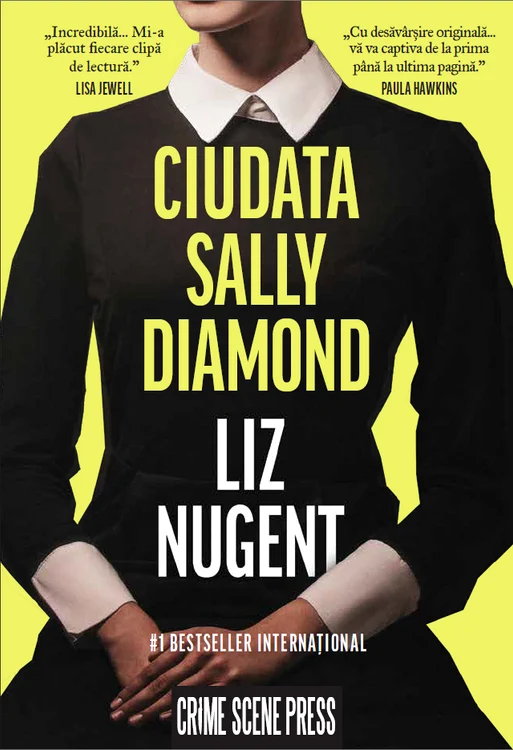
What kind of research did you do to prepare before writing the novel?
I had to figure out how to get from Ireland to New Zealand in 1980 without getting on a plane, but the whole psychiatry part is made up. Sally's story is entirely fictional. After I finished writing the book, I gave it to a psychiatrist friend and asked her to read it, and she gave me some pointers on the language used in therapy.
What's the best piece of writing advice you've ever received?
Finish what you have to write. I probably spent eight years writing my first book. I'd do it for a few months, then save it to a file and do nothing for a year. It was only when my job became unbearable that I was able to finish it and could afford to leave. I could have left a lot sooner if I had really worked at it.
Have you ever been on a literary pilgrimage?
Not. I, for one, am not that curious about writers. I know next to nothing about some of my favorite writers. What matters to me is the book. When I finish reading something I like, I immediately want to discuss it with others. I can love the book without loving the writer.
