
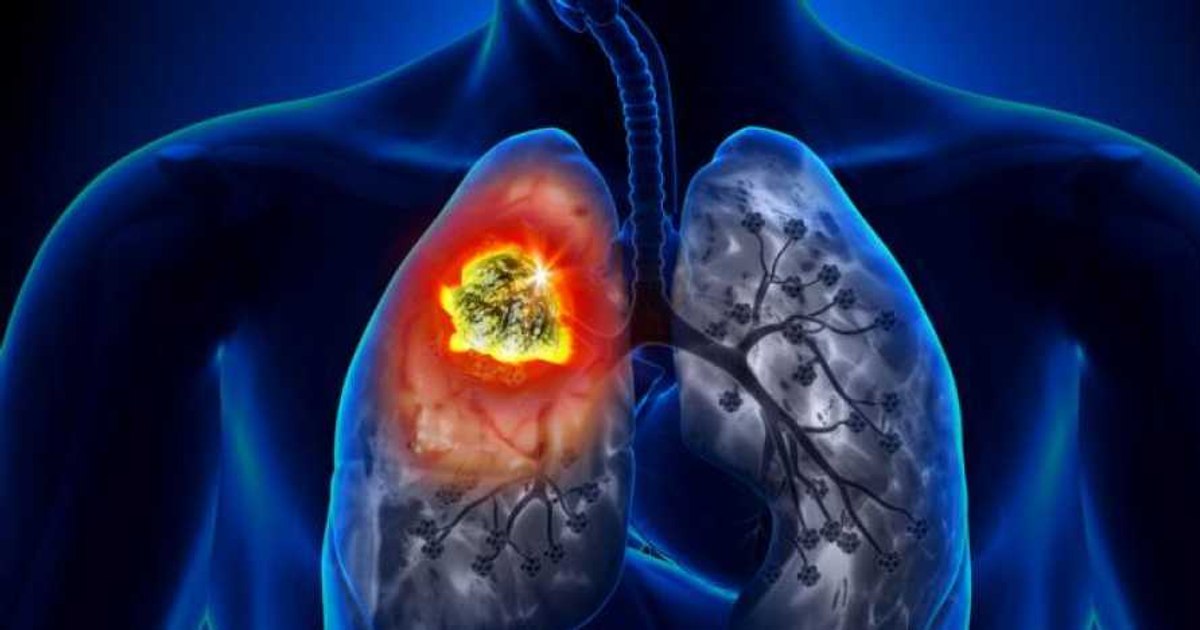
It is the most common cause of cancer death in men, and the survival rate at 5 years, even in developed countries, is at most 20%. The specialists demand the need for “fast and firm” measures.
It takes a screening program for the lung cancer: Archive
“Every two minutes, in the world a man finds a difficult diagnosis: he has lung cancer”, It draws attention to the pneumologist Beatrice Mahler, on the occasion of the International Day to fight lung cancer, which is marked on August 1. Pulmonary cancer is the most common cause of cancer death in men, in Romania, data for 2021 indicating a standardized rate depending on 75 deaths per 100. 000 inhabitants, value 8 % higher than EU average.
“Statistically, at world level there are 643 people who find out this sad news every day. From the perspective of lung cancer the future does not sound good, without clear and precise interventions. Thus, it is expected that by 2040 the incidence will increase to 67%, and today, and in developed countries the survival of patients at 5 does not exceed 20%”, reports Dr. Beatrice Mahler.
The situation “He obliges us all, professionals in health and government responsible, for fast and firm measures ”, adds Dr. Mahler.
Pulmonary cancer screening is one of the solutions, the doctor indicates.
What are the screening criteria
Many states use as criteria for lung cancer screening the following “coordinates”: smoker over 55, who has smoked more than 1 package per day, for 20 years, even though he has given up less than 15 years. The recommended investigation in this case is a small -dose thoracic CT.
Not just the wreck smokers should be monitored, the doctor Beatrice Mahler indicating two other categories to be considered:
– people exposed at the high level of pollutants in the air they breathe;
– family members where there is an increased incidence of lung cancer.
Smoking is the main risk factor, but also the one we can control best. Instead, there are other risk factors for lung cancer, such as radon exposure (and in Romania there is no faithful map); exposure to asbestos (still maintained in households to cover houses or annexes); pollution from big cities; chronic disorders, etc.
From suspicion to treatment pass two months and this time must be shortened
The pneumologist draws attention to the necessity, in the Romanian medical system, to make the intervention more efficient in the suspicious cases of lung cancer. Specifically, it is necessary to reduce the times between suspicion, diagnosis and treatment.
“We must also efficiently and develop systemically, and not from “doctor to the doctor”, the collaboration between pneumologist, radiologist, oncologist, thoracic surgeon, family doctor or doctors from other specialties if the patient has more comorbidities, to ease the “road” of the patient in the Romanian medical system “, Dr. Mahler points out.
The good news is that the specialists from several institutions – the “Marius Nasta” Institute, the University of Medicine and Pharmacy “Carol Davila”, the National Institute of Public Health – are very close to the launch of a national screening program for lung cancer, which on the one hand will mean the investigation of people at risk, and on the other, the other procedures will be established Dr. Beatrice Mahler, for “Adevărul”.
Dr. Mahler said that the time between the CT investigation and the confirmation of the diagnosis and the establishment of the treatment, which today reaches about two months, could shorten by half. Specifically, today, following a control that a patient performs in the pneumologist’s office, the specialist who suspects a lung cancer can prescribe a CT investigation. If the mention “oncological suspicion (SO)” is checked on the referral ticket, the patient’s route may be faster, not having to wait for the well-known waiting lists for the imaging investigations settled on the basis of the insured quality. From the investigation of CT Chest and until the interpretation of the result, other waiting time intervenes, which can reach up to two weeks (and this time must be shortened). After the interpretation of the CT, the road continues with another long series of stages (confirmation of the nodule, the laboratory stage, the immunohistochemistry stage, etc.), or all this can be shortened by a close collaboration of the multidisciplinary team that is needed to treat the patient diagnosed with lung cancer, Dr. Mahler said.
Signs that need to send you to the doctor
There are some symptoms that can announce lung cancer, although most likely when the situation appears, it is already quite complicated. You should immediately come to the doctor if:
– you cough for more than a month, or in the last month the character of the cough has changed;
– You have an important, involuntary weight loss, and you do not have a appetite;
– you get tired to minimal effort;
– you have chest pain several days in a row;
– You have hemoptysis (spit blood when you cough).
From early diagnosis to palliation – long list of needs in treating lung cancer
For cases in which the possibilities of intervention reach limited, it is necessary to pallow, also an area in suffering in Romania. “In many cases it is missing or insufficient, which leads to deepening the suffering of the person with lung cancer in advanced stages and to an even greater weight for belongings.”points to the pneumologist.
Even the medical care services at home, and this is an underfilled area, they are not very helpful to patients suffering from lung cancer because they cannot access them. It would also need: quick access to the regional level for screening services for early diagnosis; Development of specialized multidisciplinary centers at regional level; quick access to treatment; Making an optimally standardized route in the system for the person with suspicion of lung cancer, pneumologist Beatrice Mahler drew attention.
