
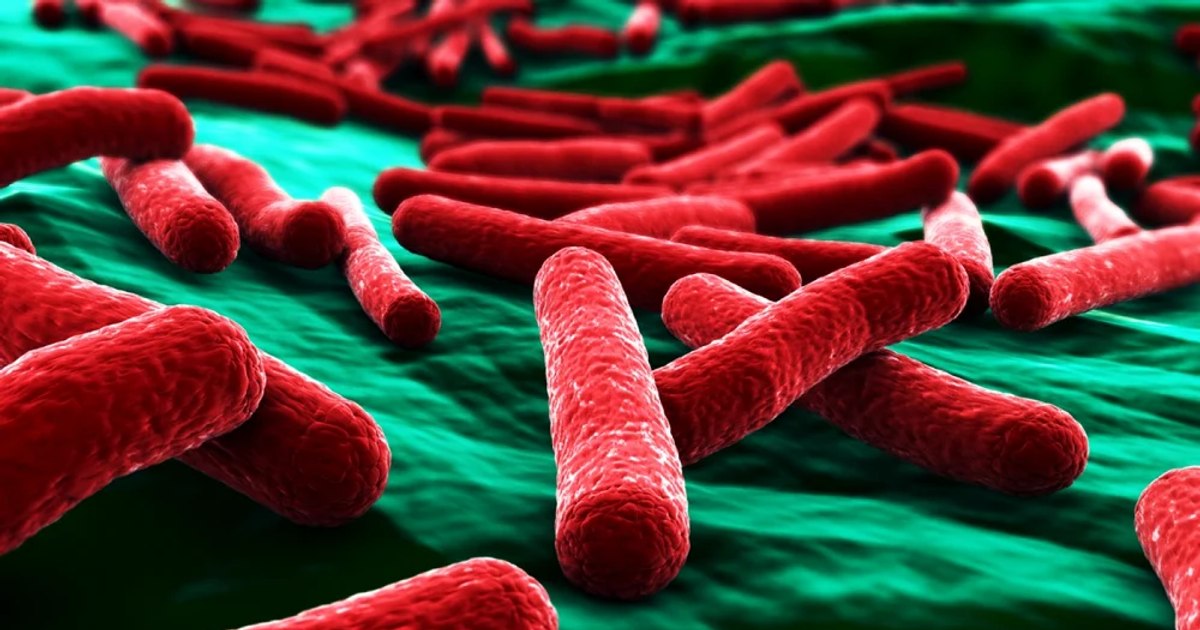
Common infections will kill millions if drug resistance through antibiotic misuse is not curbed, England's former chief medical officer has warned.
PHOTO: Shutterstock
If drug resistance through antibiotic misuse is not curbed, common infections will kill millions, warns England's former chief medical officer. The COVID-19 pandemic will “seem minor” compared to what will happen to humanity due to the growing number of superbugs resistant to current drugs, said Professor Dame Sally Davies, writes theguardian.com.
Davies, who is now the founder of the National Institute for Health and Care Research, lost her fina two years ago to an infection that could not be treated. She paints a grim picture of what could happen if the world fails to tackle the problem in the next decade, warning that the problem is “more acute” than climate change. Drug-resistant infections already kill at least 1.2 million people a year.
“It seems that there are a lot of people with untreatable infections and we should move to isolating untreatable people so that they do not infect their families and communities. So it's a really bleak picture. It would make infections like COVID-19 seem minor,” said Davies, who is also the first woman to serve as Lord of Trinity College, Cambridge.
The expert claims that some infections caused by bacteria, viruses, fungi and parasites can no longer be treated with available drugs, and the phenomenon is called RAM. Exposure to drugs allows organisms to develop resistance to them, and overuse of drugs such as antibiotics accelerates this process. Widespread resistance would make much of modern medicine too risky, affecting treatments including C-sections, cancer interventions and organ transplants. “If we don't make important progress in the next 10 years, then it's very serious,” Davies said.
Davies has spent more than a decade warning about the problem, but said she was really hit when her “beautiful” sweetheart, Emily Hoyle, died of a drug-resistant infection aged 38. years. Hoyle had cystic fibrosis and had undergone two lung transplants before being infected with Mycobacteroides abscessus, which was resistant to treatment. The team treating her “tried everything,” Davies said. “And she knew six months before she died that she couldn't be treated and that she would probably die from it. She had a very beautiful death – she had a very dignified death, laughing, joking, making fun of her trouble in front of her husband, her family, everyone. It was very special. But she gave me permission to use her story as my own because, well, it became something personal to me.”
There are efforts worldwide to reduce the misuse of drugs such as antibiotics in medicine, although the COVID-19 pandemic has stalled progress on many of these initiatives. More than two-thirds of antibiotics are given to farm animals, Davies said, usually to promote growth or prevent infections in overcrowded and unsanitary conditions, rather than to treat specific infections.
We have no time to waste
Prof. Emilian Popovici, vice-president of the Romanian Society of Epidemiology, told “Adevărul” that antibiotic resistance is one of the most serious global threats to public health. “The rise of antibiotic resistance is a growing concern for health professionals, policy makers and the general public alike. This phenomenon of antibiotic resistance occurs when microorganisms, such as bacteria, develop resistance to drugs that are designed to kill them. This means that common infections and minor injuries could become life-threatening if the current trend of antibiotic resistance continues. Keywords associated with antibiotic resistance include antibiotics, superbugs, drug-resistant infections, antibiotic overuse, and global health crisis. These keywords highlight the seriousness of the problem and the need for urgent action to solve it. The overuse and abuse of antibiotics in both human and animal health, as well as in other fields, has contributed to the development of antibiotic-resistant infections. This has led to the emergence of superbugs that are difficult and, in some cases, impossible to treat with existing medications,” explained the expert.
Prof. Emilian Popovici stated that in order to avoid a situation with an unpredictable end, a collective action at the global, national and local level is necessary to combat antibiotic resistance. “This includes promoting the responsible use of antibiotics, investing in the research and development of new antibiotics, and improving infection prevention and control measures in healthcare settings. It is essential that governments, health professionals and the public work together to address this crisis and ensure that effective antibiotics remain available for future generations. Failure to do so could have devastating consequences for health systems and economies around the world,” emphasized the expert.
