

More and more Romanians have discovered their vocation as “free Dacians”, according to the model of the controversial “Stegar Dac”. Those who truly know the phenomenon regret how the cultural heritage of the Dacians is often led.
The dac flag. Source: Facebook. Cezar Cătălin Avămuță.
The Dacian inheritance has become a reason for more and more Romanians, but the specialists point out that it is often carried out in derision, both by the behavior of some of the “new Dacians” and by the wrong impressions they leave in society.
The Dac’s flag, the Romanian who overturned the image of our ancestors
Self -titled “Dac’s flag” or “Samuraiul Dac”, Cezar Cătălin Avămuță (58 years) has become in recent years a character known to the Romanians, for his controversial gestures, but also through his appearance. Dressed in clothes inspired by the Dacian costumes (tunic, mantle and sandals), waving huge tricolor flags, the eccentric “stegar Dac” drew the public’s attention through height protests.

The dac flag. Source: Facebook
For over a decade, the “Dac flag” attracts attention from time to time, climbing in trees, cranes and buildings, making hunger strike or arguing with law enforcement.
He was fined several times, and in other situations he was expected to descend from height and was transported to the hospital, for psychiatric evaluation, after threatening that he would be thrown empty if the authorities would try to bring him to the ground.
The Dac’s flag, popular among Romanians
In recent months, his eccentric appearances have been increasingly frequent, driven by the popularity he has created over time and by online media. The many Romanian people looked at his controversial gestures with admiration. He has over 20,000 followers on Facebook and almost 60,000 on Tiktok, and his fans daily send him support messages.
“I have been to every protest of yours. I wholehearted you with all my heart! You are the best example for our whole country.” transmitted one of them.
Others took the example of the “Dacian stegar” and, also equipped in clothes reminiscent of the Dacians, with imported cages purchased from markets, with coats, shoes, sandals or opinions, tried to stand out on social networks.
Often the attempts to copy to the Dacians who lived on the territory of Romania in antiquity are ridiculous. Some specialists show that “modern Dacians” only distort history.
Their outfits are inappropriate, even if they resemble those found on Trajan’s Column, the ancients wearing simple straps, adapted to their climate and needs, than those currently purchased from trade.
Equally controversial are, some scientists show, and the association of the Dacians with the nationalist current and with various religious and mystical manifestations. Since the 1990s, Sarmizegetusa Regia had become a meeting place for numerous sects and meditation groups, and this phenomenon that damaged the site was hardly stopped.
At the same time, Țebea – the place in Hunedoara where the tomb of Avram Iancu is located, became a parade for Romanians equipped according to the “Dacic” model.
The bitterness of the last Dac in the Orăștiei Mountains
Vladimir Brilinsky, the man who discovered the mold in Sarmizegetusa Regia and took care, for several years, by the Dacian fortress in the Orăștiei Mountains, has bitterly observed the degradation of Dacism in recent years, a phenomenon accentuated by eccentric characters that use the image of the Dacians to promote and follow their controversial interests.
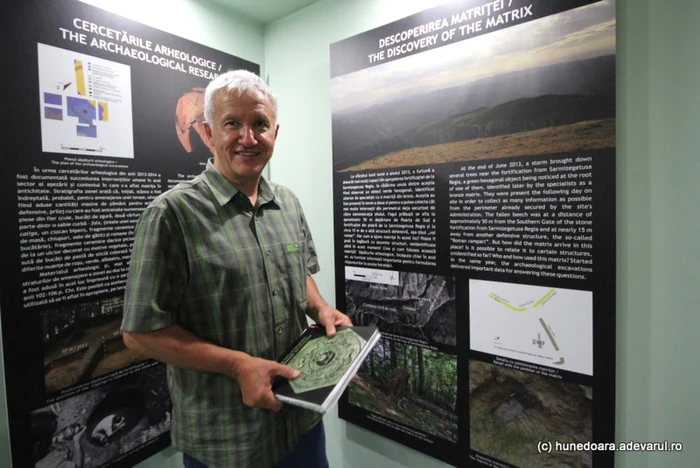
Vladimir Brilinsky. Source: Truth
He recounts that he did not wear the Dac clothes at once and did not do it as an ostentatious gesture or desire for a show, but as a natural expression of his involvement in saving the archaeological site. Brilinsky was named, perhaps exaggerated, as he states, “the last Dac from the Orăștiei Mountains”, for his tireless work at Sarmizegetusa Regia.
After the movement of historical reconstruction began, adds the former administrator of the Sarmizegetusa Regia site, the Terra Dacica Aeterna group, of which it was a part, was the first to promote a rigorous and authentic approach, based on respect for scientific research, in the reconstitution of daily life and the Dacian.
Along with historians and archaeologists, Brilinsky has been involved in educational and interactive projects, to promote among students and young people the history of Dacians and Romans in a correct and attractive way.
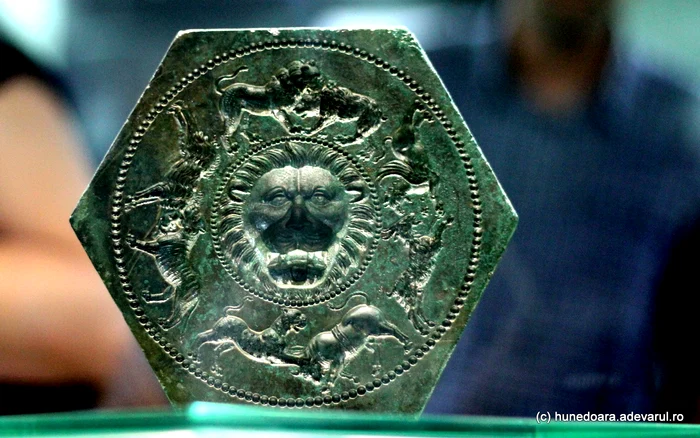
Dacian mold. Photo: Daniel Guță. TRUTH
Over time, however, other reenactment groups appeared, but some of them did not take into account the demands respected by the associations such as the Aeterna Dacica and Garda Apulum.
“Unfortunately, the ideas of Dacia and Dac have spread among those who are argued with true history, clients of ostentation, clowns or charlatans, who invented all kinds of stories with Dacul Jesus, with wizards or with Dacian priestess, with good energies torn from the temples of the Sarmizegetusei, with the Halucinant theories, with the Halucinant theories, hard to learn the stupid ”, Vladimir Brilinsky wrote in an editorial published in Hunedorean.
The way in which many Romanians have come to relate to the Dacians and their inheritance has become more and more removed from the historical truth, being altered by the increasing popularity of the controversial characters who exploited the ancient image in an incorrect way.
“Above all, a Dac steggar, a modern caricature, which fascinates the popular naivety through its grotesque originality. A song of childhood, in which an elephant was swinging on a spider’s canvas, made me carefully arrange my Dac’s costume, put it with infinite sadness in a bag and put it well, where will those who will take me on my way to the ground. “ Writes Vladimir Brilinsky in the editorial “to be or not to be”.
How many Romanians visited the “Dacian homeland”
Romanians rarely reach authentic historical places reminiscent of Dacians and often embrace controversial theories, rejected by historians, about Dacians and Dacia.
Since 2013, since Sarmizegetusa Regia has entered the administration of the Hunedoara County Council and has begun to benefit from permanent care, guard and a visiting program, the Capital of the Dacians in the Orăștiei Mountains has been visited by about 700,000 tourists, Romanian and foreigners.
Annually, less than 70,000 visitors arrive in the UNESCO site, although, for almost a decade, the access was facilitated by the construction of the Costești -Sarmizegetusa Regia road, which climbs to the Grădiștii Valley from Orăștie, and of the Călan -Costești road, which shortens the trail of the tourists from Hunedoara.
Sarmizegetusa Regia remains the most popular tourist destination between the Dacian cities, many of them being difficult to access and less sought after by Romanians. But the simple calculations show that, in the last 12 years, less than five percent of the Romanians have visited the capital of the Dacians and the cities in its surroundings.
Although the number of tourists who saw “live” the Dacian settlements is reduced in relation to the population of the country, the number of those who dressed supposed strains and Dacian equipment, pretending “Dacians’ descendants”, is constantly increasing.
