
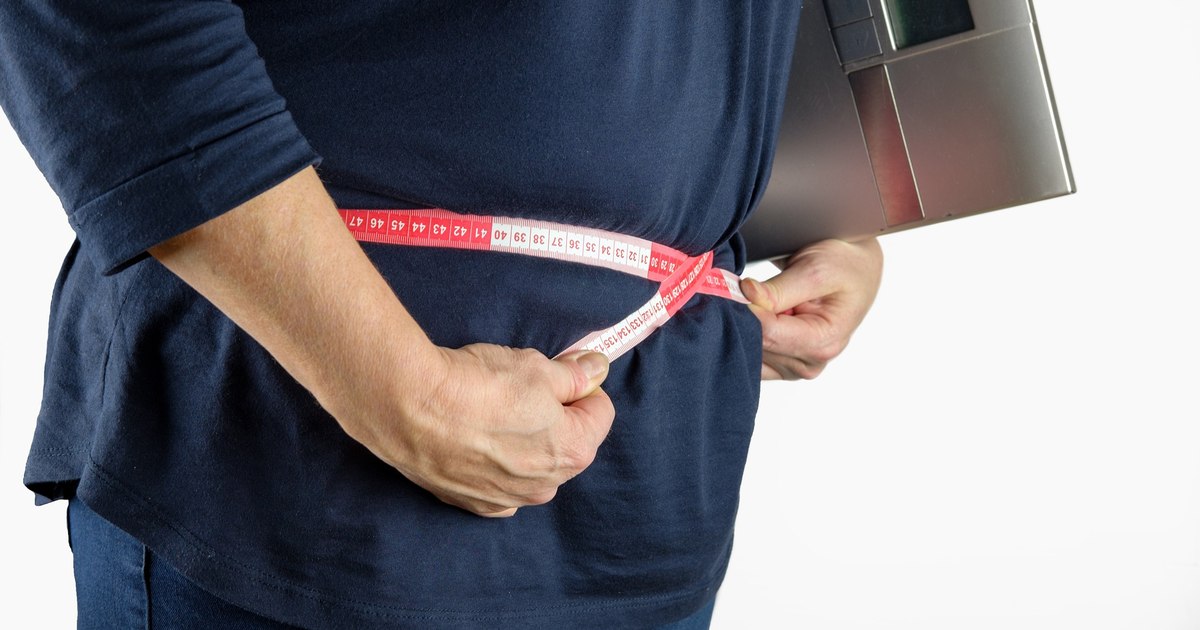
A complex disease, with a continuously increasing incidence, which is the basis of other serious diseases and which causes thousands of premature deaths in Romania every year, continues to be ignored. An association demands that it be recognized as a chronic disease and that treatment be settled.
It has been recognized as a disease since 1948 by the World Health Organization, but even today the treatment is not settled in Romania, as is the case in most countries of the European Union. The figures show that 70% of Romanian adults have a worrying body mass index (BMI). Four out of 10 Romanian adults are obese, and what worries even more is obesity among children, which has reached 11%.
Obesity, often seen as a complication that you can get rid of simply by willpower, is actually a complex disease that goes hand in hand with many others: diabetes, high blood pressure, fatty liver (hepatic steatosis), sleep apnea, osteoarthritis and even various types of cancer. The state still does not settle the treatment for obesity, although it would be the more effective and cheaper solution compared to treating the other diseases it causes.
The impact of obesity is not only medical, but also functional and psychosocial, the consequences being the limitation of mobility, chronic pain (joints, back), chronic fatigue, depression and anxiety (often amplified by stigma) and difficulties in professional and social life, draws the attention of the Association Against Obesity.
The representatives of the association ask the authorities to recognize obesity as a chronic disease and to develop integrated national prevention and treatment programs. Patients need access to drug treatment and bariatric surgery in severe cases, and this could be done by including obesity in national health programmes.
“It isit is time for obesity to become visible not only in statistics, but also in the priorities of the health system”, it’s the call of the association.
“There are only four countries that do not settle and Romania is one of them”
I spoke with Lorenzo Radu, the representative of the Together Against Obesity Association, who says that obesity, in theory, is recognised, has a disease code, you can even give referral tickets to specialists. However, the list of settled services is extremely short.
“It is, I think, the only chronic disease, among the most common, for which the treatment is not settled. It is a disease with an extremely high prevalence. However, only interventions related to lifestyle are settled: nutrition, exercise, psychological support and advice related to rest, stress, life management”, explains Radu.
There are not many doctors specializing in nutritional diseases who work in contract with CAS and have collaborations with psychologists who are also in such a contract, although psychological services are needed in this pathology, because many people end up eating for emotional reasons. “Most countries in the European Union also pay for surgical or medical treatment. There are only four countries that do not pay for either of these two, and Romania is one of them (ed. – along with Bulgaria, Hungary and Greece). In the others, at least one of the two options, most often the so-called bariatric surgery, is paid for. We are told that it is partial, but it is a tiny percentage. It’s a joke. It doesn’t help at all.” explains Lorenzo Radu.
“I have at least three conditions that I can treat compensably”
What comes from behind is much more worrying, warns Radu, because we neither prevent nor treat obesity. When he talks about the fact that Romania ends up spending even more money, beyond the suffering of the patients, Lorenzo Radu gives his own example.
“I personally have at least three ailments that I can treat compensably. And I mean here physical therapy and physiotherapy for a gonarthrosis, knee, I mean sleep apnea, for which that C-PAP device and high blood pressure are settled. All three are treated with settled treatments. Well, all three medical specialists I went to for confirmation of the diagnosis told me the same thing: the weight would fix a lot, including to the point of no need to treat”says Radu. If he could lose 20 kilograms, he would most likely not need sleep apnea treatment, says the specialist.
“If we don’t stop the upward curve of obesity, some extremely sick generations await us”
What the decision-makers do not understand is that a man who lives with considerable excess weight after 35-40-50 years will eventually end up with some chronic diseases that are almost inevitable: type 2 diabetes, hypertension, etc. “If you start from 14 years, from 12 years or from 6 years with obesity degree 2, almost guaranteed these diseases will not come after 50-60 years but maybe after 30-35 years. Which means that if this upward curve of obesity is not stopped, we are in for some extremely sick generations. Much earlier than we are used to,” says Radu.
There are still no signs that things could improve in the future. No place was found in the schools, Radu points out, for the discipline “Education for health”.
“Romania has no prevention strategy. None. Schools teach 12 years of religion, zero years of health education. And I don’t say that one excludes the other, but when it is discussed, many complain about the busy schedule, where to put in another hour, where do you get teachers… These things were not discussed when religion was introduced into the curriculum, teachers were also found, classes were also found, time was also found. There are no national awareness campaigns that I can think of right now, and people don’t really know how much harm they can do to themselves simply by pushing the trolley around the supermarket and adding products to it. A lot comes from there, from the lack of education. We don’t expect teenagers, given to choose between an energizer and a bag of chips and some carrots with hummus, to choose the latter, but at least parents who control what their children eat know that these things can have quite important and long-term effects. And nobody learns, we expect that we know what it means to eat healthy. Maybe we don’t know“, says Lorenzo Radu.
“The state needs to somehow control what option those children have in the school zone”
There are countries where children not only eat healthy in the school canteen, but even learn to prepare food themselves that does them no more harm than good, so we shouldn’t invent anything, says Radu.
“Plus the state needs to somehow control what options those children have in the school area, what they can buy, where. This aggressive marketing of ultra-processed foods is part of the control and industry of these extremely well produced consumer goods, but at some cost to all of us as a society, there is not even an attempt to control these things. There are countries where there are campaigns, I give the example of Great Britain, “5 a day” and any 10-year-old child asked what “five a day” means knows that it is about five servings of vegetables and fruits a day that are necessary to grow well and develop”. emphasizes Lorenzo Radu. In Romania, on the other hand, shops near schools, despite the legislation, can sell almost anything to children, including products prohibited for this age.
“On the obesity side, we are talking, nothing is being done yet. I know that it has been at least 3 years since, in theory, the Ministry of Education and the Ministry of Health discussed Health Education as a subject, it is now optional, chosen by 5% of students, and it has no way of making a difference as long as it does not become a compulsory subject”, Radu scored.
Even the information campaign of which the message transmitted by televisions is part of the advertising mold is not an initiative of the authorities, but belongs to some associations. But the associations, says Radu, fill to some extent a huge gap, but they do not manage to cover it entirely.
The myth we can’t escape
The most dangerous myth about obesity, believes Lorenzo Radu, is that “obesity is a matter of will” and that “it’s the fault of the obese person”.
“I once had a quote: when in a class of 30 students you have one or two who don’t pass the class you can blame them, when 20 out of 30 don’t pass the class it becomes clear that the problem is the system or the teachers. We are in a situation where we have reached 2 out of 3 people who are already overweight, pre-obesity, and we can’t keep blaming people. Because there is a certain amount of self-control, but as long as you don’t have choices… Look, on the way to work, how many options you have to eat something really fresh, healthy, home-made, and how many options you have to eat bagels or something overly processed. How much time do we have in our society where time and stress are both a problem. (…) When people are extremely tired, when people are very preoccupied with certain things, the brain pushes us towards the sweet, towards the processed, towards things that give us comfort. Self-control can get you somewhere but it cannot solve the problem of an obesogenic environment. Because this is the term, the environment around us is obesogenic. We have no way, we don’t have time to do the 30 minutes of exercise a day. Very few people can afford to buy quality food, because when it comes to food the most important thing is the quality and degree of processing. We can tell people what to do, but we can’t change the fact that nothing around us helps us do it.” emphasizes Radu.
The biggest danger is this impression that it is in the will of each person, but it is not so simple, the disease being very complex, claims the specialist. Moreover, we are fighting against biology, because the body is not made to lose weight, but to accumulate fat.
Treatments, on the other hand, exist on the market, but few people with weight problems afford them. “The harsh reality is that unfortunately health systems are not necessarily made to prevent disease or cure, but are simply economic systems. When you draw the line it all comes down to money. If only there were some analysis done by health economists to prove that it is cheaper to treat obesity than many complications”. concluded Radu.
