
Walking in the mountains is healthy, but for many Romanians it seems an impossible mission in the cold season. Most of them are afraid of advances and that they do not have the necessary physical training. However, there are easy mountain routes in winter as well, which we present to you in the following.
It is scientifically proven that mountain walks, regardless of the season, are a real health vaccine for the human body. However, many Romanians say no to mountain walks in winter because they don’t feel prepared. He believes that the trails can only be traveled by people with experience and enviable physical condition, and consequently, it is limited to admiring photos of gorgeous mountain landscapes posted on social networks. The good news is that in Romania there are winter mountain trails for everyone, even for families with children or the inexperienced. With proper gear, casual hikers can enjoy gorgeous scenery and beneficial mountain air without much effort.
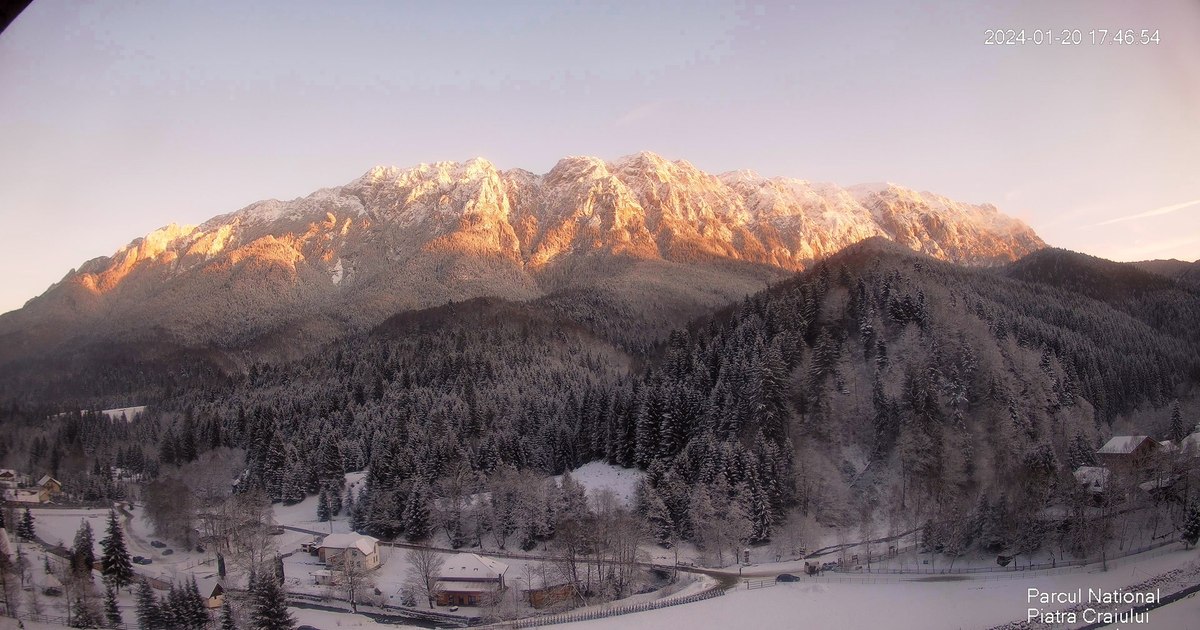
The winter paradise of Piatra Craiului
One of the most beautiful winter landscapes can be admired from the Piatra Craiului Mountains. Here there is an easy route to the environment that can also be traveled by amateurs, with caution. It is about the Fântâna lui Botorog-Cabana Curmătura route. In short, a story hike that takes four to five hours round trip, depending on physical condition. In addition to the “aromatherapy” that you can do by walking the paths of coniferous forests, you can enjoy a fabulous panoramic view from above, from the Curmătura Hut.
For those who live in Bucharest or in the capital area, it is the best option. If the departure is early in the morning, it can be a day trip. If you feel that you don’t want to push and prefer safety, then a night’s accommodation at the many guesthouses at the foot of Munitil Piatra Craiului is enough. To enter the route, you must first arrive in the town of Zărnești, Brașov county. The means of transport are various, although it is preferable to use your personal car or the train, precisely to reach the light back from the route. Once you arrive in Zărnești, you have to look for a very well-known place for mountain trail lovers on Piatra Craiului, Fântâna lui Botorog. It is a spring from which springs fresh spring water. There you will also find trail signs.
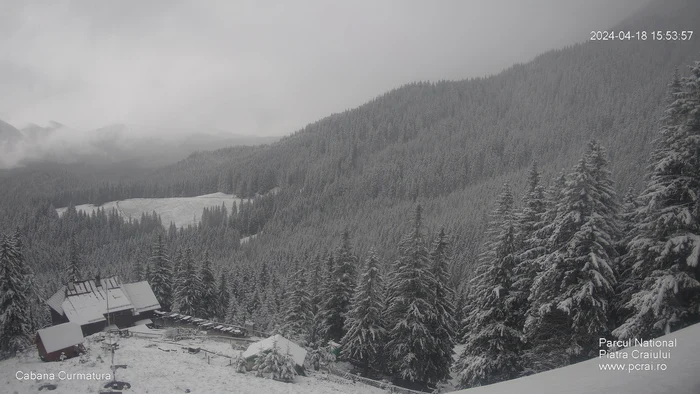
Follow them to the Curmătura Hut. The route is marked with a yellow tape. You should be at Cabana Curmătura in a maximum of three hours. The road is particularly picturesque, through conifer forests, on beaten paths that actually walk you through the middle of nature. The final destination is Cabana Curmătura, located at an altitude of 1470 meters, on the eastern side of the Piatra Craiului Mountains. Once you arrive at the cabin you can admire the scenery and even serve a hot meal. After you catch your breath, you need to hit the road again so you don’t catch the night on the trail. The mountain travel bloggers at greuladeal.ro propose a return route through the Zărnești Precipice, marked with a blue tape, a particularly picturesque area, with an easy descent through the forest. Walking downhill sets a more alert pace, so in two hours you should be at Botorog’s Fountain. From here you get in the car and go either to a recovery meal in Zărnești, or to accommodation, or, why not, directly home.
A spectacular visit to the largest underground glacier
Another very nice winter route, for families or the inexperienced, is the one to the Scarișoara Cave in the Apuseni Mountains. The Scarișoara cave houses the largest underground glacier in Romania. Its name comes from the commune of which it was a part until the administrative reorganization of Romania. The cave and its entire ecosystem are considered monuments of nature, being a speleological reserve since 1938. It was also researched by the famous Gheorghe Racoviță. Inside the cave, which descends almost 50 meters deep into the ground, is the famous glacier with a volume of 80,000 cubic meters, over 4000 years old.
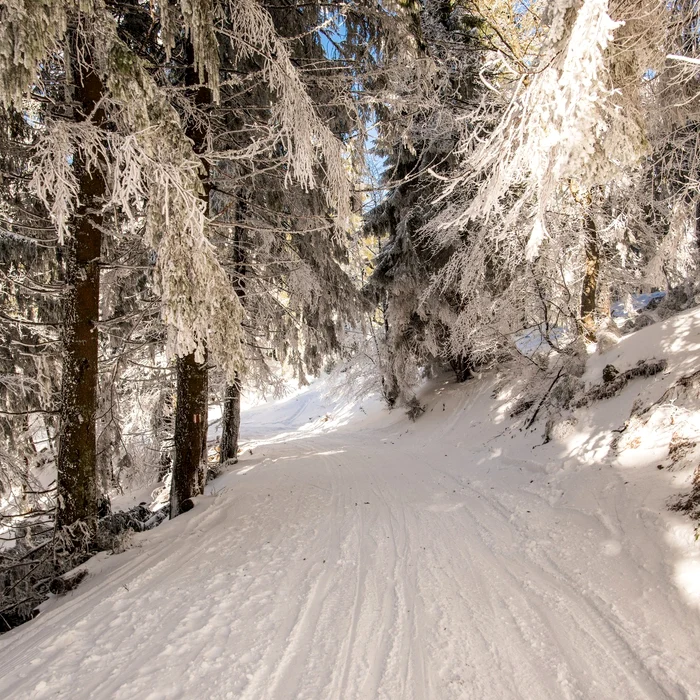
Until the cave, however, the road itself, through the forests of the Apuseni, is a spectacle that should never be missed. Let’s see how it gets there. First of all, you have to go to Alba Iulia, by personal car, bus or train. From Alba Iulia go to Gârda de Sus commune, Alba county. From there you have two options. If you preferred the old-school excursion option, i.e. you came by train or bus, you must follow the route from Gârda de Sus, on a tourist path marked with a red cross. The route also passes through the village of Mununa and stretches for 10 kilometers. Winter can be quite demanding for the inexperienced, but it is splendid.
If you go with your personal car, things are much simpler because you are just taking a beneficial walk through the forest without any exceptional effort. In short, from Gârda de Jos you have to reach the village of Ghețari. There are also guesthouses there, if you want to be closer. From the village of Ghețari, follow the marked route to Scarișoara. The entrance to the Scărișoara Cave is through a huge “mouth” in the ground, with a diameter of 60 meters. Descend the stairs to a depth of 48 meters to see the wonder of the depths. Attention, the entrance to the cave is paid.
At Dochia, in the kingdom of snow
Another approachable route in winter and with great satisfaction is the one on the Ceahlău Massif, which leads to the Dochia Hut. An accessible adventure even in winter, through the forest, to the rock tanks of Ceahlău. The most traveled route is Durău-Fântânele-Panaghia-Dochia.
“It is probably the most trafficked, both in summer and in winter. The route starts from Durău Resort and climbs assiduously up to Cabana Dochia. If the slope is one of the main obstacles that stand in your way, in winter another cause for concern is ice. So, some snowlines or classic cornerers would be good for you. The rest, everything depends on your preparation, how long you climb it. It is about three hours, but how say, it may differ from case to case. On the route you will meet Cabana Fântănele, Cușma Dorobanțului or Panaghia”states Florin from “Explore&Gis”. Another route on Ceahlău is the one that starts from Izvorul Muntelui, goes to Lutul Roșu and then to Dochia. It is similar to the first and in some places there may be portions of winter ice. “There is no shame in using cornerers. Rather than struggling, better where you put your foot stay steady. You’ll climb even faster than summer”say the specialists from “Explore&Gis”. Important sights such as the Monks can be visited on this route. At Cabana Dochia, you can stay and have a hot meal. In general, the route takes three hours.
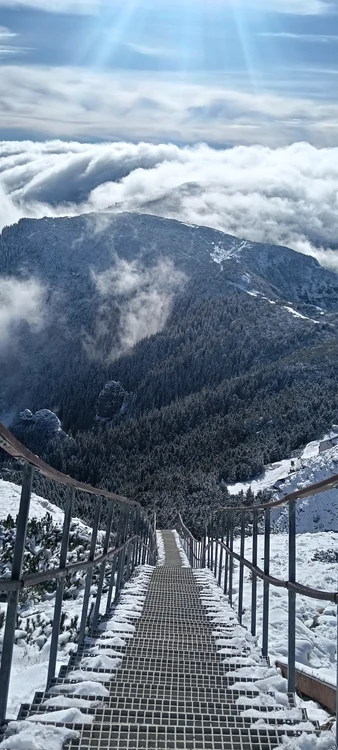
The starting point is either Durăul or the Izvorul Muntelui cabin. The latter can be reached from the intersection with DN 15 (Piatra Neamt – Bicaz – Poiana Largului – Toplita) after 8 km on the county road DJ 155F. From Cabana Dochia there is the option to climb to Vârful Toaca located at 1904 meters high. From Cabana Dochia to Toaca can be reached in about an hour, if the weather is good.
Pay attention to the weather and equipment, mountain walking is not a game
In addition to the mentioned routes, there are also other interesting winter options. For example, at Cheile Zănoagei in the Bucegi Massif, on the Ialomiței Valley, in the area of Moroeni. It is part of the Zănoaga Nature Reserve and the best route is Cheile Zănoagei-Scropoasa Lake and Seven Springs Waterfall. A show that is difficult to describe in words. Additionally, the hike can be perfect for a family looking for an easy but spectacular winter hike. In the Câmpulung Moldovenescu area there is also the Moara Dracilor area, easy to walk even in winter and also spectacular. However, specialists and experienced mountaineers say that on any of the mentioned routes, even those considered easy, especially in winter, proper equipment is needed. That is, warm and waterproof clothes, but loose, that do not obstruct movements. At the same time, the footwear must be suitable for mountain trips, solid and waterproof. We mustn’t forget the “shoes”, devices that help us move forward on frozen ground, nor the trekking poles.
“It’s better to wear light textiles in several layers than, say, a cotton T-shirt and a thick coat. Especially if you want to go on a mountain hike in the winter. The extremities must be very well insulated. And especially the head, it loses 20% of the body heat, but also the hands and feet. Hydration is also very important”states Vali Catargiu, a mountaineer with experience in mountain hiking in all seasons. In addition, we should not push ourselves more than necessary. That is, shame should not make us move forward when we can no longer and dramatically complicate the whole hike.
“In general, avoid venturing out. If you feel like you’ve covered half a kilometer in an hour, it’s not a good idea to continue. It’s very important to be careful of frostbite. The first time the joints give way“, adds Vali Catargiu. All mountain routes, even the easy ones, are only done in good weather, not in a blizzard or heavy snow, when there is a risk of getting lost, frostbite, hypothermic shock, falling from a height and many others. Before going on the route, consult the weather forecast and possibly ask the mountain rescue.
