
Romania currently reached a population of 19 million inhabitants, as much as it registered at the beginning of the Ceausescu regime. The communist couple dreamed of a rapid increase in the number of inhabitants, but the decisions imposed on the Romanians did not have the desired result and, moreover, filled the country of orphanages.
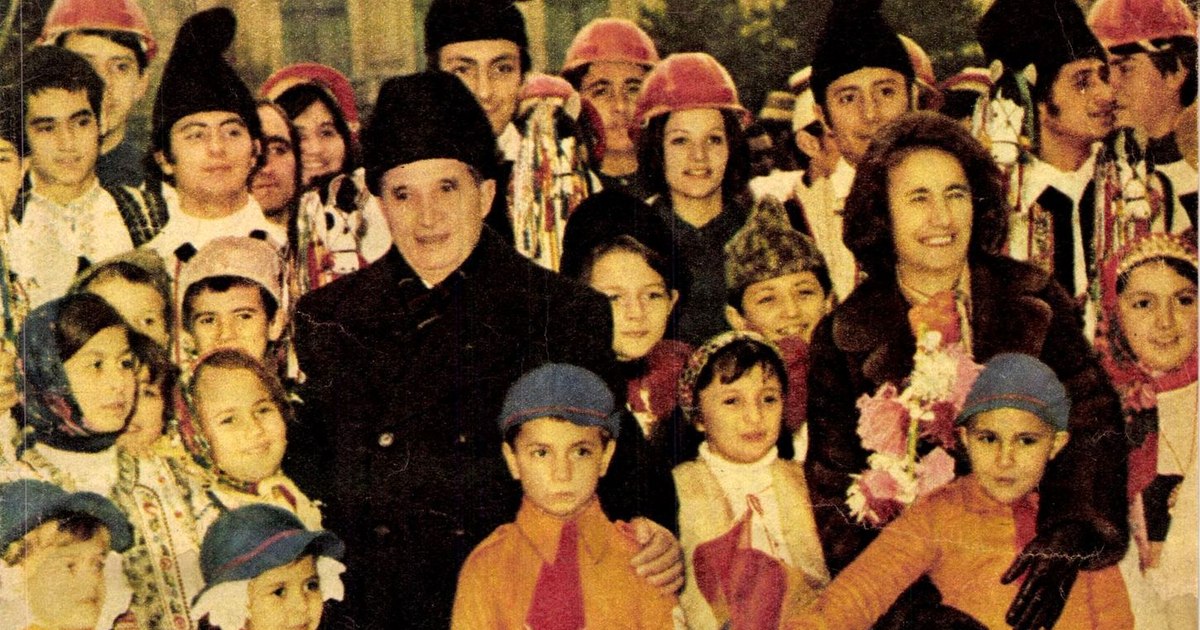
The Ceausescu spouses wanted to run a country with 40 million inhabitants. Photo: Woman’s magazine.
With a population of 19 million people, Romania reached the level of the 1960s in terms of the number of inhabitants. In the last two years, the reports of the National Institute of Statistics in Romania show, the resident population has been on a slightly increasing trend, but other statistical institutions show that in the coming years it will decrease.
The demographic decline is felt the most powerful in the former working cities in Romania and in the rural communities at distant distances from the big cities. In contrast, in the neighboring communes of the great municipalities, the number of inhabitants has been increasing in recent years.
Dumbrăvița communes, Moșnița Nouă and Giroc in the vicinity of Timisoara have almost tripled their number of inhabitants in the last decade, and the growth of the population has felt to the same extent in Florești communes, neighboring Cluj-Napoca, Miroslava and Valea Lupului-near Iași municipality. And Chiajna and Berceni from Ilfov, close to the capital.
In the 1960s, the communist regime imposed harsh measures for the forced growth of the population of Romania. Later, the decisions were motivated both for economic reasons, but also by the personal ambitions of the Ceausescu couple, in charge of the country.
Romania, the country of the orphanages of the 1980s
The controversial testimonies of the former security general, Ion Mihai Pacepa – who fled to the US in 1978, revealed that Elena Ceausescu wanted a country with a population of 40 million people. And for this, the proposed policy would have been reduced to the attempt to convince his husband, the former communist president Nicolae Ceausescu, to emphasize the anti-steady legislation, meant to severely punish the Romanians who gave up the pregnancy for different reasons.
The anti-abortion regulations contributed to the growth of the country’s population, which reached up to 23 million inhabitants in 1990, well below the expectations of the communist authorities. The communist regime estimated that the population will increase in the following decades, as the extension of industrial centers and the transformation of communes into cities, but the forecasts proved non-rank the growth of the population being gradually slowed in the 1980s compared to the previous decades.
Meanwhile, tens of thousands of children in Romania have become abandoned in the orphanages of the communist regime, in which the extremely precarious conditions suffered, according to the testimonies of the time.
In 1990, the orphanage network extended throughout the country between 14,000 and 25,000 children, orphans or abandoned by parents, according to statistics presented in the international press. Some Western diplomats, quoted by foreign journalists, claimed that the number of institutionalized children exceeded 30,000.
Numerous orphanages were overcrowded, and many of the Romanians found Nicolae Ceausescu, whom they saw as obsessed with growing the population of Romania.
“Abortions were forbidden, single women and couples without children were penalized, and women who worked in factories were subjected to quarterly gynecological examinations, to work, to monitor tasks. Under these difficult conditions, women often abandoned unwanted children or health problems ”, The authors of a report published in June 1990, in Edmonton Jurnal (Canada) were informed.
Decree that punished abortions
In the mid -1960s, with a population then about 19 million people, as at present, Romania was in 29th in the world as a number of inhabitants, but at that time the globe is 3.3 billion inhabitants. The communist regime then took the most controversial measures in the history of Romania in the desire to increase the country’s population.
By Decree no. 770 of October 1, 1966, given by the State Council of the Socialist Republic of Romania, it was forbidden to interrupt the pregnancy, with only a few exceptions and these ordered by medical committees and accepted for abortions requested in the first three months of pregnancy.
“Completely exceptionally the interruption of the course of pregnancy will be authorized in cases where: a) the pregnancy puts the life of the woman in a state of danger that cannot be removed by another means; b) one of the parents suffers from a serious disease, which is transmitted hereditary, or which causes serious congenital malformations; c) the pregnant woman presents serious physical, mental or sensory invalidities; d) the woman is over 45 years old; e) the woman gave birth to four children and has them in care; f) The task is the result of a rape or an incest ”showed the decree of 1966.
The controversial decree that put abortion among the crimes and opened the way to prison for the Romanians who chose “illegally” to interrupt the task would not have been enough for Elena Ceausescu, the wife of former communist president Nicolae Ceausescu, said the former head of the Romanian espionage at that time, at that time Ion Mihai Pacepa.
The ambitions of Elena Ceausescu: country of 40 million inhabitants, families with at least four children
In his book “Red Horizons”, Pacepa claimed that Elena had tried to convince her husband to tighten the anti-abortion legislation and to impose on families in Romania to have at least four children. He plays a conversation that the Ceausescu spouses wore on this topic, after the visit they made in the American city of New Orleans, in 1978, where the church and authorities then opposed abortions.
“I have told you many times, Nicule, that you should sign a presidential decree to prohibit abortions in Romania and force each family to have at least four children. Everyone agrees that you are the greatest contemporary state and economist. Even the mayor, who met you for the first time tonight, said you are a visionary, a personality that will last for centuries. A man like you, Nicule, is born every 500 years ”, Elena Ceausescu would have told her husband.
Ceausescu would have been excited about the praises brought by his wife, but told him to stop, smiling, Pacepa reported.
“How do you feel so great, so important, and yet be the head of such a small country? Only Albania is smaller than our country. If we give such a decree, in less than ten years, Romania will grow to almost 40 million people. It will be quite different then ”, she concluded.
The former security general, then close to the Ceausescu couple, claimed that on other occasions, Elena Ceausescu had tried to convince her husband to give such an abortions.
“During the countless hours spent with her, I often saw her dreaming. The sweetest dreams were to become president of Romania, as her idol, Isabel Peron, became in Argentina. She dreamed that her name would remain in history as the only woman president during which the presidents the country’s population was doubled ”, the former spy wrote.
Romania, in demographic decline after 1990
After 1990, the demographic trends in Romania were influenced by both the economic conditions and the European integration.
Some specialists showed that the intense urbanization proposed by the communist regime ended, and many cities have experienced rapid decreases in the population, while most of the 1990s generation was born in rural areas.
The factories from the communist era have bankrupt, and the number of workers has dropped throughout the country. In the 2000s, several metropolitan areas appeared in rapid development, with a notable tendency to observe an increase in their weight in the total population.
Currently, over 19 million people live in Romania, shows the data communicated by the National Institute of Statistics, regarding the population resident on January 1, 2024. The number of inhabitants of the country increased in 2024 compared to the previous year, from 19,054,548, to 19.067.576.
The number of residents increased slightly and compared to 2022, when 19,053,098 inhabitants were registered. The increasing trend of the resident population in Romania comes after two decades in which the number of inhabitants has been in a continuous decrease. In 2002, the resident population in Romania was almost 21.7 million inhabitants.
The up -to -date statistics presented by Worldmeter.com, however , 9 million inhabitants.
“Currently, the population of Romania is 18,947,245 inhabitants, on Tuesday, February 18, 2025, according to the WorldMeter statistics developed on the basis of the latest United Nations data. The population of Romania in 2025 is estimated at 18,908,650 people, in the middle of the year“, Worldmeter shows.
In the next five years, the population of Romania will decrease by three percent, reaching about 18.34 million inhabitants in 2029, the estimates of a study published by Statista.com show.
Romania ranks 69th in the world as a number of inhabitants, in a global population of over 8.2 billion inhabitants. Around 2050, the UN reports quoted by Worldmeter estimate that the population of Romania will decrease to 16 million inhabitants (81st place in the world).
