
Via Transilvanica has become one of the most popular hiking routes in Romania, but for some of the travelers, the risk of facing unforeseen situations is discouraging.
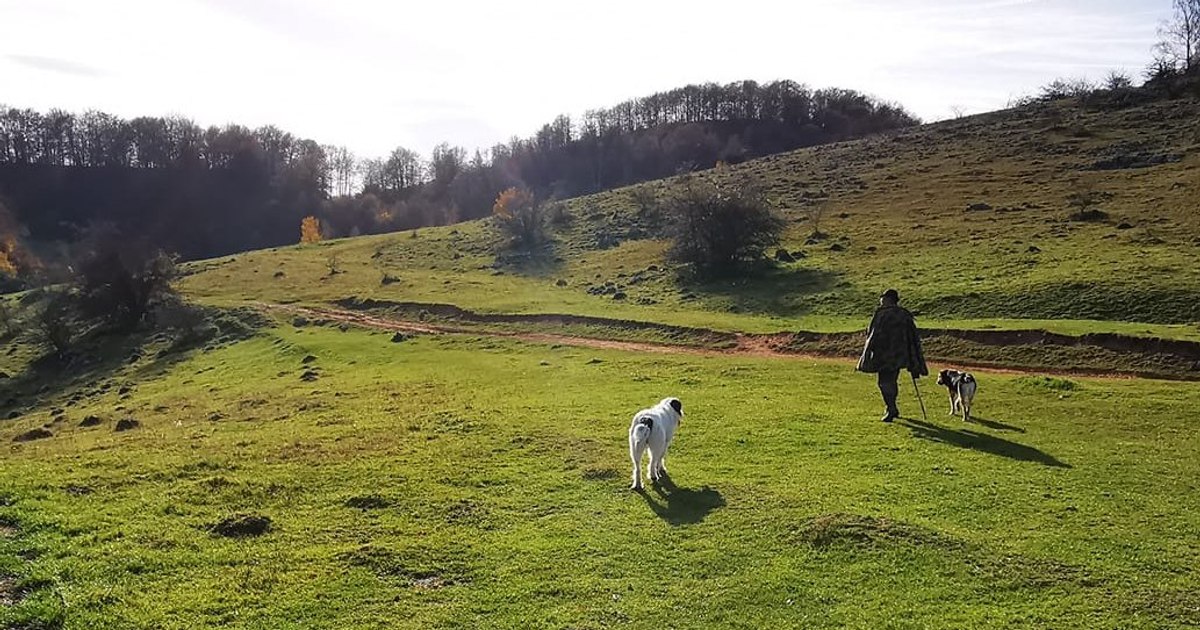
The kennel dogs often cause fear in tourists. Photo: Daniel Guță THE TRUTH
In the two years since the launch of Via Transilvanica, the tourist route of almost 1,400 kilometers, which starts from Putna, crosses Transylvania and ends at Drobeta – Turnu Severin, has become increasingly popular for hiking enthusiasts.
Via Transilvanica, one of the longest hiking trails
Via Transilvanica can be crossed on foot or by bicycle, through the counties of Suceava, Mureş, Harghita, Braşov, Sibiu, Alba, Hunedoara, Caraş Severin and Mehedinţi.
At every kilometer, its “posts” – monuments sculpted by artists, which recall the history of the places – show tourists that they are on the right path, even if the Via Transilvanica often passes through areas far from cities and busy communication routes.
During the summer, the number of hikers met on the Via Transilvanica is higher. Some dare to cover it from one end to the other, allocating even several weeks for such an adventure, most cross it in sections. In both situations, hikers find many reasons for satisfaction.
In Hunedoara (video), for example, the Via Transilvanica runs 150 kilometers passing through the Natural Park Grădiștea Muncelului – Cioclovina (Șureanu Mountains) – famous for the Dacian fortresses and for its “dead ends” Ponor and Ponorici, and at the foot of the Retezat, leaving the county in the vicinity of the former Roman colony of Sarmizegetusa, located at the Iron Gates of Transylvania.
Like any mountain route and through places less accessible to people, Via Transilvanica does not only mean the satisfaction of hiking through nature, but also responsibility. And in addition to the exhortations to set off through Romania’s mountains, tourists must also take risks into account.
For most of the travelers, the encounter with wild animals, especially bears, but also with the dogs from the numerous kennels located in the areas of Via Transilvanica represent the biggest fears. On Facebook groups dedicated to Via Transilvanica, many Romanians expressed concern about the risk of encountering shepherd dogs and bears.
Bears on Via Transilvanica
Although the bears have not caused problems for tourists who have crossed portions of the Via Transilvanica, their presence worries many travelers. The administrators of the “Via Transilvanica” Facebook page recently announced that more than 300 markers with the message “Beware of bears after dark” have been placed along the route.
“In these areas there are habitats where wild animals make their presence felt more and more often, and our attention, of those who cross their environment where they live, must be increased, both during the day and at night. Compared to previous years when we only saw tracks, this year we also met bears on the trail, even several times. Both we, the team of the Tasuleasa Social Association, those who take care of the road that unites, as well as the hikers on Via Transilvanica. The good thing is that on our path the relationship with them is not abusive, even sad in places, in the sense that you do not see bears begging for food on the side of the road as in areas that are over-populated by humans“, inform the administrators of the “Via Transilvanica” Facebook page.
Some Romanians complained that the warnings are of no use to them, in case they wake up in front of wild animals.
“Until now we were taught, and it was, that bears have no business with people. That’s why the advice was to make noise and stuff. But for the new bears, near the towns, hungry, stressed, fighting for survival, it doesn’t last anymore. how is your luck The spray? Let’s be serious. You need a toupee, no joke, to stand in front of him, within a few meters of the spray. And then, what is the phase with the bears that only come in the evening? That in fact, people would have forced the bears to eat only in the evening, because during the day people walk everywhere?“, asks a Romanian, on the Via Transilvanica Facebook group.
Mountain rangers offer some recommendations for those venturing into wild areas where there is a risk of encountering bears: make sure you have at least one hiking partner; talk, make noise, so that wild animals can hear you and avoid you; wear, hanging from your backpack, a so-called bear bell, a bell against bears; when camping, don’t keep food in the tent; carry pepper spray against bears; wear a whistle around your neck; if you notice the presence of the bear in the distance, make noise; try to avoid animals as much as possible.
Shepherd dogs, feared on Via Transilvanica
Some travelers complain, however, that they are more afraid of the sheepdogs that guard the sheepfolds on the Via Transilvanica route, than of the possibility of encountering wild animals.
Among the advice received by Romanians from other hikers is to avoid taking pets with them on the road.
“It seems that it is very dangerous to walk with your own dog on Via Transilvanica, because of the sheepfolds protected by shepherds over a wide area and the packs of aggressive dogs in the villages. It’s disappointing for me”, says one of the tourists, on the “Via Transilvanica” Facebook group.
Iulian Gabor, a member of the Via Transilvanica team, showed in a post on Facebook why tourists should not be so afraid of sheepfolds.
“The barns are generally located outside the towns, on meadows, alpine pastures, clearings, etc. They are permanent or periodic, being possible to move them from year to year. In the mountain areas, the barns are empty in the cold season. Sheep, dogs and shepherds go down to the surrounding villages, in transhumance”he writes.
On Via Transilvanica, most owners of stables were informed or found out about the route. Most have understood that it can benefit them and have a friendly approach to hiking. In fact, there are many such places where shepherds invite hikers “to a cottage” or a story, take care of them, call their dogs, and sometimes even accompany them, said Iulian Gabor, a member of the Via Transilvanica team.
“Most experiences in relation to the flocks and their dogs are positive or even very beautiful, but they are not told, which means that when someone experiences something negative and tells it, it amplifies the perception of fear”he adds.
Among the recommendations offered to tourists on Via Transilvanica, when approaching the stables, are:
“Be cautious and call the shepherd to: find out if he has dogs and to be aware of your presence so that he can call his dogs when needed. If you meet the dogs or if they come towards you, talk to them because a lot of them just look fierce and they will calm down. Try not to agitate them more by throwing rocks at them. In the extreme case that they are aggressive and won’t stop barking, you can stand back to back and walk forward gently until you see the shepherd or just sit until they calm down.” writes Iulian Gabor, on the Via Transilvanica Facebook group.
Some hikers recommend firecrackers, pepper spray or the use of trekking poles, but a friendly approach is likely to help in most cases, he added.
