
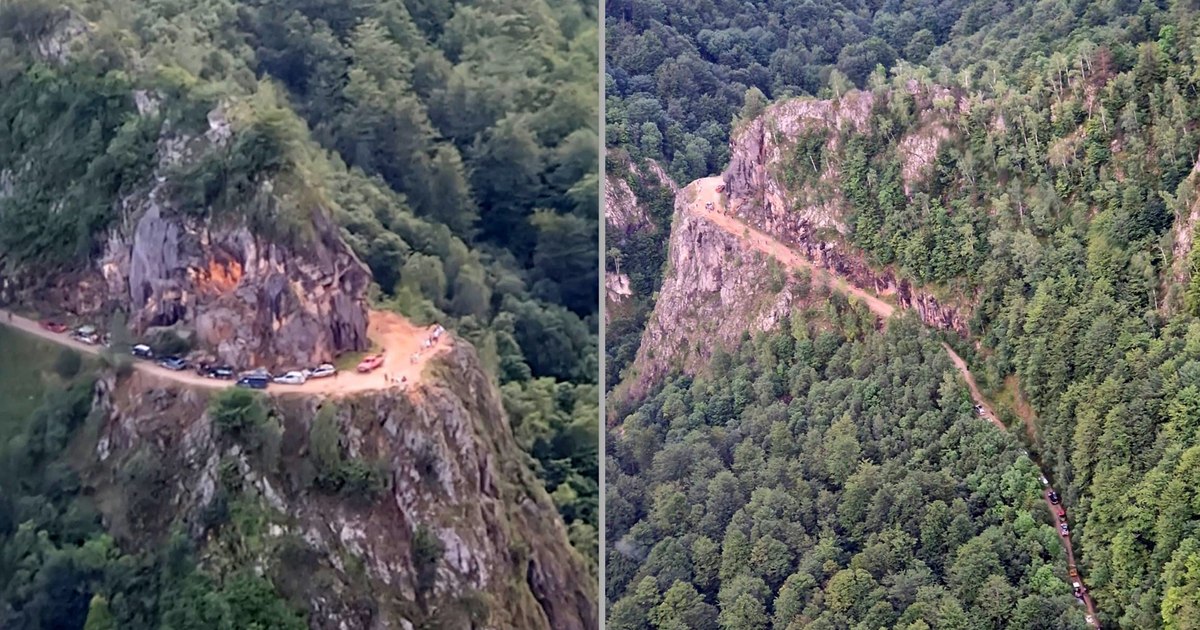
The national road that was supposed to connect Valea Jiului with Băile Herculane has been modernized at the ends, but almost half of its more than 100 kilometers remained difficult to access and, in some areas, impassable by cars. Some tourists ignore the warnings about this road.
DN 66A. Photo: ISU Hunedoara.
Tourists who venture on the National Road 66A from the outskirts of the city of Uricani, towards Băile Herculane, located about 100 kilometers away, at the other end of the Domogled Valea Cernei National Park, risk being isolated in a wild land, without a telephone signal and away from human settlements.
One such incident took place in July 2023, when more than 200 people participating in a trip across Europe, called a “carbage run”, in old cars, ventured down the route and got stuck in the mountains. Tourists, from several countries, did not take into account the warnings regarding the fact that a sector of the road is closed. Some claimed to have been guided by gps on this road.
Two decades ago, the Romanian state planned to transform the mountain road from Domogled Valea Cernei National Park into a modern road, which would connect the cities of Jiului Valley with the Danube area and the Herculaneum Baths.
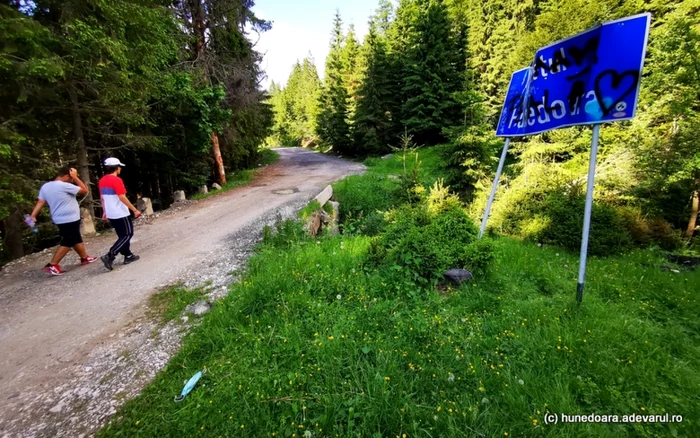
DN 66A at Campušel. Photo: Daniel Guță. TRUTH
In the 2000s, a section of about 20 kilometers of DN 66 A was modernized, from the exit from Uricani to Câmpusel, a former forest canton, at the foot of the Retezat and Vâlcan mountains. The work on the new mountain road, which stops at the border of Hunedoara and Gorj counties, was supposed to continue towards Băile Herculane, but was stopped after the protests of environmental protection organizations.
From Campušel (video), the route to Băile Herculane continues on the most difficult section of DN 66 A, a forest road impassable by cars, which plunges into the Domogled Valea Cernei National Park.
“Between kilometer 50 and kilometer 59, the road is currently impassable”, show the representatives of Domogled Valea Cernei National Park.
The worst part of the mountain road
In 2019, the National Road Infrastructure Administration Company (CNAIR) put out a public tender for the design and construction of the connecting road DN 66A km 47+600 – 66+204 Câmpu lui Neag – Cerna, which would have added another 20 kilometers to the road modern route between Valea Jiului and Baile Herculane (video).
“The road is part of the national road DN 66A and connects Câmpu lui Neag and Valea Cernei. The national road DN 66A is asphalted up to Câmpu lui Neag, then continuing with the forest road, the access of car traffic being possible only on certain sections“, informs CNAIR.
The construction of the 20 kilometers of mountain road amounted to more than 240 million lei, but the auction was canceled because no builder submitted bids until the deadline for submission of applications to participate in the auction. Since 2019, the project has not been put up for public auction.
Instead, in March, the Timișoara Regional Directorate of Roads and Bridges announced the start of rehabilitation and consolidation works on a seven-kilometer sector of DN 66A, between Uricani and Câmpul lui Neag. the road (video) opens the way for tourists to several spectacular places in the Retezat and Vulcan mountains.
From the road that crosses the West Jiului Valley towards the springs, tourists can reach Cheile Butii (video) and in Retezatul Mic.
At the end of the paved road, travelers enter the Domogled Valea Cernei National Park, through the Jiul Cerna pass, on an unmodernized road, affected by falling rocks. The route descends towards Izvoarele Cernei, at the tail of the Iovanu reservoir, then follows, on a dirt road, the outline of the lake to the Iovanu dam.
Works on the Valea Cernei – Băile Herculane section
From here, on a cobbled road, it continues through Cerna Sat and slips through the Cerna valley, until kilometer 109, where it intersects with the road DN 67D Baia de Aramă – Băile Herculane. Only from here, on the last 30 kilometers, travelers find the road.
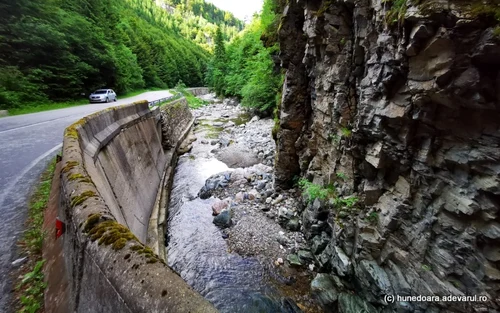
Image 1/31:
Mr. 66a
Currently, an 18-kilometer sector of DN 67 D between Valea Cernei and Baile Herculane is under construction.
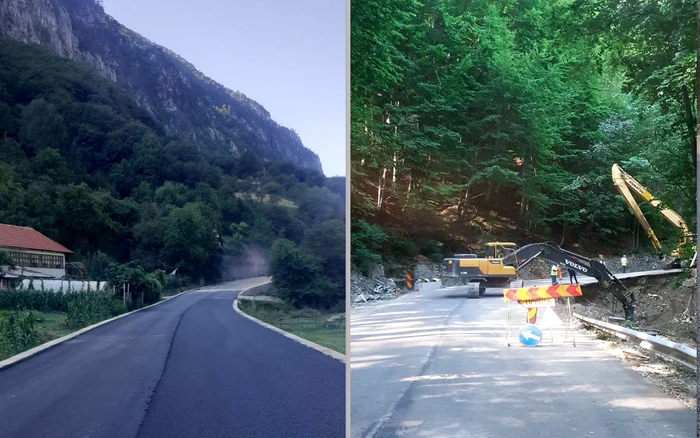
DN 67 D Valea Cernei – Baile Herculane, under construction. Photo: DRDP Timisoara
“Within the project of consolidating about 18 kilometers from DN 67D Valea Cernei – Băile Herculane, a sector within the administrative range of the Timișoara Region, the builder recently carried out works on the deepened foundations of the parapets, retaining walls in the of raw stone and cement concrete backfill, and a layer of asphalt was laid on a sector of about two kilometers“, informed the Timișoara Regional Directorate of Roads and Bridges.
