
Traveling with the family and looking for a destination full of activities for all ages? Journalists from The Telegraph Travel tried to answer the question of which are the friendliest or, on the contrary, the least welcoming holiday destinations for families with children, especially small, harder to control and usually noisier, in the off-season.
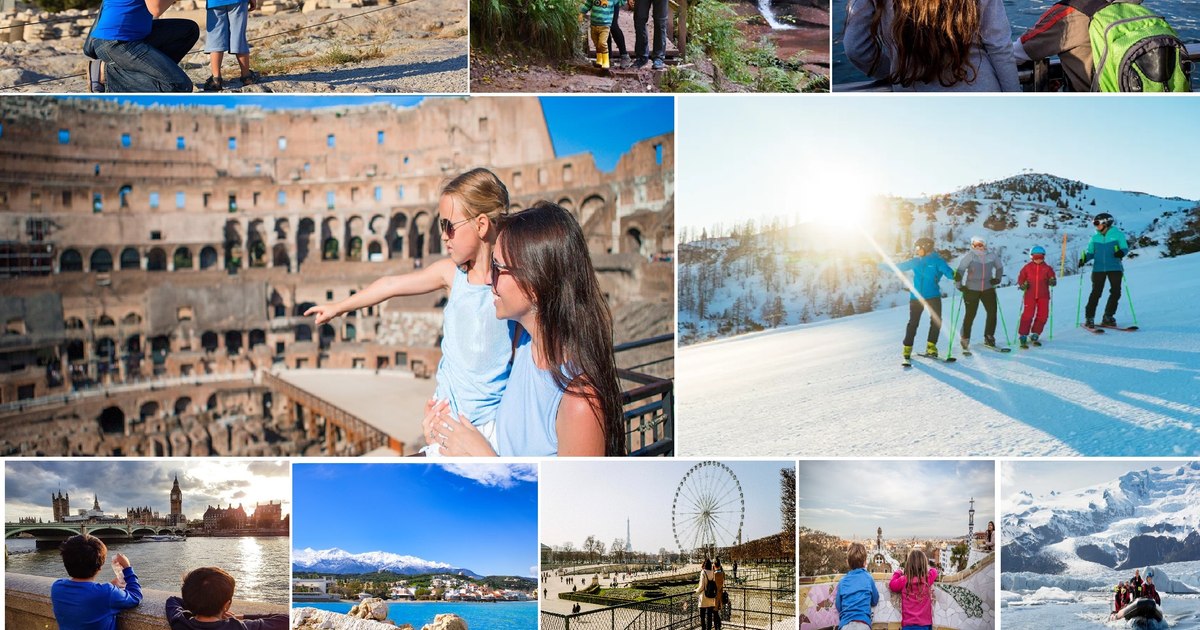
Holiday destinations for families with children more or less friendly Europe Photo Collage
Europe can be analyzed from multiple angles: accurate statistics show us the largest country (Russia), the smallest (Vatican), the one with the highest population density (Monaco) and the least crowded (Iceland, excluding Greenland) . However, there are aspects that are more difficult to quantify. Which country has the best wine? (France, no doubt). Who is the queen of gastronomy? (Also France, even though there might be disputes!). And what can we say about another aspect that is harder to measure: friendliness towards families? Is Germany the most relaxed destination for children? Is Italy the champion of the little ones? Or is there another European destination that excels at welcoming younger travelers with open arms?
This is, of course, a subjective matter. That’s why five journalists from The Telegraph Travel joined forces to explore and answer the question: what is Europe’s most family-friendly destination? And also, where is the noise of small children least tolerated?
Greece vs. Great Britain
Greece is recognized for its welcoming and friendly atmosphere, being a favorite destination for tourists from all over the world. The warm climate and clear skies contribute to an overall positive mood, while the Mediterranean landscapes and the rustle of olive trees enhance the feeling of relaxation. Although Greece sometimes faces more difficult days, its inhabitants are renowned for their constant smile and open attitude towards visitors. In particular, Greeks are very welcoming to families and children, and gestures of kindness are common. For example, in a small restaurant in Parga, a mother cook took a break from her activities to walk the child of some tourists, allowing his parents to enjoy a quiet meal for a few minutes.
In contrast, the United Kingdom was perceived as a less family-friendly destination. The gloomy weather and often gloomy atmosphere contribute to a general feeling of detachment, and amusement parks are often overcrowded, with endless queues and an atmosphere of impatience. Restaurants often seem to prefer the presence of children to be as less obvious as possible, and interactions with young members of society can seem more reserved compared to Mediterranean regions. This perception may be influenced by the fact that for local people these landscapes are part of the daily routine rather than a holiday setting, which may contribute to a less open attitude towards visitors.
Wales vs Crete – Greece
Wales stands out as an ideal destination for families, offering an open and adventurous natural setting. Children can explore trails through muddy fields, spot amphibians or enjoy hiking through streams and nights spent under tents in a genuine adventure atmosphere. Wild, unrestricted nature is an essential element of this destination. In addition, lower costs compared to other holiday locations make Wales an attractive option for families wanting a more affordable experience away from the hustle and bustle of the city.
Conversely, Crete doesn’t seem as friendly in the off-season, especially for families looking to relax on the beach. The winter sun can be chilly and scenic areas are becoming increasingly difficult to access as the island constantly attracts new hotel investment. Without a proper beach to rest on, alternatives such as the Archaeological Museum of Chania do not provide a completely satisfying experience, especially when the staff are overly demanding with children. Also, the water parks do not live up to expectations, with outdated slides, cold water and rather indifferent lifeguards.
During the cold season, the summer charm of the island completely disappears, and the unkempt beaches and desolate landscape leave the impression of a less welcoming place. Local hospitality also seems more lacking compared to other destinations, making Crete not the friendliest option for off-season family holidays.
Italy vs France
Italy stands out not only for its history, art or culture, but also for its special hospitality, especially when it comes to families with children. While other destinations may seem tiring due to endless queues at airports, hotels or tourist attractions, Italy compensates with an irresistible element for the little ones: food.
Pizza at every meal? Absolute! Spaghetti Bolognese as a refined choice? No doubt! Vegetables and fried fish, served crispy? A real feast! Adding breadsticks and gelato / ice cream to that list, Italy is quickly becoming a dream destination for any child.
But Italian hospitality does not stop there. Sardinia’s spectacular beaches are perfect for little ones, while Rome, with its tales of gladiators, fascinates children from primary school. Social media-savvy teenagers find the Leaning Tower of Pisa a perfect symbol for memorable photos, and culture-minded youngsters can explore Florence’s renowned museums.
The relaxed lifestyle, late meals and warm atmosphere make Italy a place where children are welcome and treated with affection. The only one “inconvenient”? The overflowing enthusiasm of the little ones, which may require an extra glass of Chianti for the parents.
But not all European destinations are equally welcoming to families, and France can be a clear example of this. Although it is a country famous for its culture and gastronomy, the attitude towards children of the French is not always the warmest.
Trying to encourage children to practice French can be met with a cold stare and an exasperated sigh, especially in touristy places. Patience with the little ones doesn’t seem to be a priority, and their culinary preferences are often looked down upon.
While Italians welcome families with open arms and a kid-friendly menu, in many places in France there is a certain rigidity to the dining experience, and restaurants are not always the most child-friendly.
Although France remains a fascinating destination for adults, for families with children the atmosphere may seem less relaxed. Compared to the warmth and exuberance of Italy, France can seem remote and reserved, leading many to choose other destinations for a stress-free family holiday.
Austria vs Spain
Austria stands out as an ideal destination for families, offering a perfect balance between varied activities, comforting gastronomy and a welcoming cultural environment for children. Whether it’s winter sports, hiking through spectacular alpine scenery or exploring Vienna, considered one of the most livable cities in the world, Austria manages to create a relaxed and accessible atmosphere for all ages.
Gastronomy is another strong point, from the exquisite cakes served in Viennese cafés to traditional dishes such as Viennese schnitzel. In addition, Austria – along with Germany and Switzerland – proves to be much more vegetarian-friendly than other European countries.
What really sets Austria apart is the hospitality towards families. Hotels specially designed for children (Kinderhotels), cultural activities adapted to the little ones and even opera performances performed with puppets are just some of the elements that make this destination one of the most welcoming for tourists of all ages.
In contrast, Spain can be challenging for families traveling with children, especially because of its culinary and social customs. The strict meal schedule, with lunch served after 1 p.m. and dinner often extended late into the night, is not always compatible with the needs of the little ones. Unlike France, where mealtimes are more flexible, Spain offers few options for those who prefer an earlier schedule.
While the vibrant atmosphere and local culture are attractive, the lack of family-friendly accommodations can make a vacation here require more adaptability. For tourists traveling with small children, choosing a friendlier destination like Austria can be a more comfortable option.
Turkey vs Iceland
Turkey is often perceived as an ideal destination for families due to its warm and welcoming atmosphere. Resorts such as Kalkan, located along the Mediterranean coast, offer a relaxing setting, where rooftop restaurants serve traditional cuisine while the call to prayer creates a special soundtrack. The locals are noted for their friendliness, and the visitors who return every year are greeted with familiarity.
During the day, the activities are diverse: from beach clubs and Turkish massages, to strolling through bazaars where you can buy souvenirs, counterfeit T-shirts or replica perfumes. Mint tea served on the terraces completes the local charm.
Autumn, mild temperatures and less crowded beaches such as Patara or Kaputas turn the region into a perfect retreat. A short distance away, the Saklikent Gorge offers opportunities for rafting, and the restaurants located on the edge of the river create a unique atmosphere. Also, day trips to the Greek island of Meis add extra diversity, allowing you to explore a spectacular blue cave and spot turtles that come ashore in search of food.
With its combination of nature, gastronomy and hospitality, Turkey continues to be a top choice for those looking for an authentic and relaxing experience.
Conversely, although Iceland is recognized for its spectacular landscapes, the climatic conditions and high costs can make a holiday here a challenge, especially for families. The cold temperatures, strong winds and short days of winter limit the options for exploration, and considered must-see activities like touring the Golden Circle can become uncomfortable due to the extreme cold.
Iceland’s beaches, while impressive, present significant hazards, with unpredictable waves annually endangering the lives of tourists. In addition, seeing the Northern Lights is highly dependent on weather conditions, which can lead to disappointments for those traveling specifically for the phenomenon.
The capital Reykjavik, although modern, does not offer the picturesque charm of other European cities, and high prices make any dining out considerably more expensive. Even eco-friendly benefits like using geothermal energy come with a trade-off, with the lingering smell of sulfur being hard to ignore.
In addition, local traditions such as chaotically launched New Year’s fireworks can be surprising to visitors. On isolated roads, wild horses can be another unpredictable factor, complicating the experience of exploring the island.
Although Iceland offers unforgettable sights, the tourist infrastructure, climate and high prices make this destination less accessible and more difficult for those looking for a relaxing and family-friendly vacation.
