
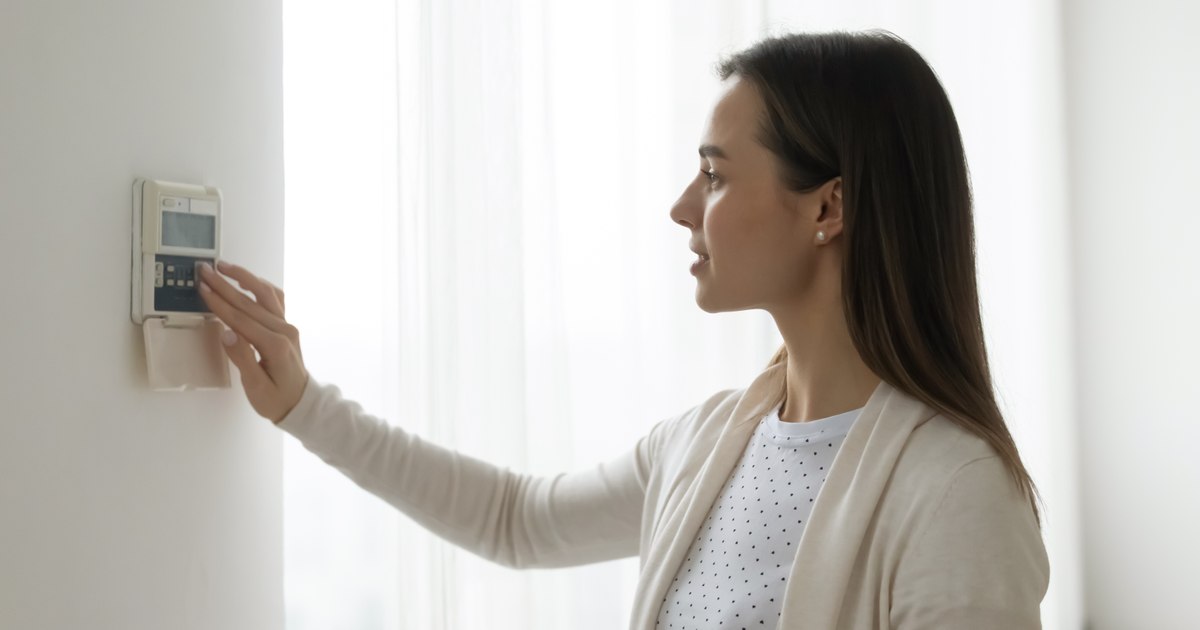
When the outside temperatures are intense, so are the air conditioners, used to the maximum.
Photo Tempwerature Thermostat: Shutterstock
At the end of June, when part of the world was under a heat dome, searches for the term “pre-alcohol” (pre-shift) increased on Google.
The idea involves a significant drop in the temperature in your home. Outside the peak hours and the use of cool air in peak hours, when the sun is strongest and the energy is more expensive, writes NPR.
A researcher has reserves
The researchers have long thought about how to make people less dependent on air conditioning systems, among them Daniel Barber, architecture professor at the Technical University of Eindhoven, the Netherlands.
He and his students have researched aspects such as better ventilation strategies and redesign buildings. As for pre-rooting-sometimes called super-robing-Barber said it could be a good starting point, with a few reserves.
“The operation of an air conditioner at 15.5 degrees Celsius will consume a lot of energy and will also produce a large amount of HFC, which involves significant costs”, he said.
The HFCs are hydrofluorocarbons, a type of greenhouse gas. Most HFCs are contained in equipment, so that emissions occur due to wear or maintenance, according to the coalition for climate and fresh air. But Barber said that excessive cooling could be effective if you take care of the air conditioning system and hold the windows and curtains.
If nothing else, Barber said, do not stop and start the air conditioner repeatedly if you want to save energy.
“It takes a lot of energy to start it, to cool the room once it heated”, he said. “You must note that the air conditioning does not cool the room. It just eliminates the hot air. So if it is hot in the room, give it a lot of work.”
What do electricity companies say
The energy department recommends an initial interior temperature between 23.8 and 25.5 degrees to save energy during summer days. Pre-root opinions vary among electricity companies.
ARIZONA PUBLIC SERVICE is generally in agreement with this idea. This suggests to customers who want to reduce their bills to lower the thermostat temperature in the morning, to increase it during peak hours, between 16:00 and 19:00, and then set it as they wish.
Georgia Power, the largest electricity company in the state, encourages customers to consume less energy during peak hours, between 14:00 and 19:00. However, the company said that a home should be extremely effective for pre-rooting to work and mentioned that there is no concrete interval of temperatures to make this most effective method.
“It would depend a lot on the efficiency and size of the home, on the outside temperature, on the temperature at which someone feels comfortable, etc.”,
said Matthew Kent, Georgia Power spokesman for NPR.
And Exelon Corp., which operates six electricity companies in the middle Atlantic area, states that the super-root can actually be more expensive.
“The operation of the thermostat at the lowest settings, even during colder temperatures, could lead to excessive energy consumption and overloading household systems, eventually increasing the costs and creating potential safety risks,” said the company spokesman James Gherardi, for the NPR in a statement.
Other tips for saving energy
Finally, Barber said that changing the thermostat throughout the day could be an important adjustment for those who usually maintain it at a set temperature.
Instead, he recommends concentration of cold air in several areas of the house using fans, certain programmable air conditioners or window air conditioning and spending time in those parts of the house during peak hours.
And, although there is no consensus on the pre-ratio, the sources for this article agreed on several other tips that can make the house more efficient and, in turn, more accessible.
These include:
Regular change of air filters
Eliminating air currents from the windows and doors of the house, using materials such as mastic or sealing gaskets
Using large appliances that generate heat, such
Maintaining curtains and blinds closed during peak hours
Programming the air conditioning system to increase the temperature in the house when you are not there
Using LED Energy Star LED bulbs instead of incandescent bulbs
