
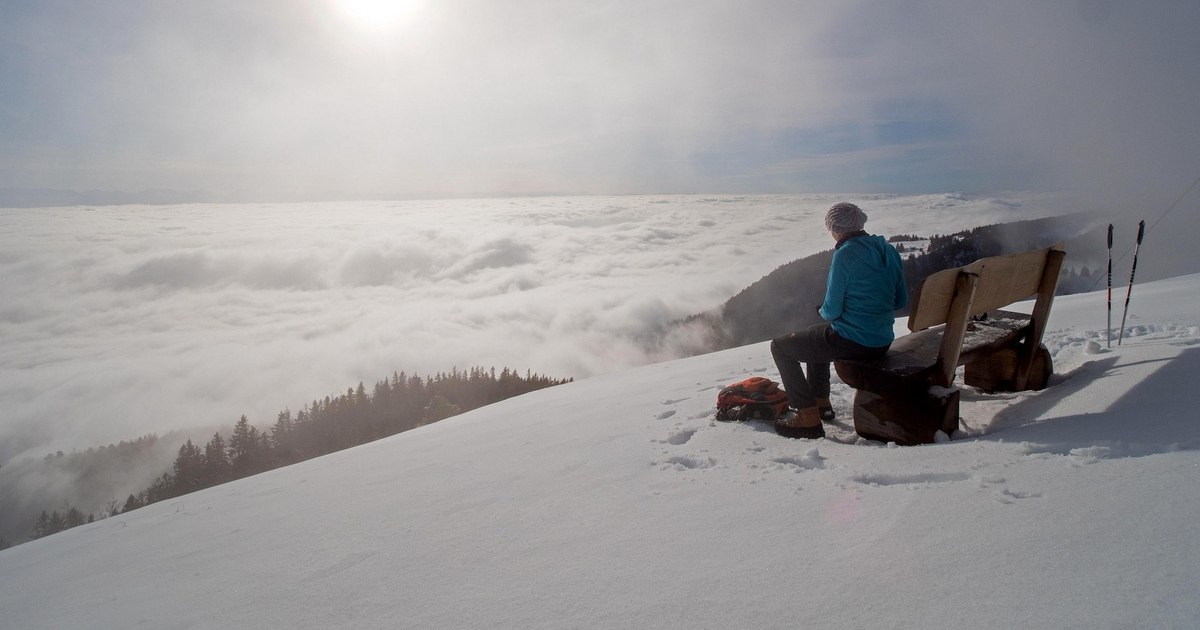
The Făgăraș, Bucegi and Retezat mountains have been the sites of many tragedies and dramatic events over time to which their explorers fell victim. In winter, the risk of accidents on the mountain increases exponentially, and the victims are often unprepared and careless tourists.
Mountain hiking offers many satisfactions. Photo: Pixabay.com
Winter has made its presence felt in the alpine areas, and the first warnings regarding the risks to which tourists who reach the ridges of the Făgăraș, Bucegi, Retezat or Parâng mountains are exposed were published in the most recent meteorological bulletins of the National Meteorological Administration.
The first snows increase the degree of risk on the mountain
According to ANM, the snow is more consistent at altitudes above 2000 meters, especially in the Bucegi massif and in the east of Făgăraş, where the layer reaches up to 25 centimeters. The precipitation expected in the next period will bring new deposits, which can also form ice crusts on the surface.
“Thin wind slabs have formed in the ridge area, and more are expected to form, especially on the northern slopes. There is a risk of small to medium-sized avalanches, which may engage the upper layer of unstable and slightly wet snow against the backdrop of daytime temperatures close to 0 degrees Celsius. The risk increases with any overloading of the snowpack by tourists or skiers and remains at a moderate level.” it is shown in the latest nivometeorological bulletin of the ANM.
Along with Făgăraş and Bucegi, and the alpine areas from over 1800 meters of the Parâng–Retezat, Țarcu–Godeanu massifs, as well as those in the Eastern Carpathians (Rodnei, Călimani, Ciucaș mountains) are at risk of small flows or avalanches, especially in high areas, caused by the sliding of fresh snow over the old.
Such phenomena can manifest themselves especially on shaded slopes, where the persistent snow is unstable. As winter progresses, the risks and dangers in the mountain area will become greater.
In winter, in addition to the risk of avalanches, tourists have to face other dangers specific to alpine areas.
One of them is the disappearance of markings under the snow, which significantly increases the risk of getting lost. Fog, wind and snowy ridges reduce visibility, increasing the danger. Cornices, which are massive deposits of snow that hang over gaps and can yield to a simple step, are one of the reasons why some routes in Retezat, Bucegi and Făgăraș are prohibited in winter.
In addition, rocky areas covered with ice, as well as snow bridges formed over ravines or streams in glaciated regions, are extremely risky. Another problem is the extended duration of the trails, at a time when the trails become difficult to access, the weather is capricious, and the days are short. In the event of an accident, tourists must take into account that Salvamont interventions can be extremely difficult or even impossible in some alpine areas.
“There is no safe zone in the mountains”
During the winter, alpine routes at high altitudes and crossing steep slopes should be avoided, warns Salvamont Romania. Mountain rescuers point out that death on the mountain is not a heroic act, but the consequence of negligence.
“Never enter a closed area. Do not go out alone. Check weather reports, avalanche forecasts and local information. Use appropriate materials and check their condition. Notify a route contact. Follow the advice of an experienced person who knows the area well. Do not advance in a compact group, but behind each other at a safe distance. Announce if you are late. Request information from professionals: mountain rescuers, guides, lodgers, ski instructors. Consider that there is no safe zone!”, Salvamont Romania representatives send.
Emilian Cristea, one of Romania’s great climbers, in his last article published in 1982 in the magazine România Pitoreasca (before he died) offered advice to those who cross the mountains in winter.
He stated that the success of a mountain ascent is ensured by the homogeneity of the group, and health, physical condition and equipment create a good mental state only if the route has been chosen to suit all participants.
“Insufficient nutrition before the ascent, going without an experienced guide, choosing routes that exceed physical possibilities, recklessness, inappropriate equipment for the season, fear and alcohol consumption are the most feared enemies of the causes that lead to mountain accidents”, added the climber.
Ignorance of the mountain, of its written or unwritten laws, represents a permanent danger, especially for young and daring beginners, he said. Not all mountain hiking is dangerous, however. Those who take the necessary precautions and do not venture into places where they can endanger themselves find in them a means of staying active and invigorating and the satisfaction of nature walks and authentic winter landscapes.
