
The Minister of Education announced on Monday that the 12th grade high school students will have to study the “History of Communism in Romania”. The decision is motivated by “nostalgia” for those times among young people who have not caught a single day of communism, caused by ignorance of historical facts.
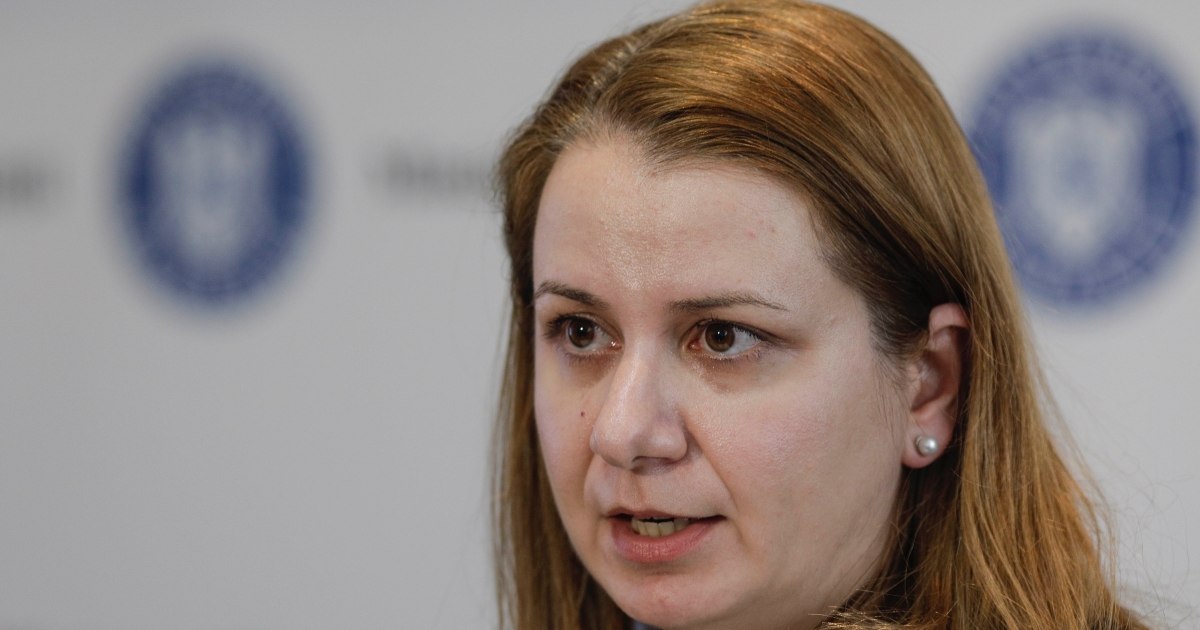
Ligia Deca announces a new subject for 12th grade students. Photo Inquam/Octav Ganea
Present at the event “35 years since the Romanian Revolution of 1989: Approval of the school program for the discipline “History of Communism in Romania”, Ligia Deca declared that it is absolutely necessary for young people to know the historical reality in Romania, before exercising their right to vote for the first time, so as not to allow themselves to be manipulated so easily.
The Minister of Education believes that the nostalgia for communism of many of them is manifested in the absence of information about that period. For this reason, the History of Communism in Romania will be studied in the 12th and 13th grades in the evening education and with reduced frequency, notes Antena3.
“Nostalgia for sadly remembered times has complex causes, but one of the most important of these causes is ignorance of historical facts. The phenomenon is worrying, all the more so since it seems to be registered within different age categories, including among young people who have not lived even a day under the communist regime, some being born even after Romania’s accession to NATO or the European Union . (…)
This subject is dedicated to students from the 12th grades of day education, respectively the 13th grades of evening and part-time education. In other words, all high school students in Romania will complete this discipline. I would add that all students will go through this discipline even when they approach their first democratic vote, when they approach the age at which you become mature and start to become an active citizen, including through the democratic gesture of voting”. said Deca, at the Faculty of Letters of the University of Bucharest.
Among the study topics will be institutions, policies and social realities from the period of the communist regime, but also repression and forms of resistance, as well as everyday life or protochronism. Also, the curriculum integrates relevant case studies such as Radio Free Europe, Decree 770 from 1966 or the Warsaw Treaty, offering a clear picture especially of how political or historical decisions have affected people’s lives.
Practically, the subject proposes that at the end of the course high school students can form a “balanced and documented” image of what communism represented in Romania.
Objective presentation of facts
The minister specified that the matter is not a simple course about the past and it will not be an ideological exposition, but an objective presentation of the facts. Also, the discipline will not be “a judgment of some or others”, but will explain to the students what happened, inviting them to a critical reflection, Ligia Deca also declared.
“You will ask us why it was necessary to introduce a discipline specifically dedicated to the history of communism in Romania. (…) First of all, the current context confirms that we need our students to know and understand the events that determined the past and that still mark the present.
We have the obligation in schools and universities to combat the ignorance and manipulation that derives from ignorance of history. Inadequate knowledge or even the lack of knowledge of historical facts from the period of the communist regime leaves room for distortions that can also influence social and, as we have seen, electoral behavior. In addition, these lessons are also for the future”, the Minister of Education also said.
“The optional “History of the Revolution of 1989 and the change of regime in Romania” represents an act of memory and gratitude for those who fought and sacrificed themselves for Romania to carve its way to freedom and democracy. (…) It is a lesson about the fragility of freedom and how through indifference or complicity, sometimes out of ignorance, evil can become trivial… The students, we hope, will understand that democratic values and human rights must never be considered as guaranteed and that any slip-up can have tragic consequences“, explained Ligia Deca.
