
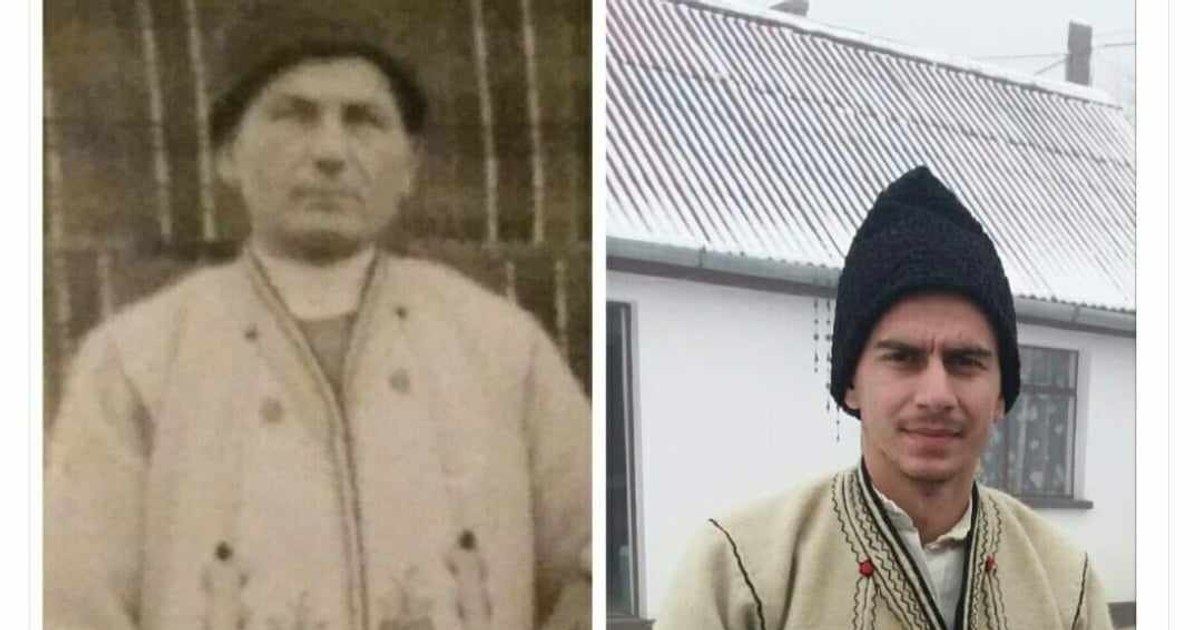
Alexandru Chiș, the young man from Arada who opened his Ethnographic Museum in Covăsânt, right in his parents' house, proudly wears a coat that his great-grandfather received as a gift.
Great-grandfather and Alexandru wearing the coat PHOTO Alexandru Chiș
The coat is now worn by Alexandru at various events and when he has tourists at the museum. Everyone admires him, especially since he's a real jerk.
The young man from Arad says that this branch is the most important legacy.
“It is a festive outfit from the Podgoria Aradului area, Covăsânt town. In winter, men wore trousers on the leg, slightly puffed at the top, a shirt, breastplate or breastplate and a white coat, decorated on the sleeves and pockets with red, orange and black embroidery. They covered their heads with astrakhan hats“, says Alexandru.
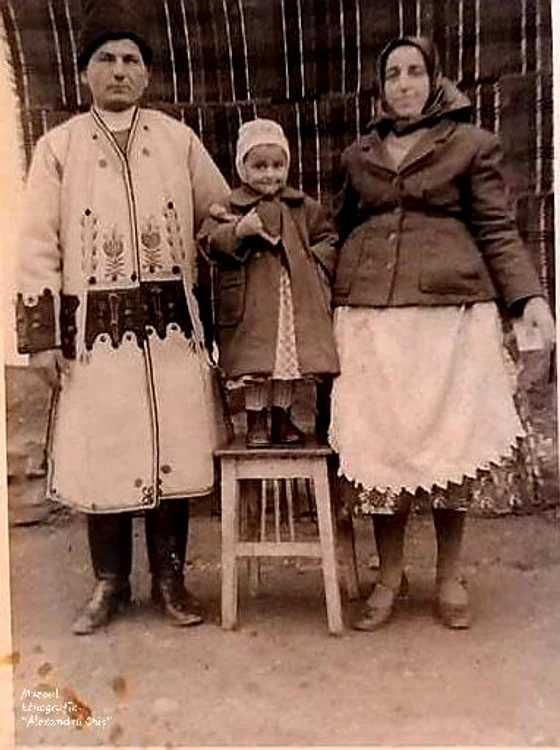
The great-grandfather wearing the coat PHOTO Alexandru Chiș
We also learn that in Covăsânt, the skirt was designed and worked by a woman, known in the community as Bănoie.
Alexandru also posted a photo on the social networking site Facebook in which he says that he and his great-grandfather have this clothing in common:
“Shuba, the most beautiful heritage. Conceived and crafted by Bănoaie, the coat was received as a gift in 1945 by my great-grandfather (Herlo Ioan) from Herlo's great-grandmother Iosana (born Bogari). It was offered to him because his son-in-law came from the village of Chereluş and to be “in line” with the people of Covasan”.
According to DEX chuba – wide and long coat with a large collar, lined with fur and worn mostly by men.
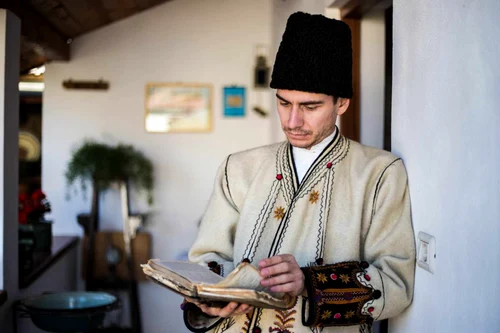
Image 1/5:
File 2 jpg
The Ethnographic Museum of Covăsânt-Arad was set up in the parental home of Alexandru, who decided to preserve and show the world a part of the village's history.
Economics teacher
Alexandru Chiș is a 28-year-old economics professor, and the museum is called “Zestrea Satului” from Covăsânt-Arad. The activity of the museum started on December 4, 2016.
At that time, the collection consisted of 600 pieces, and today it has more than 2,000 pieces. In the place of honor stands an old Scripture from 1874, a family heirloom.
