
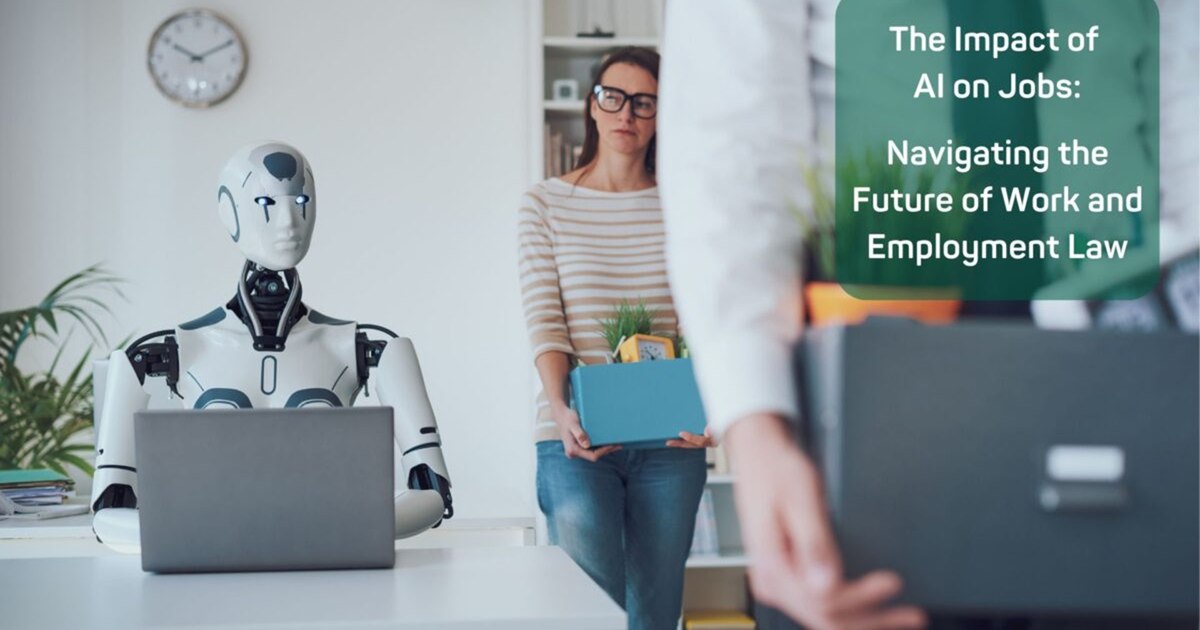
“Sooner or later, artificial intelligence will take your job”. It is not a alarm launched by conspiracy or SF scenario, but the warning of giants like Microsoft, who cause us to look carefully at the future of the labor market. Recently, the company has published a huge study, meant to answer a question that bothers many: what trades are in danger and which of them will withstand intelligent robots?
AI: Either take our jobs or radically transforms Photo Seddons DMS Com
As you read the present material, you will discover how the AI quickly takes on tasks related to writing, analysis and documentation, from drafting reports to financial counseling, but also what jobs remain almost impossible to replace-where human hand, experience and empathy are insubstitute. You will explore a top 40 of the trades difficult to automate, from nurses and specialized surgicals to construction or embalming workers, each with its unique role that robots cannot reproduce, for now.
And it’s not just about what we lose. The revolution would also bring new opportunities, creating professions that did not even exist a few years ago – such as prompt engineers, those who “I translate” People’s thoughts in the language that AI understands, turning simple commands into complex texts, images or projects.
Finally, the Microsoft study shows us that the robots do not steal our jobs, but the way we choose to use them. The question that remains is a simple but essential one: are we ready to change with them?
What does Microsoft study say
Research entitled “Working with AI: measurement of the occupational implications of generative” He analyzed 200,000 anonymous conversations worn with Microsoft Churches, the company of the company. The purpose: to see in what types of tasks people ask for the help of artificial intelligence and how much these activities overlap with what professionals do in real life.
The results seem clear: the AI quickly takes on activities related to writing, analysis and documentation. From drafting reports and articles to financial counseling, the Ai proves that it can work quickly, cheaply and sometimes surprisingly good. They all have a common denominator: language and analysis addiction-exactly the areas where the AI excels.
At the opposite pole there are hard to automate trades, where the human hand and empathy cannot be replicated. These trades show a simple truth: the AI can write a poem, but cannot pick up a house or save a patient on the operating table.
However, Microsoft study can be considered subjective, because it is based exclusively on the analysis of online interactions and users searches on certain topics. Therefore, it does not necessarily reflect the complete reality of all the trades. For example, certain professions that seem difficult to replace, such as the dishwasher, could be successfully automated, but do not appear in the data analyzed because users do not look for information about these jobs online.
The most exposed trades
Carlos Fenollosa, an entrepreneur and teacher, synthesized the list of the most vulnerable professions. Among them:
- interpreters and translators;
- journalists and publishers;
- historians, political scientists and mathematicians;
- personal financial counselors.
The common element of all is the focus on language and analysis tasks-areas in which the AI performs very well.
The jobs that robots cannot steal
At the opposite pole there are hard to automate trades, where the man’s hand and empathy cannot be replicated:
- workers in construction and maintenance of roads;
- oro-maxillofacial surgeons;
- medical assistants and massage therapists;
- Foresty workers or in oil and gas exploitation
- dishwashers and households.
These jobs reveal the essence: the AI can produce content, but cannot replace the manual skills and vital decisions of the people.
Top 40 trades hard to replace AI
- Flebotomists – specialists in blood sampling.
- Nurses – help patients in hospitals and clinics.
- Dangerous material workers – cleanses toxic substances.
- Aids for painters and masonry – support in construction and finishes.
- Swissing (Tanators) – deals with the preparation and care of the bodies.
- Industrial equipment operators – control machines in factories and factories.
- Oro-maxillofacial surgeons-specialized doctors in complex facial operations.
- Car window assets and reparators – replace and repair the glass of cars.
- Naval engineers – build and maintain ships.
- Tire mounting and exchangers-work in car services.
- Dental technicians specialized in prostodontia – do dental prostheses.
- Unskilled workers – support manual activities on the site.
- Workers in road maintenance – repair and maintain streets.
- Preparators of medical equipment – clean and prepare the equipment.
- Packing and filling operators – work in factories to pack the products.
- Car manipulants – operate production machines.
- Dishwashers – in restaurants and canteens.
- Masonry workers and finishes – works with concrete and cement.
- Fire supervisors – coordinates teams at interventions.
- Operators of industrial and tractors – lead heavy cars on site.
- Ophthalmic medical technicians – help diagnose vision problems.
- Kinetotherapists-helps patients regain their mobility.
- Surgical assistants – helps doctors during operations.
- Tire workers – works in the manufacture of tires.
- Help for roofing specialists – supports the mounting of roofs.
- Gas stations operators – control gas equipment.
- Crafts in mounting and repairing the roofs – mount and repair roofs.
- Oil and gas workers – works on the extraction of natural resources.
- Housekeepers and people who clean – cleaning in houses and buildings.
- Operators Machinery for paving and compaction – works on roads and sites.
- Forest equipment operators – work in forests.
- Small boats operators – lead small boats.
- Maintenance and cleaning staff in hospitals/career – various aids in hospitals and institutions.
- Polish and floors of floors – deal with the floors.
- Operators Mixing Mixing (Malaxor pilots) – operates cars for foundations.
- Railway equipment operators – maintain railway lines.
- Workers at molds and casting – manufacture of metal components.
- Operators Water treatment installations – maintain water systems.
- Workers at bridges and metal structures – repair and maintain metal bridges and structures.
- Excavative operator and land equipment – uses cars for excavations and land maintenance.
The new trades of the era Ai: the angel of prompts
It’s not only about what we lose, but also about what we win. The revolution has also created completely new professions. The most sought after: Prompt Engineer or prompting engineer.
Its role is to “Translate” Human desires in a language that AI understands. A good prompt can make the difference between a trivial text and an excellent ratio, between an unsuccessful image and a visual campaign of millions.
Wages? Between 70,000 and $ 150,000 a year in the US and Western Europe.
Conclusion: No robots take our jobs, but the way we choose to use them
Microsoft study emphasizes that we should not look at artificial intelligence as an inevitable enemy, but as an instrument. In many cases the AI does not “steal” The job, but changes it radically. The real question is: are we ready to change with it?
