

In the fight against cancer, each form of therapy plays an important role in preserving the quality of life and reducing the side effects of conventional treatments such as chemotherapy or radiotherapy. Physical therapy is increasingly recognized as an essential component of cancer treatment, and recent research supports its integration into multidisciplinary patient care.
Alexandra Rusu, physiotherapist at Kinetic Sport & Medicine
Statistics show that patients who benefit from well-structured physical therapy programs show better physical functionality and a higher quality of life compared to those who do not follow such programs. In addition, physical therapy can play a preventive role, reducing the risk of recurrence – according to the European Society for Medical Oncology and helping patients maintain an active and healthy lifestyle.
Among the most important benefits observed in oncology patients who underwent movement therapies, Andrei Nicolae, physiotherapist and trainer at Kinetic Sport & Medicinestates: “reducing stress and anxiety, regaining muscle strength and joint flexibility, preventing muscle atrophy and improving balance”.
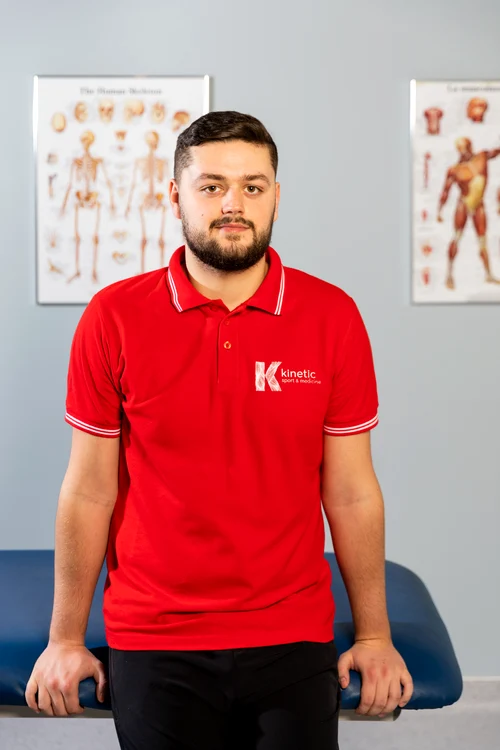
Andrei Nicolae, physiotherapist and trainer at Kinetic Sport & Medicine,
Dragoș Rusu, physiotherapist and manager of Kinetic Sports & Medicinedetails other benefits for the well-being of patients: “from a clinical point of view, in patients who follow recovery sessions we can observe the reduction of chronic fatigue syndrome, depression, improvement of insomnia, increase in physical condition, decrease in the risk of falls and fractures and increasing self-esteem’.
The role of physical therapy in the management of oncological conditions
The multidisciplinary approach is considered to be the gold standard for cancer diagnosis and treatment, because it ensures complete and effective care through close collaboration between specialists. According to the American Cancer Association, in 2024, approximately 70% of cancer centers in the US will include physical therapy as part of their treatment plan, up 30% from 2019.
Together with the physiotherapist, the oncologist establishes a personalized recovery program, depending on the type and stage of the condition, as well as the patient’s therapeutic response.
“For the maximum efficiency of the physiotherapy sessions, the collaboration of the therapist with the multidisciplinary team responsible for patient care, consisting of an oncologist, nurse, psychologist and sometimes even a nutritionist, is essential. They will then consult each other constantly in relation to the evolution of the treatment plan, but also to re-evaluate the recommendations in the event of possible changes or complications during the recovery sessions”adds Andrei Nicolae.
The integration of physical therapy in the stages of treatment
The stage of cancer treatment significantly influences the recovery plan because the patient’s needs and capabilities change from stage to stage.
Alexandra Rusu, physiotherapist at Kinetic Sport & Medicine explains what the integration of movement therapy into the treatment plan of oncology patients looks like:
“Before starting the treatment, the patient’s condition and capabilities are evaluated and the goals are set according to the type of cancer. The most common are increasing mobility and muscle tone, through light aerobic exercises, encouraging walking and stretching. During the treatment, the aim is to manage fatigue, reduce pain and relax the patient both physically and mentally, the exercise plan always adapting according to the side effects of the oncological treatment which can be manifested by nausea, pain, peripheral neuropathy, weakness. In the post-oncological treatment stage, the focus is on the recovery of mobility, muscle strength, but also on breathing exercises.“
Therapy recommendations according to the type and stage of the condition
Depending on the type of condition, the oncologist together with the physiotherapist determine the best form of treatment, to effectively respond to the particularities of the disease.
“For patients diagnosed with breast cancer, before and after surgery, but also during radiation treatment, breathing exercises are recommended to preserve the mobility of the upper limb and chest. In the case of lung cancer, light breathing exercises are also recommended, and for prostate cancer, exercises for the pelvic muscles“, adds physiotherapist Alexandra Rusu.
Physiotherapist Dragoș Rusu approaches the treatment plan in depth and provides examples of procedures he applies in sessions with oncology patients. He mentions medical massage performed in the case of breast cancer, which has very good results in preventing lymphedema of the upper limb, but also electrotherapy which reduces pain and edema by limiting nerve compression, ensuring increased joint mobility.

Dragoș Rusu, physiotherapist and manager of Kinetic Sports & Medicine,
Another procedure is laser therapy, which is used to treat the side effects of radiation therapy because it promotes tissue healing.
Physiotherapy not only complements traditional oncology treatments, but plays a crucial role in improving clinical outcomes and the quality of life of oncology patients. The expansion and accessibility of these programs are important steps in the holistic and modern care of patients diagnosed with cancer. It is essential, however, that physical activity recommendations are adapted to the individual needs of patients, taking into account the type and stage of cancer, as well as the treatments received.
