
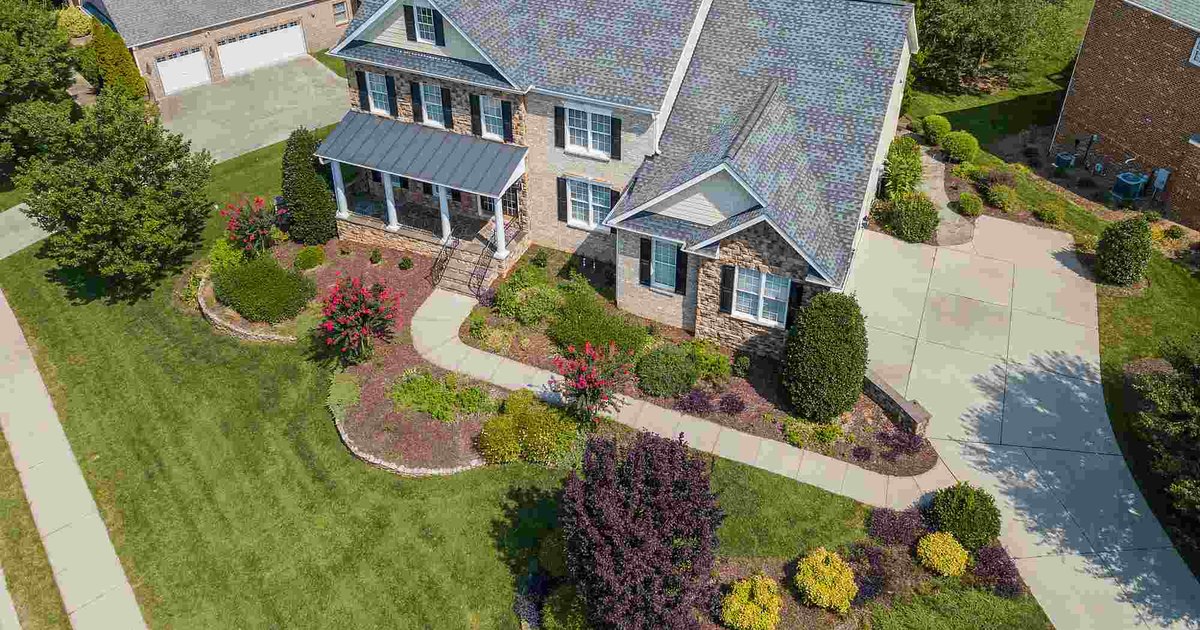
Lawn can be the perfect choice to add value to your garden. In addition to the special aesthetic appearance, it is also an element that actively contributes to the thermal comfort around the house.
In this way you can enjoy a real refuge in the yard of your home even on hot days. With care for the environment and care for the lawn, it is important to apply the right fertilizers to help it maintain its intense green, health, and impressive appearance. Choosing green space, instead of an asphalted surface, comes with a number of thermal benefits.
How natural grass helps to lower the ambient temperature
High temperatures can feel uncomfortable and cause you to look for solutions to cool off. If you live at home and want to spend as much time as possible on the terrace or in the garden, you can think of some natural elements to lower the ambient temperature. Replacing artificial surfaces with a vegetable one can be a good solution. Plants, including blades of grass, absorb water from the soil through their roots and release it as vapor into the atmosphere. As the water evaporates, the surrounding air cools, the principle that an air conditioner also uses, but without the energy consumption. A square meter of lawn can evaporate up to two liters of water daily, and the effect on a larger scale is spectacular. Thus, in a yard of 100 square meters of lawn, the temperature can be 3-4 degrees Celsius lower than a surface covered with concrete or asphalt. This is felt both at ground level and inside the home, especially if the windows or walls are near the green area. It can be said, therefore, that the green space helps to create a suitable microclimate for you and your home.
Concrete heats up, grass cools
Asphalt, tiles or paving absorb heat quickly during the day and release it slowly at night. The lawn functions, instead, as a tool for a thermal balance. In addition to the cooling effect, natural grass also reduces the reflection of sunlight. Unlike glossy surfaces, which reflect light and can increase thermal discomfort, lawn partially absorbs it and transforms the energy into biological processes. Thus, a green yard not only looks more pleasant, but also contributes to a more balanced microclimate, especially during dry summers.
The thermal benefits that the lawn has for the home
A lawn strategically placed around the house not only influences the air outside, but also the temperature inside. By reducing the heat radiated from the ground, the walls of the house stay cooler and the air conditioner is used less. In addition, the ground covered with grass maintains constant humidity and prevents excessive drying of the air, a factor that contributes to respiratory comfort and the protection of building materials.
Turf also has the ability to filter dust and reduce noise. The dense layer of grass and soil acts as a sonic sponge and manages to dampen sounds from traffic or the neighborhood. In a small yard, these effects are felt immediately: the air is cleaner and the temperature milder. A study, cited by ScienceDaily, revealed that the temperature in those neighborhoods dominated by impervious surfaces is higher than in urban parks, up to two degrees warmer both day and night. For example, when you are sitting in a parking lot on a hot day you feel the heat strongly, and when you are on the lawn it is cooler. Considering that natural grass manages to lower the ambient temperature, lawn can be the solution for the optimal microclimate of your home.
Photo source: pexels.com
