
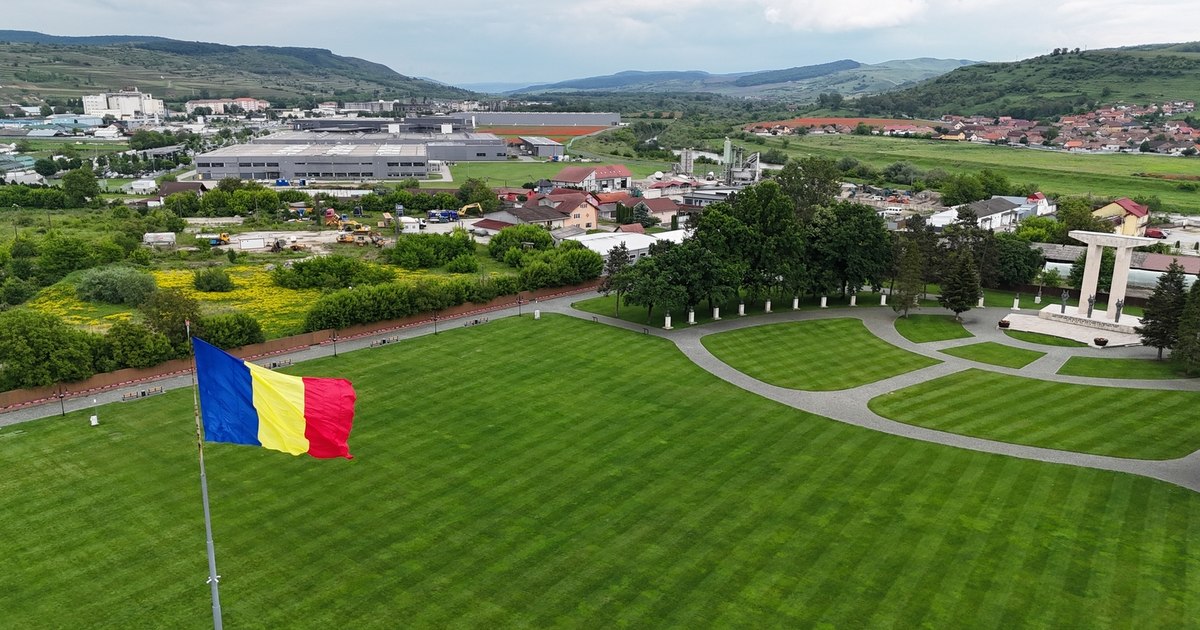
Blaj, a city with 18,000 inhabitants of central Romania, seems to have found the recipe for successful success, supported by great private companies that have been attracted to invest here.
The Freedom Plain of Blaj. In the background Bosch plants. Photo: Daniel Guță. TRUTH
Less than 18,000 people live in Blaj (Alba County), one of the most developed economically small cities. At the success of the city in the central area of Romania, 40 kilometers from Alba Iulia, they have contributed the major investments started since the 1990s and continued in the following decades.
Unlike Blaj, numerous cities in Romania with 20,000 – 30,000 inhabitants have reached the threshold of bankruptcy in recent years.
The most affected were the old mono-industrial cities, which failed to “reinvent” themselves following the decline of the industries on which they were relying on. Although praised in the past, mining cities like Lupeni, Vulcan, Petrila or Brad (Hunedoara county) remained far behind Blaj regarding investments.
In the decades of communism, the economy of the city of Blaj was based on its two large factories: the wood processing combination, established in the early 1960s, and the accessory accessory company (Iamu), with a fine mechanics profile, opened in the mid -1970s.
The industrial decline of the 1990s, cushioned quickly in Blaj
In the 1980s, the two big factories in Valea Târnavelor had almost 5,000 employees, Blaj and the surroundings of the city. Other locals worked in viticulture and agriculture, the region having an old tradition in the production of white wines.
After 1990, the industrial decline affected most state -owned enterprises, and those in Blaj were not protected from restructuring, layoffs and bankruptcy. In the 1990s, the construction of a brewery attenuated the shock of the first massive dismissals in the local industry.
In the 2000s, when the Blaj furniture factory was preparing the bankruptcy, the German Bosch group gave the economic return of the whole area, by opening in 2007 its first car component factory.
“At Blaj, Bosch came because of the great tradition in the industry we had, in fine mechanics, Iamu Blaj, one of the best factories in Romania”, Reminds the mayor Valentin Rotar.
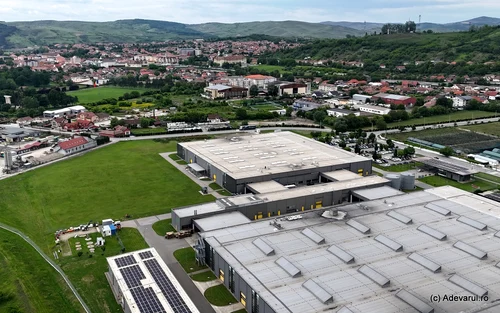
Image 1/20:
City Blaj Photo Daniel Guță Adevărul (130) JPG
Initially, the Bosch group opened a linear technique plant. Since 2013, the group has expanded by opening new production units.
“Bosch produces in Blaj components for the automotive industry, such as: wheel speed sensors, turning tree speed sensors, sensors and electronic components for the motorpropular group”informed the company.
In recent years, the German group has had over 2,500 employees in Blaj, both from the city and its surroundings. Other companies were also attracted to invest in the city about 30 kilometers from the Transylvania Highway and crossed by the CFR 300 bus, modernized as part of the Paneuropean IV corridor.
In addition to private investments, the authorities in Blaj are proud of the public works they have managed to support.
The Multipurpose Hall in Blaj
The best known of them is the Multipurpose Hall, built in Blaj, from own funds of the municipality and from the Alba county budget. Here the female volleyball team of Alba Blaj, champion of Romania activates.
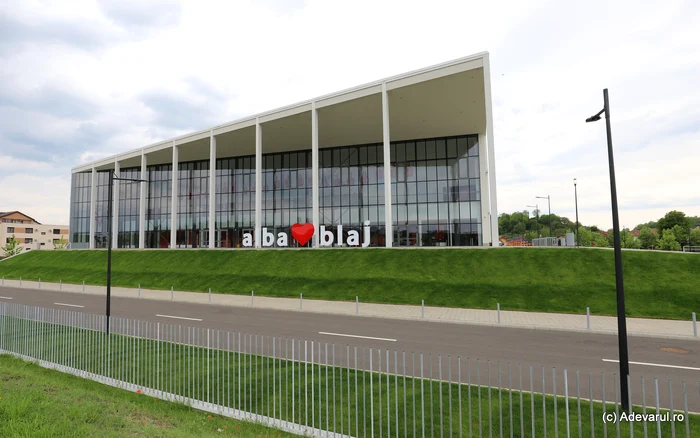
The Multipurpose Hall, with 2,000 seats. Photo: Daniel Guță. TRUTH
Students in Blaj can use the training room for free. The football and athletics fields in Blaj, modernized, are also made available to the locals, and in the recently built swimming pool can participate in swimming courses.
A new library is currently built in the municipality of Blaj, recognized in the past as one of the cultural landmarks in the Transylvania region.
Blajul, historical and religious landmark
For over three centuries, Blaj has been an important center of the Greek-Catholic community. The Greek-Catholic Bishopric of Blaj was established at the beginning of the eighteenth century and made a major contribution to the cultural, political and religious development of Romanians in Transylvania. Through it, direct relationships were established between Romanians and the cultural centers of the West, especially with Rome.
In the middle of the eighteenth century, the first school with teaching in Romanian in Transylvania was founded in Blaj, by the Greek-Catholic bishop Petru Pavel Aron. From the same period the “Saint Trinity” Cathedral in Blaj, one of the most important monuments of the Romanian Church with Rome, dates back to the same period.
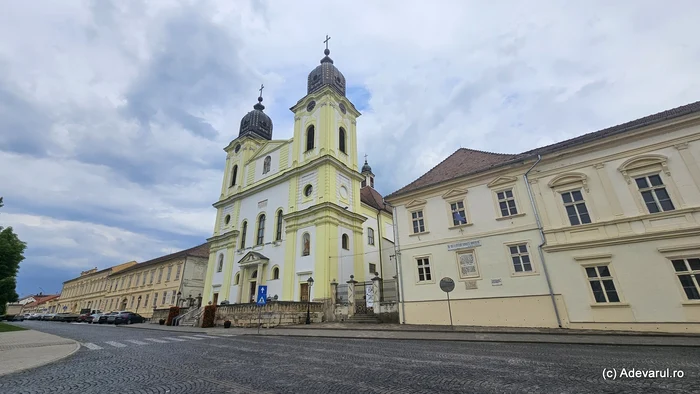
The Cathedral and the first Romanian school. Photo: Daniel Guță Adevărul
In its vicinity the buildings of the first Romanian school were preserved, which became a symbol of national culture and identity, where the intellectual elites known as the Transylvanian School were formed.
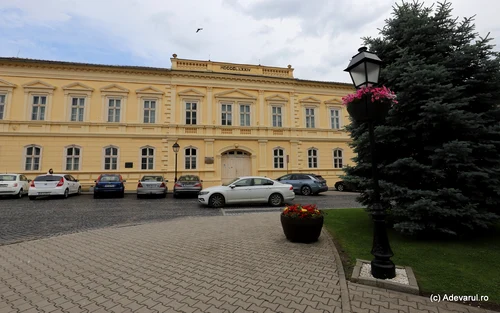
Image 1/20:
City Blaj Photo Daniel Guță Adevărul (99) JPG
This laid the foundations for the idea of national unity and latinity of the Romanians. Some historians point out that the Transylvanian school was essential in the development of national feeling, not only in Transylvania, but also in the Romanian Principalities, throughout the 19th century.
Mihai Eminescu and Pope praised Blajul
In 1866, Mihai Eminescu lived for a few months in Blaj, a city that he embraced in the words: “I greet you, from the heart, little Roma.” A secular lime keeps the poet’s memory, as well as the words of Pope John Paul II, in memory of which a statue was raised in Blaj.
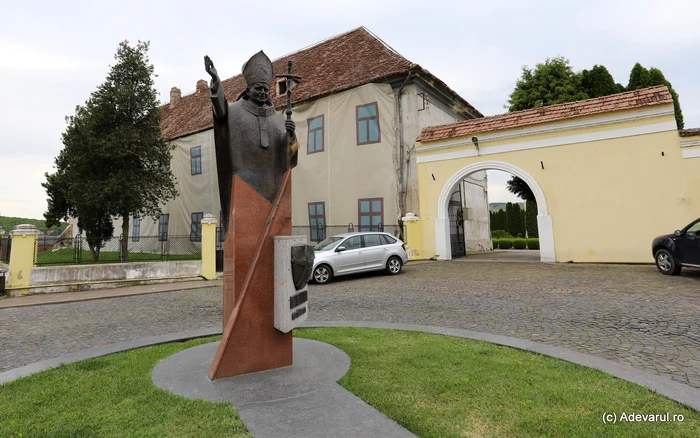
Pope’s statue. Photo: Daniel Guță Adevărul
“My thought cannot not fly to Blaj. Kiss in a spiritual way that martyrdom and I acquire the moving words of the great poet Mihai Eminescu, who refers to him:” Thank you, God, that you have helped me to see him! “”, Stated the Pope in the liturgy celebrated in Bucharest, in 1999.
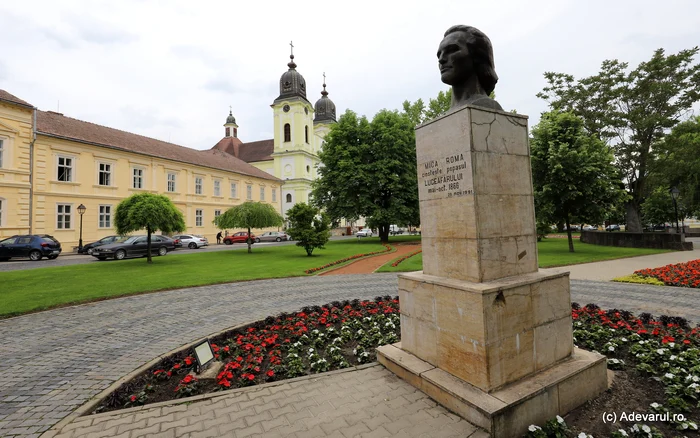
Mihai Eminescu’s statue. Photo: Daniel Guță Adevărul
In fact, the city is adorned with dozens of statues of its personalities. Most are found on the Freedom Plain in Blaj, the place of the Great National Assembly of May 1848, during which the Romanians demanded the recognition as a distinct nation, representation in the diet, the abolition of the servant without compensation, the establishment of Romanian schools in all the localities, the use of the Romanian language in the administration and the political language.
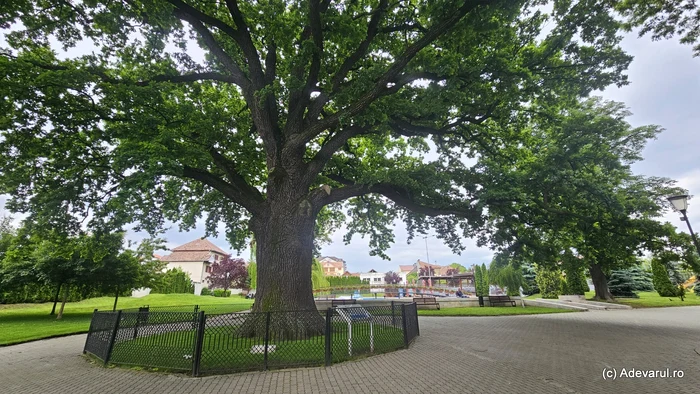
The oak of Avram Iancu. Photo: Daniel Guță. TRUTH
The monumental ensemble in the Freedom Plain remained one of the tourist landmarks of the city, next to the historical center, both included on the Via Transilvanica cultural route.
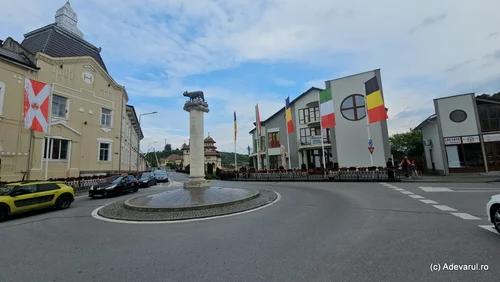
Image 1/17:
Blaj city of Alba County Photo Daniel Guță Adevărul (72) JPG
In a park in Blaj, an old oak of over six centuries reminds of Avram Iancu, who, together with other Romanian intellectuals, was involved in organizing the Great Assembly in May 1848, attended by over 30,000 people.
