
Although European metropolises attract millions of tourists annually, some of them face major problems in public transport, including the underground. Find out which are the lowest rated metro networks in Europe and how they compare with underground transport in Bucharest.
The lowest rated metro networks in European capitals Collage
The metro is often considered a symbol of efficiency and urban modernity, but in some of the most visited European capitals, the reality is far from ideal. Despite the historical attractions and international status of these cities, their underground transport networks do not live up to the expected standards.
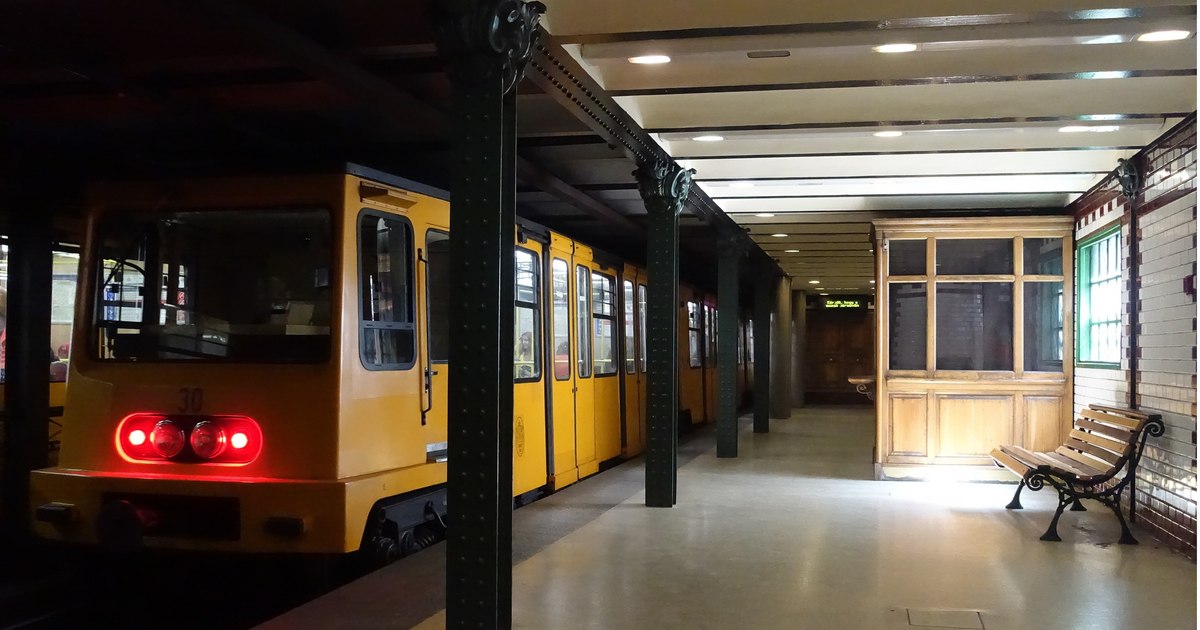
From Budapest, with extremely unpleasant stations, to Brussels and Rome, which face serious hygiene and safety problems, here’s a tour of Europe’s worst metro systems.
By comparison, the subway in Bucharest outperforms the underground networks in “Eternal City”“City of Lights” and Vienna. With a score of 5.97 out of 10, equal to the metro in Lisbon (Portugal) and Copenhagen (Denmark), the only metro network in Romania ranked in the Top 10 in Europe of the best underground transport systems.
This European ranking was made by Bounce, a company that provides luggage storage services and evaluated the quality of services offered by underground transport systems in European capitals.
Budapest Metro: Europe’s weakest, with ‘disgusting stations’
Budapest’s metro, although full of historical glamour, was rated as the poorest in Europe, with a score of just 3.13 out of 10. Although it has an impressive number of annual passengers – over 382 million – and a score of average of 4.05 out of 5 in Google reviews, reactions from the online public are mostly negative: 75% of comments are critical, while only 1% are positive.
Határ út station is the most problematic, with a rating of 2.80 out of 5, with critics describing it as “unpleasant” and “disgusting”specifically mentioning the lack of cleanliness, “the moldy wagons” and the constant presence of garbage.
By contrast Állatkert Station is the best rated metro station in Budapest, with an impeccable score of 5 out of 5. Located next to the Biodóm Zoo in the Városliget city car park, it is appreciated for its excellent location.
Brussels metro has ‘dangerous’ stations with ‘strong smell of urine’
Brussels, the capital of Belgium and the main seat of the European Union being the host of the European Parliament (along with Strasbourg), also faces problems regarding the underground transport network. Surprisingly, the Brussels metro is the second worst transport service in Europe, with a modest score of 3.20 out of 10 in the Bounce index.
Although the system, which includes 59 stations on 40 km of route and carries more than 86 million passengers annually, is essential for reducing congestion, the reality is far from ideal.
The busiest station, Gare du Midi, gets the lowest ratings, with a disappointing 1.90 out of 5 in Google reviews. Acidic critics noted that the station is “unsure” and “dangerous”being reminded of the alarming number of complaints related to “strong smell of urine” who greets travelers.
Rome criticized for having ‘terrible’ metro stations
Rome’s metro system ranks third in the list of the worst rated in Europe, after Brussels. With 64 km of route and 73 stations, the Italian metro received a modest 3.75 out of 10 in the Bounce index. The subway is integrated into a system of suburban trains known as “FL lines”which offers extensive connections to surrounding areas, including Rome’s Fiumicino Airport.
Even though the network is extensive and well connected with other means of transport in “Eternal City”Rome’s metro stations do not impress, with an average score of just 3.60 out of 5 in Google reviews.
Less than 14% of stations received ratings of four stars or higher, and 34% of comments are negative, while only 9% are positive.
Quintiliani Station tops the worst rated list with an alarming score of 2.40 out of 5. Reviewers frequently criticize the lack of staff and security, and the area around the station is described as “abandoned” and insecure. Facilities such as elevators and ticket machines are often out of order, complicating passenger travel. Some users have named it “most useless station” and one “perfect example of a poorly maintained location.”
In the Top 5 weakest metro networks in European capitals are also Amsterdam (Netherlands) and Paris (France) – where the most extensive underground transport system is located.
On the following positions of the ranking we find the metro from Berlin (Germany), Stockholm (Sweden), Helsinki (Finland) and Vienna (Austria).
