
Less accessible in the past, the Poiana Ruscă Mountains have become popular in recent years as holiday destinations in Romania, with the modernization of the road infrastructure. Here are some unique places in Romania.
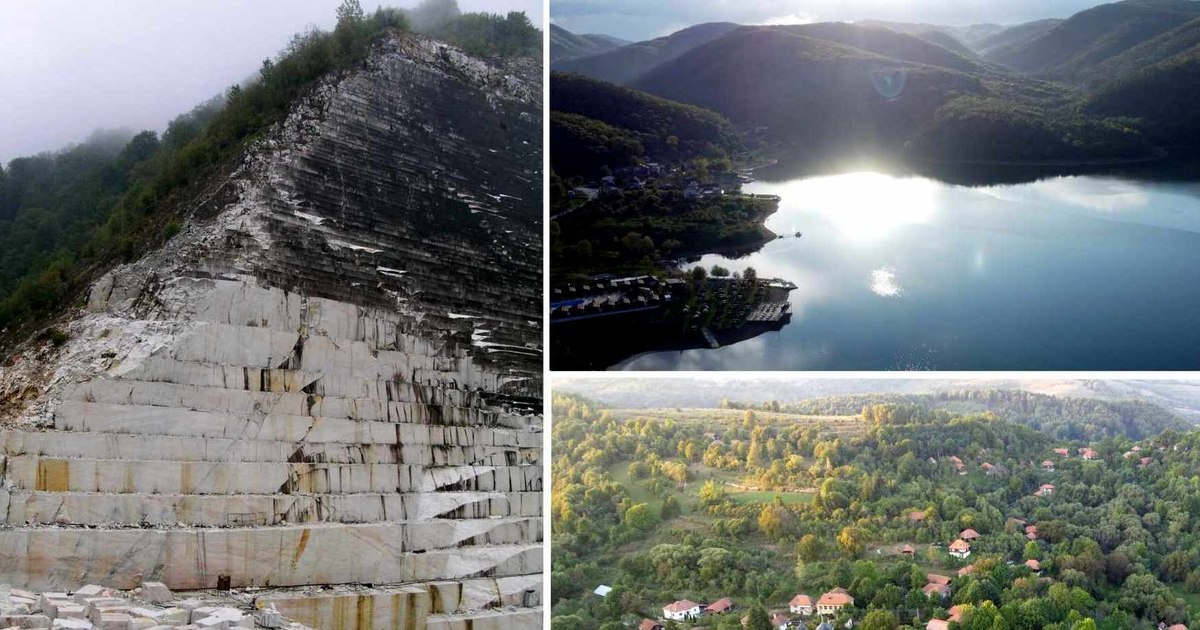
Alun Village, Cinciș Lake and the Ruschița marble quarry. Photo: Daniel Guță
Less accessible in the past, the Poiana Ruscă Mountains have become popular in recent years as holiday destinations in Romania, with the modernization of the road infrastructure. The Poiana Ruscă Mountains are located in the west of Romania and occupy, for the most part, the territory of Hunedoara county, but also of the neighboring counties of Timiș and Caraș-Severin.
The towns from which tourists can start their holiday adventure in the Poiana Ruscă Mountains are Hunedoara, Hațeg and Deva, from Hunedoara county, Lugoj and Făget, from Timiș county, and Caransebeș from Caraș-Severin county. From here, the roads plunge into the forests, climbing up the valleys of some mountain rivers, on which former mining settlements, established in past centuries, line up from place to place.
Regardless of the city from which they start, the roads in the Poiana Ruscă Mountains cross tens of kilometers of forest, which surround like wide belts the gentle peaks occupied by the most picturesque settlements in the region: the villages of the Forest Land of Hunedoara (video).
To reach the foresters’ villages, located at 900 – 1300 meters above sea level, travelers climb steep and winding sections of the roads that have been modernized in recent years, or still remain in the state of forest roads, accessible only in summer.
The villages of the Poiana Ruscă Mountains also owe their existence to the rich natural resources of the region, some of which have been exploited since ancient times. In the time of the Romans, the “rustic” land – the toponym that gives the name of the massif – then located near the urban center of Sarmizegetusa, was an important mining district of Roman Dacia.
Here the native populations of Dacia continued to live, busy with animal husbandry and the exploitation of forests and iron and marble deposits. The rich resources led to the establishment of most villages in the Poiana Ruscă Mountains (video), and the isolation of the land helped preserve a distinct culture of the communities.
All the mines and several stone quarries in the Poiana Ruscă Mountains were closed after 1990, and with them, many villages in the Hunedoara Forest Land were depopulated.
Industrial activity has almost completely reduced in the area, animal husbandry has become less and less attractive to the locals, and forestry work has lost its former extent. Instead, tourism gained more and more ground, and the number of guesthouses and accommodation offers increased in the region.
Tourist attractions in Poiana Ruscă Mountains
The clean air and the wealth of wild flora, the centuries-old forests, the archaic villages of the Forest Land, the marble quarries and the spectacular mountain roads are the main reasons why the Poiana Ruscă Mountains have become attractive as holiday destinations in Romania.
Adevărul.ro presents the most attractive vacation spots in the Poiana Ruscă Mountains:
Lake Cinciș – the coast from the mountain
Lake Cinciș from Hunedoara (video), called by the locals “the mountain coast”, was laid out in the early 60s, being necessary for the water supply of Hunedoara and the Hunedoara steel plant.
The Cinciș Lake Dam, on the Cerna River in Hunedoara, with a length of 221 meters and a height of 48 meters, was built in only 14 months, between 1962 and 1963. The dam is located ten kilometers from the center of Hunedoara , upstream, and behind it stretches, on about 250 hectares, Lake Cinciș from Hunedoara, which would swallow the hearths of several villages and hamlets from the Forest Land of Hunedoara.
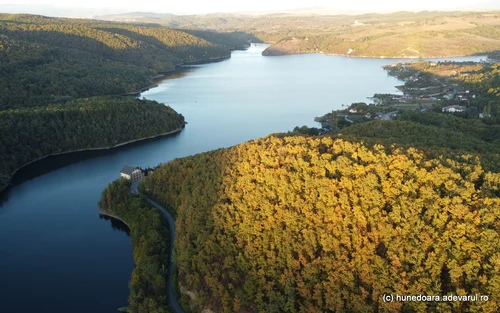
Image 1/17:
Lake Cincis from Hunedoara Photo Daniel Guță THE TRUTH (36) JPG
Lake Cinciș in Hunedoara has become one of the most sought-after recreational areas in western Romania.
On its right bank, for several kilometers, numerous guesthouses, places of recreation, motels and holiday homes are lined up, surrounded by hills and forests, and the opposite shore is completely covered by forests, preserving some of the ruins of the former settlements swallowed by the waters.
How to get to the Ruschița marble quarry
The most spectacular marble quarry in Romania is located in Ruschița (Caraș-Severin County), in the Poiana Ruscă Mountains.
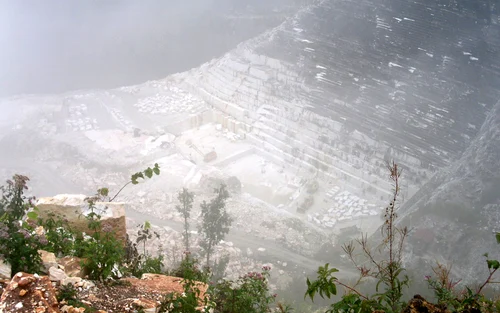
Image 1/11:
Marble quarry from Ruschița Photo Traian Manu (1) JPG
Before reaching the wild land where the great Ruschița marble quarry is located, the road from the Ruschița valley crosses the villages of Ruschița and Rusca montană, mining towns established in the 18th century with the first metal mines and forest exploitations in the mountainous land .
The Rușchița marble has been mined since the end of the 19th century, and the quarry that went deep into the mountain ended up occupying more than 40 hectares. Huge blocks of marble of various shades, from white to gray, pink, pinkish-yellow and reddish, are cut from here.
“Thanks to its fascinating beauty, Ruschița marble has been integrated, in the last ten years, into famous projects all over the world”informed the representatives of the marble quarry.
Forest road (video) that passes at the foot of the marble quarry continues towards Hunedoara and Timiș counties.
The Ruschița marble quarry can also be reached from Hunedoara, on the Hunedoara – Lunca Cernii de Jos road, but the last part of the road is not modernized.
At 7 – 8 kilometers from the quarry, over the mountains, the “Marble Road” descends into the Cernii meadow, where some of the most picturesque in Romania are located: Negoiu (video), Lunca Cernii de Jos, Lunca Cernii de Sus, Meria and, on the mountain, at almost 1,300 meters altitude, the village of Vadu Dobrii from Hunedoara – inhabited by three to four families.
“Vadu Dobrii village in Hunedoara has many advantages for the people who come here to have a healthy lifestyle. It’s a secluded place, where you don’t have the pressure of the city, and in a few days if someone stays here, they will immediately see what clean air means, from over 1,000 meters above sea level, what good water and healthy food mean. Because on these ridges, people only relied on water from the well, intensive agriculture could not be done, so the land here is not chemicalized, it is an ecological zone. The spontaneous flora is rich in medicinal plants. You can find them everywhere, within walking distance”, recounted Eugen Pascotescu, a therapist based in the village of Vadu Dobrii in Hunedoara (video).
Near the village of Vadu Dobrii in Hunedoara is Vârful Rusca (1,359 meters), located on one of the marked hiking trails in the Forest Land of Hunedoara. Other hiking trails descend on plain and forest roads to other small villages in the Poiana Ruscă Mountains, closer to Hunedoara.
The marble village of the Woodlands
Inhabited by a few families, the village of Alun in Hunedoara is distinguished from the other settlements in the Forest Land of Hunedoara by its marble road at the entrance to the village, where the Alun marble quarry is also located (video).
“This road was built in the 1960s and 1970s, so that its solid structure would allow marble blocks of 5-10 tons each to be safely lowered down the hillside”said Mircea, a local from the village of Alun in Hunedoara.
The Alun marble quarry has been exploited since the 19th century, at a time when the Forest Land had become an area of particular interest for the Austro-Hungarian state, due to its rich iron deposits and forest expanses.
A marble church was built in the 1930s, in the village of Alun in Hunedoara, and the locals used marble in abundance in their households. The old church of the village was built of wood more than two centuries ago and is also among the attractions of Hunedoara.
In the 1980s, blocks of marble used in the construction of the People’s House were extracted from Alun, and the marble columns that adorned the Ceauşescu family villa in the Primăverii district also originated from Alun.
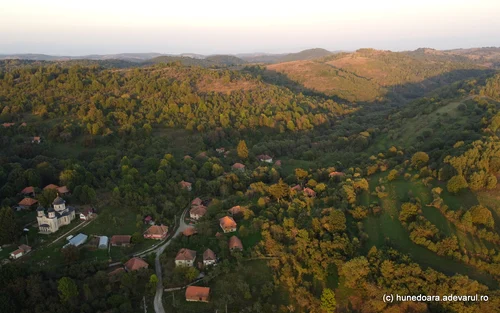
Image 1/19:
Alun Village, Hunedoara Photo Daniel Guță THE TRUTH (165) JPG
The Alun marble quarry has been under conservation since the early 1990s. Since then, the fate of the village has changed. Many of the locals had meanwhile moved to Hunedoara, and the settlement continued to depopulate until it reached less than ten inhabitants.
The spectacular mountain roads of Poiana Ruscă Mountains
The marble road in the village of Alun is degraded and is more suitable for walking, instead another road is in the construction site, towards the “marble village of Hunedoara”. Along with the marble road in the village of Alun, other new roads make the trip to the Poiana Ruscă Mountains a pleasant way to spend your free time.
The most spectacular mountain road is called “Transluncani” and was modernized between 2018 and 2020, in Timiș County, in a wild area of the Poiana Ruscă Mountains, close to Hunedoara and Caraș-Severin counties.
The road located in the area of Tomești commune was dug in the mountain at an altitude of 700 meters and includes numerous serpentines, along its length of approximately five kilometers.
Modernized a decade ago, the Hunedoara – Lunca Cernii de Sus road (50 kilometers) brought several villages from Hunedoara’s Cernii valley out of isolation (video) and became a tourist attraction, thanks to its spectacular route.
The highest road in the Poiana Ruscă Mountains, also modernized in recent years, climbs from Hunedoara through the Zlaști valley, towards the village of Poiana Răchițelii in Hunedoara, located at an altitude of over 1,000 meters and about 40 kilometers from the city.
Secular chondrites from the Poiana Ruscă Mountains
The mountain road crosses the archaic villages of Cerbăl, Socet and Poiana Răchițelii, and at the end of it and the village in the mountains, the roads to the secular forests of the Poiana Ruscă Mountains begin.
Located near the villages of Batrâna (video), Vadu Dobrii and Poiana Răchițelii, the secular Codrii on the valley of Dobrișoara and Prisloapa, include, according to the specialists, a natural arboretum with plurial, quasi-virgin structures, large in size and up to 200 years old.
The flora and fauna of the forest areas contributed to the declaration of an area of over 450 hectares in the Poiana Ruscă Mountains as a forest reserve. Extremely numerous species of butterflies, but also some rare ones like Lycaena helle, have contributed to the forest reserve status received by the forests of the Poiana Ruscă Mountains. In addition, the ecosystems of Valea Dobrei have undergone extremely small changes created by humans over time.
Several forest roads that start from the edge of the villages of Bătrâna, Vadu Dobrii and Poiana Răchițelii lead to the centuries-old forests of the Poiana Ruscă Mountains.
The forests occupying the valleys of the Dobra and its tributaries exceed more than 15,000 hectares and surround villages where a few dozen people still live, the most famous of them being Batrâna – a picturesque village on the border of Hunedoara and Timiș counties.
