
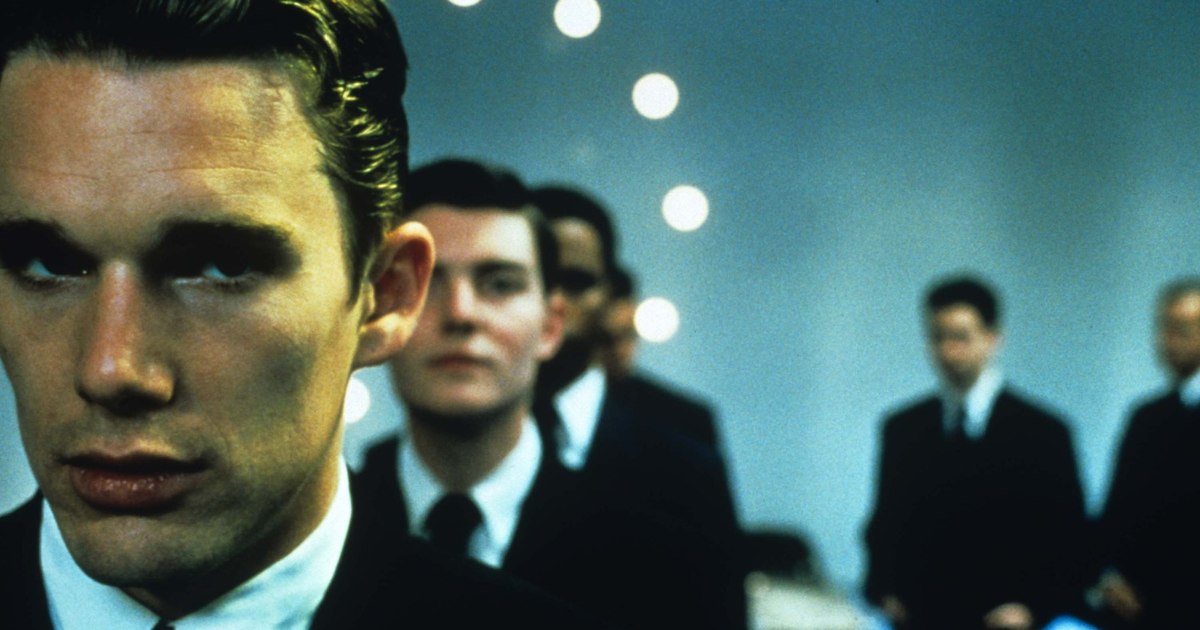
In 1997, a groundbreaking science fiction film captured the imagination of audiences around the world and earned the distinction of being listed by NASA as the most realistic science fiction film ever made.
The film Gattaca, the best sci-fi film PHOTO: IMDb
“Gattaca” presents a future in which genetic manipulation allows parents to predefine their children’s traits and potential. This concept, although it seemed far-fetched in 1997, has become increasingly relevant in today’s world, where genetic technologies are advancing. The title of the film ingeniously incorporates the letters G, A, T and C, which represent the four nucleotides that make up the basic elements of DNA: gunania, adenine, thymine, cytosine, writes dailygalaxy.
NASA’s recognition of “Gattaca” as the most credible science fiction film ever produced stems from its grounded approach to genetic science.
“Gattaca” follows Vincent Freeman (Ethan Hawke), who was born genetically inferior into a world where parents can choose the traits of their children, as he tries to fulfill his dream of traveling in space by taking Jerome’s place Morrow (Jude Law) in society. Vincent’s plans go awry when he is implicated in the murder of one of Gattaca’s bosses and must work with Irene (Uma Thurman) to find out who killed him.
The film explores the ethical implications of genetic engineering, presenting a society where an individual’s DNA determines their social status and career prospects. This concept aligns with current research in medical genetics, which focuses on the study of hereditary diseases within families.
right Commissariat à l’énergie atomicique (CEA), the ever-increasing knowledge of human DNA could indeed lead to the identification of individual genetic predispositions. However, this progress raises many ethical issues, mirroring the concerns explored in “Gattaca.”
NASA ranking of science fiction films
In 2011, NASA’s Jet Propulsion Laboratory convened a meeting to rate and rank science fiction films based on their scientific accuracy and plausibility. This evaluation resulted in a definitive list of both the best and worst sci-fi films from a science perspective. The first three most realistic films, according to NASA, are:
- “Gattaca” (1997)
- “Contact” (1997)
- “Metropolis” (1927)
Interestingly, two of the first three films were released in 1997, marking a particularly strong year for sci-fi. These films were distinguished by engaging narratives, impressive special effects (considering the era), and solid scientific research.
At the other end of the spectrum, NASA identified the least scientifically accurate films:
- “2012” (2009)
- “The Core” (2003)
- “Armageddon” (1998)
Gattaca, starring Ethan Hawke, left an indelible mark on the science fiction genre and popular culture. His dystopian vision of a genetically stratified society has inspired countless discussions about the future of human genetics and the potential consequences of unchecked scientific progress.
Although plans for a “Gattaca” television series were eventually abandoned, the film’s influence continues to be felt in contemporary science fiction and scientific discourse. As we approach the technological capabilities depicted in the film, its themes become increasingly relevant, prompting us to consider the ethical implications of our scientific endeavors.
Reassessing Science Fiction Realism in the Modern Era
As technology advances rapidly, it’s worth considering whether NASA’s 2011 assessment of “Gattaca” as the most realistic sci-fi movie still stands. The landscape of science fiction cinema has evolved significantly since then, with newer films incorporating cutting-edge scientific concepts and technologies.
Recent sci-fi movies like “Ex Machina” (2014) and ““The Martian” (2015) were praised for their scientific accuracy and plausible near-future scenarios. These films, along with others, may challenge the position of “Gattaca” as the most realistic sci-fi film in the eyes of NASA.
However, the enduring relevance of “Gattaca” lies not only in its scientific accuracy, but also in its exploration of timeless ethical dilemmas. As we continue to grapple with the implications of genetic engineering and other emerging technologies, this 1997 classic remains a provocative and cautionary tale, reminding us of the importance of considering the human element in the pursuit of scientific progress.
