
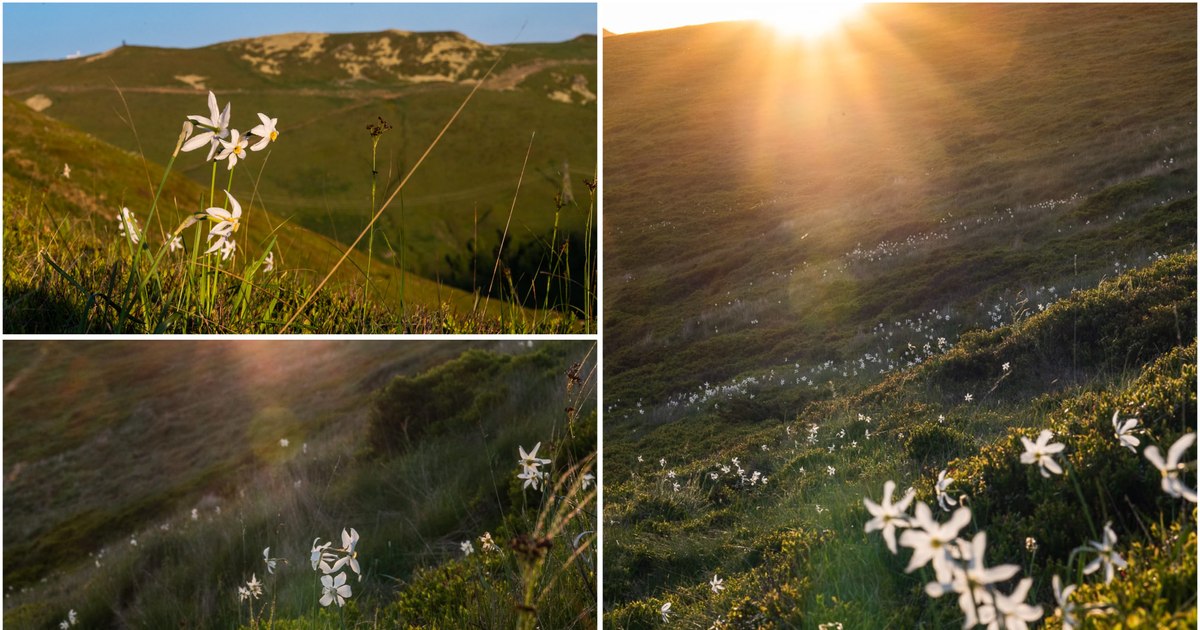
A mountain adorned with wild daffodils appears to travelers who arrive in Pasul Vâlcan from Hunedoara (video – Lucian Ignat), the mountain pass that connected the historical regions of Transylvania and Oltenia.
Wild daffodils from Pasul Vâlcan. Photo: Lucian Ignat.
The historical events that took place in the Vâlcan Pass in Hunedoara and the panorama of the Jiului Valley and the Vâlcan and Parâng mountains, seen from its summits, make the Carpathian pass, located on the border of Hunedoara and Gorj counties, an attractive place for tourists. But they are not the only attractions of Pasulu Vâlcan (Volcano).
Carpets of wild flowers adorn the slopes during this period, to the delight of mountain hikers. The photos taken by Lucian Ignat from Hunedoara in Pasul Vâlcan in Hunedoara show the view of the mountain with daffodils from Pasul Vâlcan in Hunedoara (video – Lucian Ignat).
“We arrived in the evening, at sunset, in Pasul Vâlcan in Hunedoara, and even though the wind was strong and made us a little uncomfortable, we left here with a pleasant feeling, seeing the mountain full of wild daffodils, untouched by people, flowers white that seemed to glow in the light of the last rays of the sun that was going to set beyond the mountaini”, says Lucian Ignat, the author of the photos.
Pasul Vâlcan, historical and touristic place
Vâlcan Pass from Hunedoara (video), an old pass from the Carpathians, located at an altitude of over 1,600 meters, connects the Petroşani depression and Oltenia.
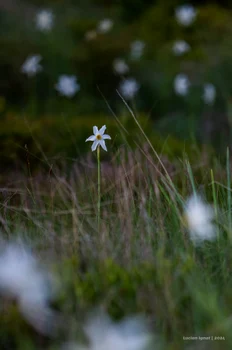
Image 1/13:
The meadow with daffodils in Pasul Vâlcan. Photo: Lucian Ignat 1
In the past, the pass had a strategic role, being a connection point between Transylvania and Oltenia.
It was a customs place and a market place where the inhabitants of the two historical regions met, but it gradually lost its importance from the end of the 19th century, with the construction of the road through the Jiului Gorge and later the railway from the gorge (video).
Michael the Brave passed through the Valcan Pass to reach Vienna in 1600, and according to legend, in the place called Poiana lui Mihai, the voivode's horse would have died due to the effort. Also here, in the fall of 1916, fierce battles took place between the Romanian, Austro-Hungarian and German armies, and hundreds of people died on the summits of Vâlcan.
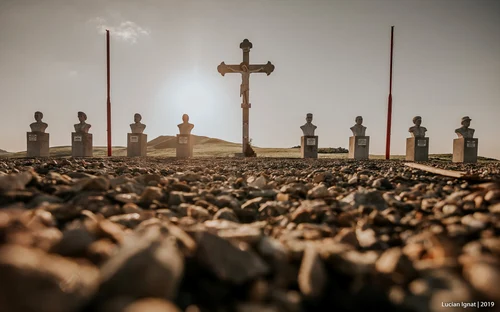
Image 1/41:
Pasul Vâlcan Photo Lucian Ignat (5) jpg
An eight-kilometer road, modernized between 2013 and 2019, climbs steeply from the municipality of Vulcan in Hunedoara towards the Vâlcan Pass, being asphalted up to the ridge on the border of Hunedoara and Gorj counties, at about 1,600 meters above sea level.
Here, travelers find several monuments erected in honor of Romanian heroes from the First World War and traces of trenches dug by the Romanians over a century ago.
From the border of the two counties, the road descends towards the commune of Schela in Gorj, located about 20 kilometers from Târgu Jiu, on an unmodernized sector, inaccessible to cars. Tourists can also reach the Vâlcan pass in Hunedoara by gondola, built at the end of the 2000s.
From the old pass, travelers can climb to Vârful Straja (1,865 meters), the emblematic place of the Vulcan Mountains, which watches over the mountain resort of Straja (video).
