
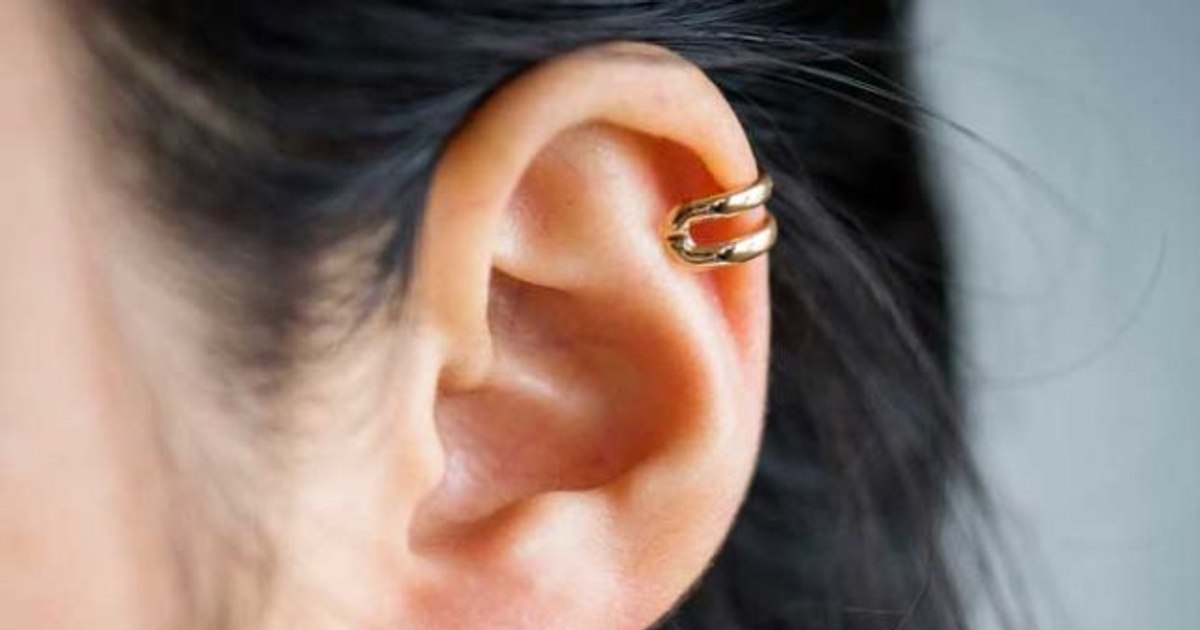
The movement of the ear is vital to many animals to help them focus on certain noises and realize what direction they come, in a survival reaction. But while the human ear is much more static, the traces of the ears of our ancestors remain in what has been named by foreign researchers “A neural fossil”.
Ear. Photo: Archive
“It is believed that our ancestors have lost their ability to move ear about 25 million years ago. It is hard to say why exactly ”said Andreas Schröer, the main author of the research at Saarland University in Germany, quoted by The Guardian.
“However, neural circuits seem to be present in a certain state. Our brain has kept some of its structures to move the ears, even if it seems no longer useful. ” says Schröer.
The team has previously discovered that the movement of these muscles to humans is related to the direction of the sounds to which they pay attention. Now, they have discovered that some of these muscles are activated when people listen carefully to a sound. Writing in the magazine Frontiers in Neuroscience, the team reported how 20 adults analyzed without hearing problems, who were able to listen to an audio book rendered by a speaker, while a podcast was played from the same location.
The team created three different scenarios: in the first scenario, the easiest, the podcast was quieter than the audiobook, with a big difference in height between voices. In the hardest scenario, two podcasts were broadcast which, taken together, were stronger than the audio book, one of the podcasts being spoken at a tone similar to the audio book.
“We were interested in finding out if the euricular system in humans is sensitive to listen with effort. Think about trying to understand what someone says in an almost empty restaurant and try to understand someone in a very busy restaurant ”said Schröer.
Each participant has experienced the three different scenarios twice. This was then repeated with the speaker in a different position in the room. Each participant wore a set of electrodes, allowing the researchers to record the electric activity produced by the muscles involved in the movement of the ears.
After each attempt, the participants were asked to evaluate how much effort they made listening to the audio book.
The results showed that the perceived listening effort of the participants and how often they lost their focus on the audio book have increased as the scenario went from the easiest to the hardest.
The team discovered that the activity in the upper auricular muscles, which raises the ear upwards and outwards, was greater in the most difficult listening conditions than in the light and medium conditions. They also discovered that the posterior auricular muscles, which dragged the ear back, were more active when the sounds came from behind the participant than in front of them.
“Almost no one (from the study) has had the ability to voluntarily move their ears, so our results are not related to a person’s ability to do so.”mentions SSCHRöer, although he noticed that other researches have shown that people can learn to move their ears.
Although the study is restricted and must be repeated in a larger and more diverse group, the team said the discoveries have provided information: “The movements of the ear that could be generated by the signals we have recorded are so tiny-or even absent-that there is probably no noticeable benefit. So we believe that this vestigial auricular system “does everything possible”, but it probably doesn’t do much. “
