
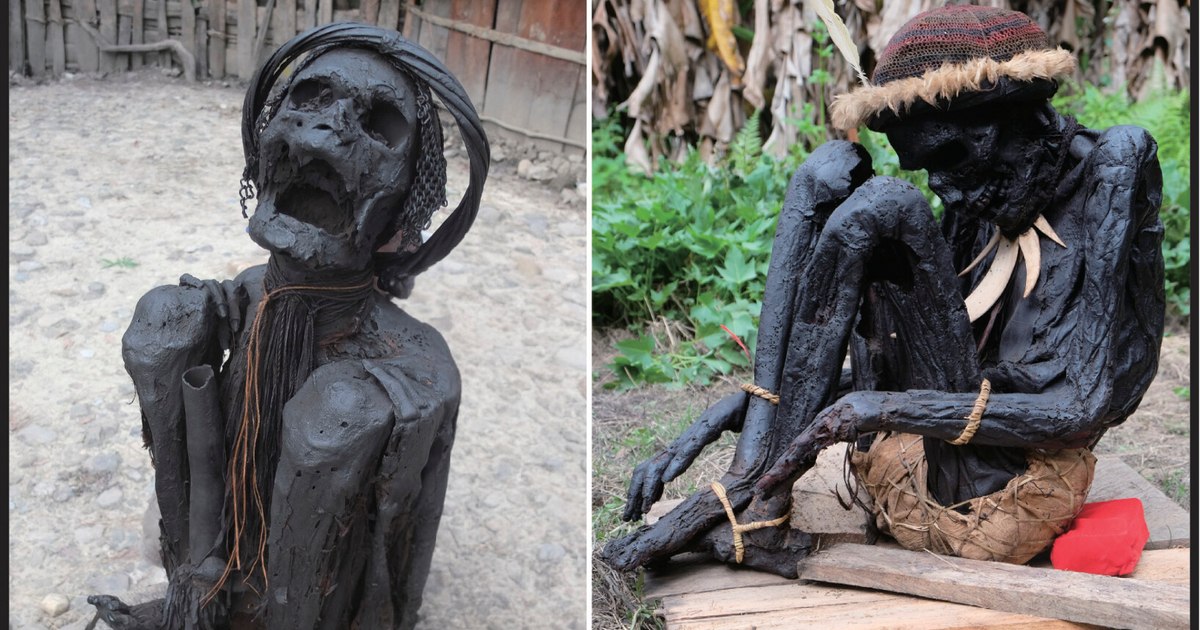
Thousands of years before the pharaohs of Egypt are embalmed and just before the Chinchorro people on the arid shores of the attacm (Chile-Peru) turn their deaths into clay and bones, the hunting of southern China and southeast Asia had already discovered an ingenious method of giving the body, of artificial mummification known to this day. The discoveries, dating over 10,000 years, radically change the way we understand the origins of this universal funeral ritual.
10,000-year-old mummies from Papua-Indonesia, preserved by smoking photo PNAS org
Next you will find out how the smoking technique was working, why these communities were investing for months in preserving the ancestors and what surprising links exist between these Asian practices, those of Chinchorro culture and the famous tradition of ancient Egypt.
Preneolithic funeral rituals in Asia: The first mummifies and conservation techniques
Thousands of years ago, on the border between the end of Pleistocene and the beginning of the Holocene (about 12,000 – 4,000 years ago), the dead were not quiet on the back, as will happen later in the Neolithic era.
Instead, they were deposited in crouching or coming positions, sometimes dismantled after death and often carrying the traces of fire. These funeral scenes, surprising and loaded by mystery, were reconstituted by an international team led by the National University of Australia, which analyzed remains from 95 archaeological sites, extended from southern China to Indonesia and Vietnam.
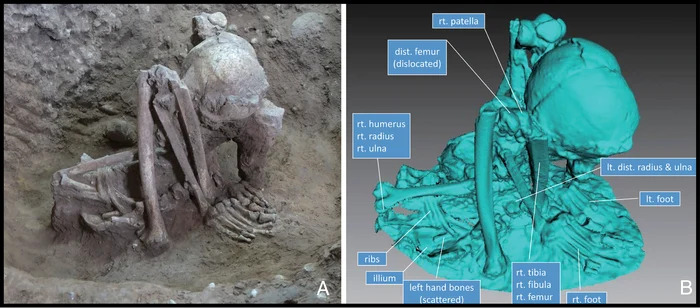
Crouching mummies, 10,000 -year -olds from southern China, preserved by smoking photo PNAS org
The oldest mummies in the world: advanced smoke drying technique in Southeast Asia
Research shows that many of the bodies have gone through a long process of drying in smoke, above the fire, to low intensities, before they are buried. This technique, surprisingly sophisticated for the preneolithic era, resembles ethnographically documented funeral practices in indigenous communities in Australia and New Guinea.
“Some of the samples analyzed represent the oldest known cases of artificial mummification of this type in the world”notes the researchers. The practices in Southeast Asia have persisted for over 10,000 years, proof of their cultural complexity and continuity.
Although the smoking technique could have been used for 17,000 and 19,000 years ago, the best preserved mummies discovered so far dates about 10,000-14,000 years.
Compared to other methods, smoke -based technique “It should not be considered less advanced”explains Hsiao-Chun Hung, the first author of the study, from the National University of Australia. Unlike other procedures, the bodies were not sealed in containers, which limited the duration of preservation to several hundred years, but emphasize the ingenuity and adapt this method to the conditions of the time.
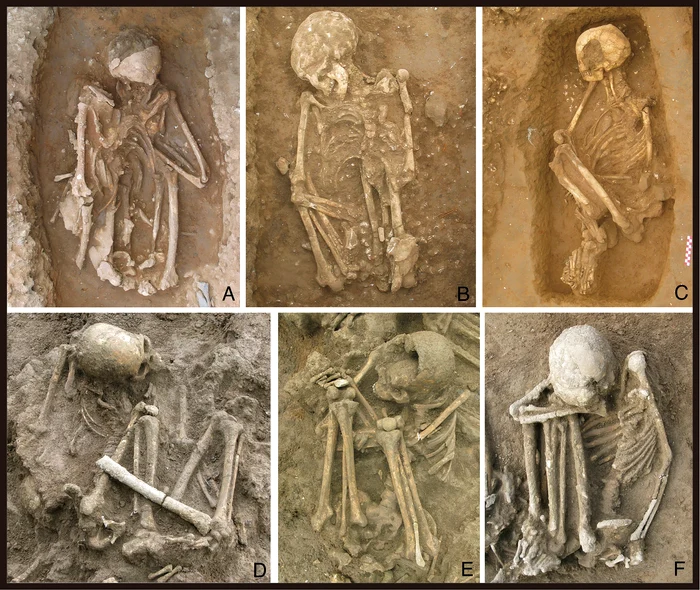
The 10,000 -year -old crouched mummies from southern China Pnas Org
How did the first smoked mummies in Southeast Asia survived over 10,000
Over the millennia, the smoked mummies have been deposited with respect in caves, under rocky shelters or directly in the soil, and today, from these rituals, only the bones have survived. The remnants examined were usually discovered in extremely compact positions, and the lack of bone disarticulation – frequent in the corpses that break down – suggests that the bodies have already been buried, not as simple fresh bodies.
The discovered indications show that this sophisticated conservation practice began long before the traditions of mummification in Chile and Egypt, in the wet and rainy areas of the East and Southeast Asia. In a climate where natural drying was impossible, the researchers show that the bodies were smoked to strengthen and preserve the skin that surrounds the skeletons, demonstrating the ingenuity and adaptation of the preneolytic communities to the environment in which they lived.
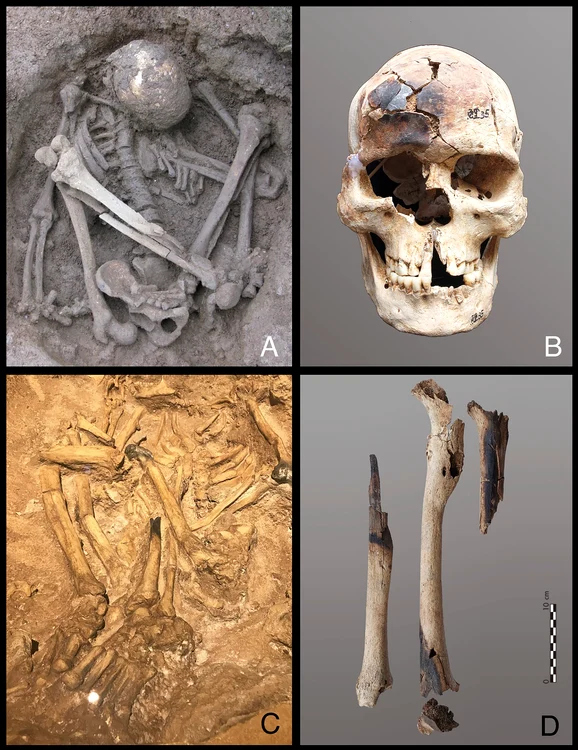
10,000 -year -old mummies from southern China and Indonesia, preserved by smoking PNAS org
Three months of care: How to be created and kept smoked mummies in Southeast Asia
The results of the research reveal “A unique interaction between technique, tradition, culture and beliefs”, explains Hsiao-Chun Hung. The study shows that the people of the past not only developed this sophisticated practice, but have invested considerable time and effort to keep the bodies of the ancestors in a visible form.
According to the ethnographic records, the creation of a single smoked mum could take three months of continuous care, made by family or community – a possible commitment only due to a deep love and an intense spiritual devotion. For researchers, this habit reflects “A deep human impulse, present from antiquity to this day: the sustainable hope that families and loved ones can remain” together “forever, regardless of the form that this connection takes.”
Surprisingly, the practice has persisted over the millennia and even in a vast area, from the late Paleolithic to the present. “The extent and resistance of this tradition is extraordinary“Hung admits.
Smoked mummies and historical traditions: Chinchorro and Egypt
The earliest tradition known to mummify by dehydration is the Chinchorro culture on the Coast of the Atacma (Chile – Peru), dated around 7,000 BC, apparently abandoned around 3,700 BC.
In Egypt, the first attempts of embalming mummification appear in the Old Kingdom (about 4,500 years ago), although in the Egyptian Predinostic tombs there is evidence of natural conservation of bodies by drying.
These historical comparisons highlight the uniqueness and innovation of smoke mummification to Southeast Asia, the oldest and most continuous practice of this type, demonstrating ingenuity, devotion and adaptation of preneolytic communities-essential information for understanding the origins of funeral rituals around the world.
