
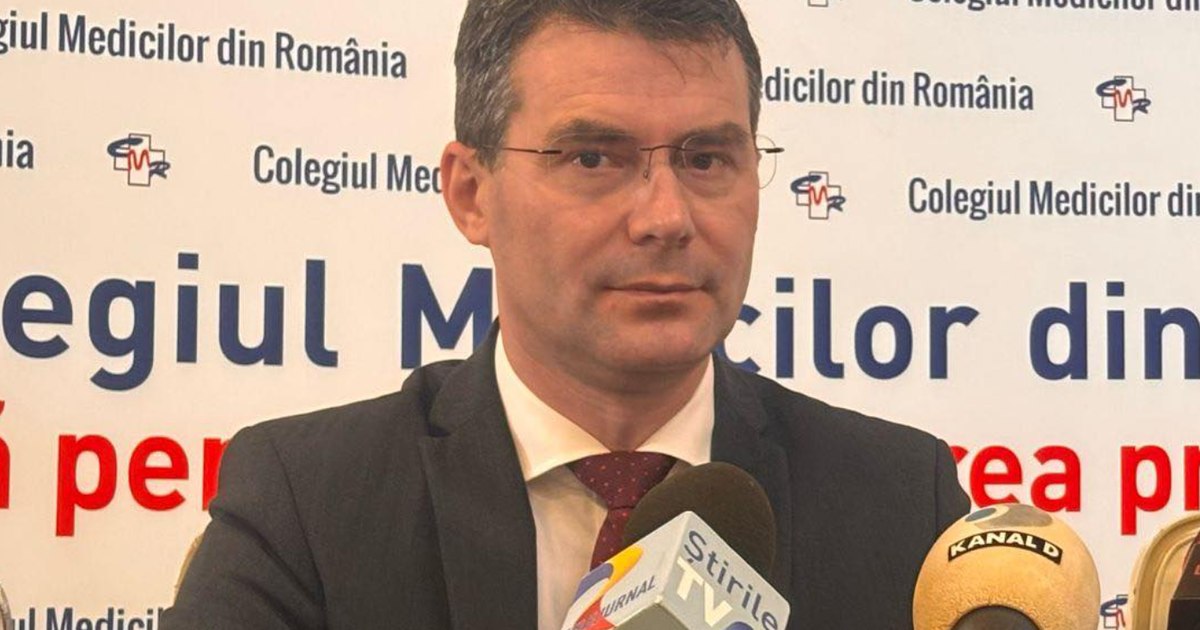
The President of the National Health Insurance House (CNAS), university professor Dr. Horațiu-Remus Moldovan, announced on Friday, November 28, that the possibility of introducing performance-based payment in public medical units is being analyzed.
“We started working meetings where, at the same table with the management teams of the hospitals, we analyze how to introduce performance-based payment in public medical facilities.
I met today, in Târgu Mureș, with colleagues from the Târgu-Mureș County Emergency Clinical Hospital, the Mureș County Clinical Hospital and the Emergency Institute for Cardiovascular Diseases and Transplantation, with whom we discussed how to apply the mechanism by which we put performance first. There were honest discussions, with concrete examples, but also with a lot of openness to change.
Today’s meeting came after the discussions we had, also this week, with the management teams of some important hospitals in Bucharest: Bucharest University Emergency Hospital, Foișor Hospital, National Institute of Diabetes, Nutrition and Metabolic Diseases «Prof. Dr. NC Paulescu” and the Emergency Clinical Hospital for Children “Marie Curie”. And there I found the same openness to contribute to a more efficient and predictable health system”the CNAS president sent in a statement.
CNAS President: “The new payment system is based on five clear indicators”
It emphasizes that linking salaries to hospital performance is a major step toward an efficient health care system that rewards effort and accountability.
Soon, he adds, the Government Decision implementing the changes in Law no. 163/2025.
“Today, hospitals in Romania operate with two “financial engines”: the payment of medical services, with a total of 16 billion lei, and salary influences, which reached 17 billion lei.
In 2015, these influences were a crisis solution, designed to stop doctors going abroad. But over time, they have made some hospitals more dependent on the “guaranteed” money than on the services they are supposed to provide to patients”, says Horațiu-Remus Moldovan.
The President of CNAS adds that “the new payment system is based on five clear indicators that reflect the real activity of hospitals, including the bed occupancy rate and the share of salary influences in the budget.”
“Small hospitals will be able to collaborate with large ones”
The president of CNAS says that large hospitals, “those who bear the brunt of complicated cases”, they will receive more support and small hospitals will be able to collaborate with large ones through contracting consortia to save money and treat more patients.
“Large hospitals, those that carry the burden of complicated cases, need to be supported more, and where wards are almost empty, we will help the management to reorganize the structure so that the hospital better meets the needs of the community.
We also provide them with a new tool: contracting consortia. Small hospitals will be able to collaborate with large ones, both medically and administratively, to save money and treat more patients. It’s a simple, correct solution and required by the system for many years”he specifies.
Last but not least, the CNAS president conveys that the Government “a reconfirmed that Health remains a priority”, allocating an additional 2.4 billion lei for the CNAS to close the year without major blockages and to reduce delays in the payment of medical leaves, from three years to a few months.
Efficiency measures, says Horațiu-Remus Moldovan, such as performance-based payment, hospital reorganization and responsibility in spending public money, are beginning to yield results, improving services for patients. CNAS will continue to support hospital managers to increase their performance.
“We will continue these meetings in December. CNAS colleagues and I remain with hospital managers who need support, clarity and motivation to become more efficient”, it concludes.
