
The Ministry of Development, Public Works and Administration announced, through a press release, that it decided on Tuesday, July 30, to withdraw the draft GD regarding the introduction of taxes for cars that drive in low-emission areas.
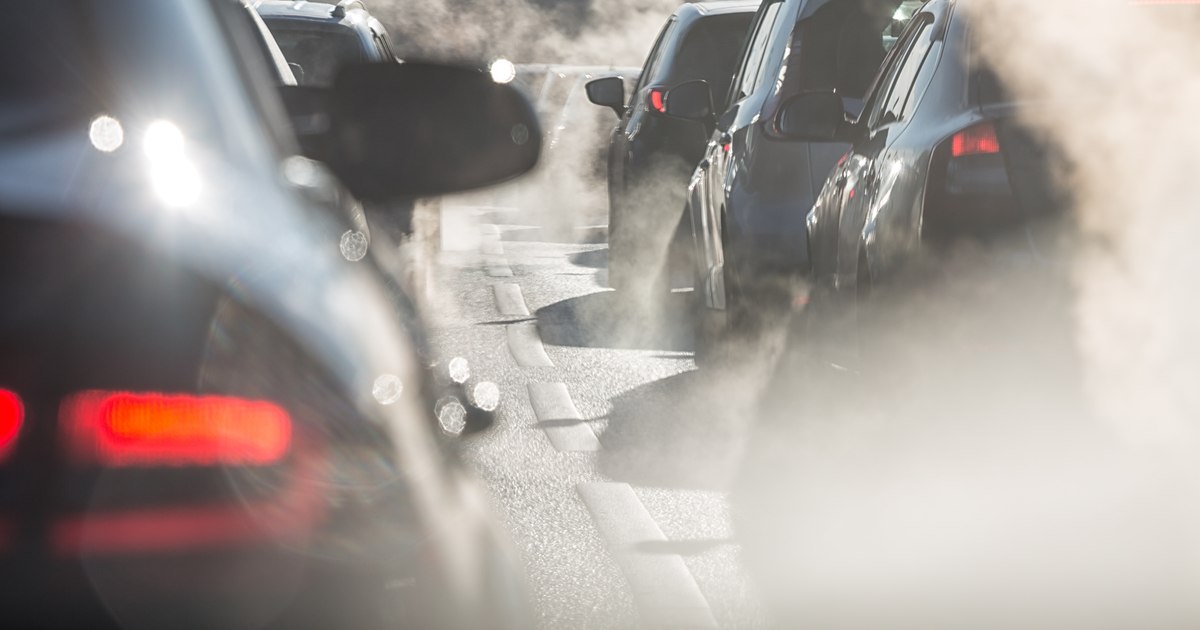
Local authorities would establish the low-emission zones. PHOTO Shutterstock (Archive)
The project in question was launched in consultation published on July 26, according to the MDLPA press release.
“The Ministry of Development, Public Works and Administration (MDLPA) decided, today, to withdraw, from the transparency procedure, the draft Government Decision on the methodology for developing the access rules, the way of applying the tariffs, as well as the exceptions related to the zones with low emissions (ZNSE). The decision was taken in view of a wider consultation both with the partners within the Governing Coalition, as well as with the representatives of the associative structures of the local public administration authorities, the business environment and civil society.
The project, launched in public consultation on July 26 of this year, aims to apply the provisions of Law no. 155/2023 on sustainable urban mobility, a normative act adopted by the Romanian Parliament (as a result of the consultation within the Governing Coalition) and published in the Official Gazette of Romania on May 31, 2023, and which specifies that, «within 6 months from the entry into force of this law, the competent ministry, the Ministry of the Environment, Water and Forests and the Ministry of Transport and Infrastructure elaborate the methodology for the elaboration of the access rules, the way of applying the tariffs, as well as the related exceptions ZNSE, which is approved by Government decision».
In addition, Law no. 155/2023 represents Milestone no. 288 within the National Recovery and Resilience Plan (PNRR), for which it was established the obligation to create the mechanism for the adoption of low-emission areas by local public authorities, and the methodology for developing access rules, how to apply tariffs, as well as the exceptions related to low-emission areas, is one of the measures related to the CISC (Interministerial Committee on Climate Change) – legislative priority no. 43 of the Plan established for the year 2024″,
it is stated in the press release of the Ministry of Development, Public Works and Administration.
“A one-year accommodation period”
The project presented by MDLPA was carried out within a group created at a technical level, with the participation of representatives of the Ministry of Environment, Water and Forests, the Ministry of Transport (through the Romanian Car Registry) and the Ministry of Internal Affairs, and aims at a unified approach at national level regarding the criteria and the necessary steps, in order to establish an implementation framework as easy as possible for local public authorities and citizens.
“Also, maximum flexibility is granted for local public authorities, which would establish the location of low-emission areas, their size, the classes of vehicles for which unrestricted access is allowed (depending on the pollution norm and the type of fuel) and the approach – if restrictions or tariffs are established (access to the respective area being conditioned by a tariff established exclusively by the local public authority). Therefore, the owner of a non-euro vehicle is not liable to any tariff if he does not enter such an area.
At the same time, an accommodation period of one year is established, which means that the obligation to comply with the provisions of Law no. 155/2023 and from the draft GD would enter into force starting on May 31, 2026.
Last but not least, we specify that Romania is at risk of infringement due to the deficient, even alarming, air quality situation in several urban areas in the country, where increases in pollution levels are recorded above the average recorded in other European countries.
The Ministry of Development reaffirms that this measure is absolutely necessary for all citizens, contributing to ensuring an environment with clean air, to the creation of more relaxation, promenade or interaction spaces, but also to the decongestion of traffic in areas with large urban agglomerations, without being affected regional mobility“, the same statement also states.
