
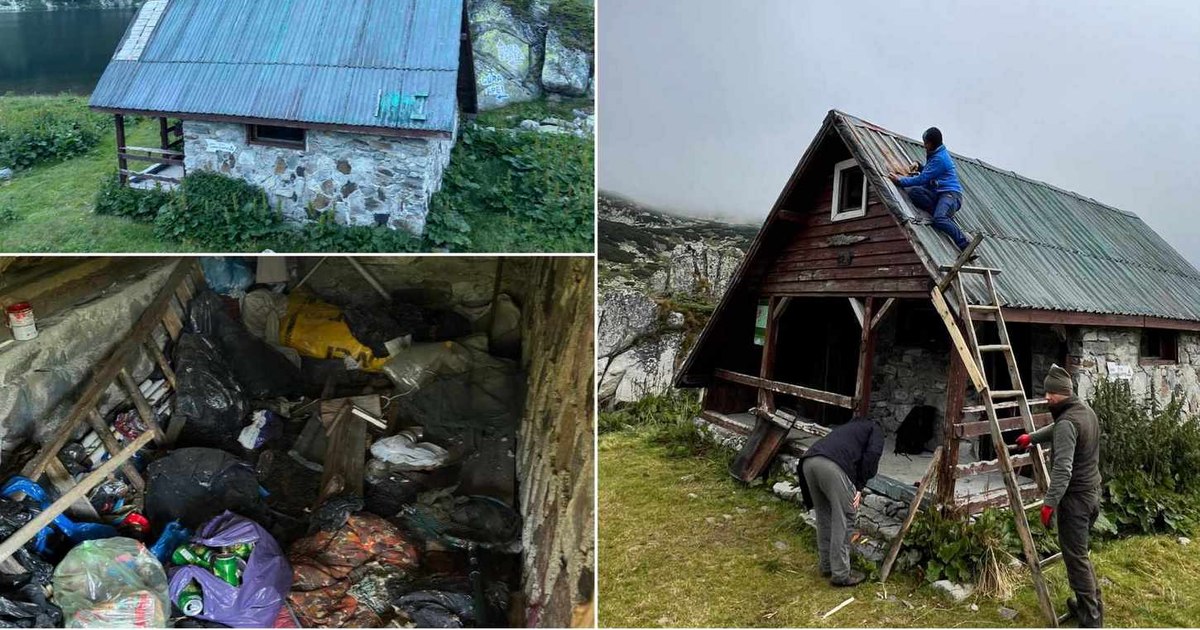
The number of tourists arriving in the Retezat Mountains increases during the summer, and with them the problems they cause. The lack of education of many travelers is increasingly affecting the condition of the refuges that are made available to them.
Zănoaga Refuge. Photo: Retezat National Park, Salvamont Hunedoara.
After finding the Zănoaga refuge in Retezat littered by tourists, the rangers and rescuers from the Retezat National Park launched an appeal to tourists who arrive on the mountain not to leave trash behind.
“Please remove the waste from Retezat National Park! What kind of mountain people are you, the ones who leave trash everywhere in your wake? If you went up with five kilograms of food, you can certainly go down with 500 grams of scraps and packaging! The APNR rangers, Alin Dăjulesc and Danciu Bogdan, went up to the Zănoaga APNR Refuge and sanitized the place after they were notified by their colleagues from Salvamont Hunedoara about the mess left by tourists in the annex of the refuge. They also temporarily repaired the roof of the refuge, until we carry the necessary materials to complete the work”, informed the Retezat National Park, on its Facebook page.
Refuges in the Retezat Mountains
Retezat National Park covers more than 40,000 hectares, but only in a few places can tourists stay overnight.
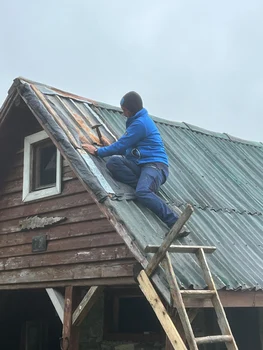
Image 1/6:
Retezat Refuge photo Retezat National Park and Salvamont Hunedoara (5) jpg
The places in Retezat where camping is allowed are at Râuşor, Pietrele, Stâna de Râu, Stănuleți, Dracșanu, Poiana Pelegii, Bucura, Zănoaga, Buta. The administration of the Retezat National Park specifies that it does not own cabins on the territory of the park and does not make reservations at existing cabins in the park.
The network of mountain refuges on the territory of the Retezat National Park includes the following places:
Refugiul Salvamont Poiana Pelegii (1,633 m) – located in Poiana Pelegii, a 15-minute walk from Gura Bucurii, the point where cars arriving on the section Gura Apelor – Gura Bucurii (Poiana Pelegii) are parked.
Salvamont Bucura Refuge (2,041 m) – located on the shore of Lake Bucura, 45 min. walking distance from the Bucurii ridge (trails to Bucura Peak, Peleaga, Păpuşa, Retezat).
APNR Zănoaga refuge (1997 m) – located on the shore of Zănoaga lake, the deepest in Retezat, almost 30 meters deep.
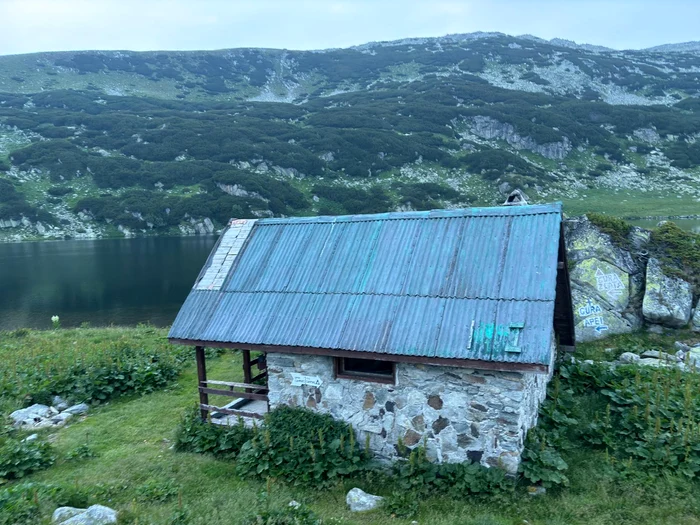
Zănoaga Refuge. Photo: ANPR
Condor Refuge (1780 m) – located on the route between the Râuşor Tourist Complex and Lake Ştevia, in the Ştevia valley.
APNR Stănuleți Refuge (1,100 m) – located in the Lăpuşnicului Mare valley, between Rotunda and Gura Bucurii (Poiana Pelegii), approximately 12 kilometers from the Gura Apelor Dam.
Salvamont Stâna de Râu refuge (1563 m) – located in the Poiana Stâna de Râu area (in this area, the streams flowing from Tăul Ţapului, Tăul Adânc, Tăurile Custurii, Ciomfu Mare lake give rise to the Bărbat River).
Salvamont Buta Refuge (1580 m) – located on the southern side of the Retezat, upstream from the Buta cabin.
Tourists are advised to keep the campsites and shelters in the national park clean.
“Why is it important to remove the garbage from Retezat National Park Minimal human impact! We want to preserve the wildness of nature and avoid the appearance of scavenger bears that, in search of food, would later tear apart the tents and backpacks of tourists. These preventive measures to remove waste from the Retezat National Park are taken both for the safety of people and the permanent residents of Retezat”, show the representatives of the Retezat National Park administration.
The rangers offer some recommendations to those who use the mountain refuges in Retezat. Some concern the care they have to take with regard to temporary accommodation. There were cases when tourists caused fires that led to the disappearance of such shelters.
“So that you find them in good condition next time and that they are useful to others, please: do not damage the shelters; close the doors and windows, so that the wind does not break them and the rain or snow does not enter the shelter; do not leave packaging and other rubbish in refuges, nor food that is not stored in boxes/containers that cannot be gnawed by rodents; make the fire using the primus and be very careful; don’t corner into shelters with floors or linoleum”says the PNR administration.
Recommendations for tourists
On the Facebook page of the national park, other tips are offered to tourists who plan to venture on the trails of the Retezat Mountains.
Seasonality: Check the seasonality of the routes before you hit the road. You can discover more details about the routes in Retezat on the page retezat.ro or salvamonthd.ro.
Duration: Will the proposed route take a few hours or a few days? Is it a little colder than you thought? Always check the weather beforehand! Choose the necessary equipment, materials and food, depending on the season and weather conditions, also anticipating special situations; Also take a map of the area.
Degree of difficulty: Will you be walking a short distance at a slow pace or a long distance at a faster pace on difficult terrain? when will you get back Don’t forget to inform the lodger, the mountain rescuers or the neighbors about the route you want to follow and the approximate time of return.
Experience: Do you have a special skill set? Skills you’ve acquired over a very long career? For example, ask yourself if you need any special skills (eg rock climbing, bird spotting, walking on a spider web, etc.) to enjoy the view safely on the trail? Choose the routes according to the training of the least experienced member of the group.
Rules: Do not leave the path. Follow the markings and signs on the route. Respect the imposed restrictions of the protected areas in which you are, informs Retezat National Park.
Retezat National Park, the first nature reserve in Romania
Retezat National Park, the first scientific reserve in Romania, was established in the mid-1930s, following the efforts made by scientists Alexandru Borza and Emil Racoviţă.
The reserve, located in the southwest of the country, in Hunedoara county, has an area of over 38,000 hectares, of which 19,988 hectares are forests, 9,893 hectares being in strict or full protection zones.
The Retezat National Park ensures a balance of fauna, here there are large predators, such as the bear, wolf or lynx, but also herbivorous animals, including the black goat, deer and deer or omnivores, such as the wild boar.
185 bird species live here and 1,190 plant species can be found, of which 90 are endemic species. Retezat National Park is home to 55 species of mammals, twice the number known at the beginning of the 90s.
There are 80 lakes and lakes within the park, including Lake Bucura, the largest glacial lake in the country, and Lake Zănoaga, the deepest glacial lake in Romania.
