
The end of the Olympic Games showed us once again that our athletes deserve their medals twice: once for their sporting success, and secondly for their tenacity to overcome the difficulties of training in a country where the dedicated infrastructure is precarious or even non-existent. But things started to change.
At least three of CNI’s future investments will become emblematic for Romania
The legend of Trivale is reborn
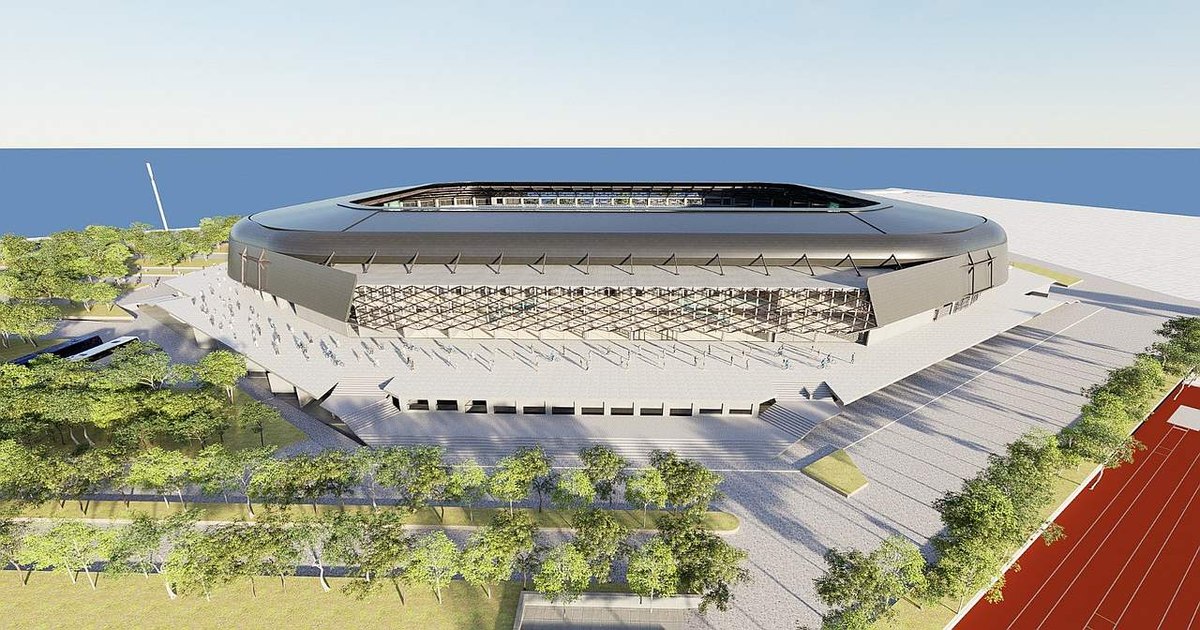
Pitesti will have the first “green” stadium in Romania, which will also be the most modern in our country. It will have zero energy consumption, thanks to photovoltaic installations and state-of-the-art heat pumps, which will cover all energy needs even in the most “hot” phases of the matches. It is the biggest investment in Pitesti. The project is financed from the state budget, and the contract for the execution works, worth 372.85 million lei, is to be signed in the near future. The whole complex – because the new stadium will actually be a sports complex – will be ready by the fall of 2026. The stadium will have 15,200 seats, of which 255 are intended for people with disabilities. There will also be a 500-space car park, 20 of which will be for electric cars only. The construction, equipment and facilities of the stadium will comply with UEFA’s provisions for category IV, renamed “elite”. This means that the arena will be able to host matches from the play-off round of the Champions League or from its higher stages, but also matches from the basic tournament of the Europa League or the European Football Championship. Thus, the new arena in Pitesti will also have “international” features. As a result, the complex could bear no other name than Nicolae Dobrin from Pitesti (nicknamed “Gâscanul”), considered the best Romanian footballer of all time. In 1979, his transfer to Real Madrid was blocked by Nicolae Ceaușescu on the grounds that the player was a “national asset”, as a result he could not be “alienated”. Not even for 2 million dollars, as was offered, which today would be about 10 million dollars. But then the amount was enormous. Beyond the reputation of Gâscanului, the stadium here also has the memory of some legendary matches in which FC Argeș defeated “at home” teams such as Real Madrid, Valencia or Sevilla. Now, the new stadium, with all the covered stands, will represent only the heart of a state-of-the-art sports complex, which will also house the children and juniors center of FC Argeș. But, in addition to the spaces dedicated to football, there are also training rooms for other traditional sports in the area: wrestling, boxing, judo or karate. Of the total area of the complex, 60% will be represented by green spaces.
In Constanța, “The King” will have a stadium to match
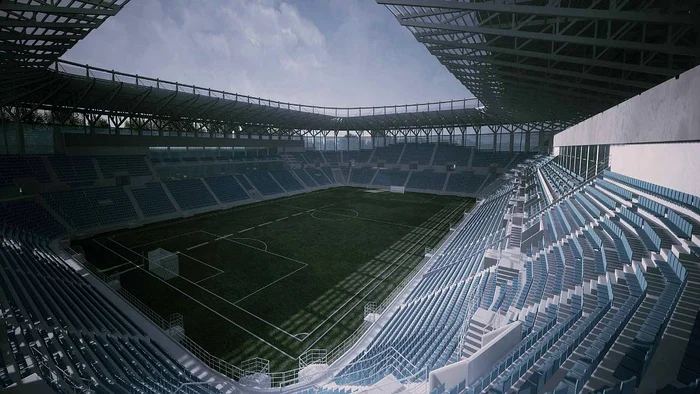
On the seaside, the former Farul arena, with all its rich track record, has become a memory. As in Pitesti, a sports complex will be built in its place, which will, of course, gravitate around the new stadium. The investment amounts to 490 million lei and the contract is expected to be signed shortly, which means that the works will start, most likely next year, and completion is expected in 2026. How the future stadium on the seafront will bear his name Gheorghe Hagi, the future arena must meet the demands of all those for whom Hagi is the “King”. Because, regardless of the teams he played for, for Hagi, Farul Constanța is the place where he asserted himself and from where he launched his brilliant career. Wherever he later played, from Sportul Studențesc to Steaua, from Real Madrid to Galatasaray, for the “rocket” Gică Hagi, Farul Stadium always represented… “Cape Canaveral”, the starting point. His coaching career strengthened his reputation, so that today Hagi is enthroned, definitively, on the “king” throne. Moreover, the former Farul stadium – renamed Gheorghe Hagi – had to be rebuilt, in such a way as to honor its name. The new stadium will be a state-of-the-art arena with 20,000 seats. The complex will benefit from all the functions and surfaces necessary to qualify for UEFA category IV, and will also contain a training space for athletics. There will also be around 3,000 square meters dedicated to indoor training rooms for sports such as squash or table tennis, but also for fitness or annexes. The project also includes a conference center with several rooms, a fan club, an exhibition and a souvenir center, as well as cafes or restaurants.
At Sfântu Gheorghe, the “Pole of Cold” turns into the Pole of… hockey!
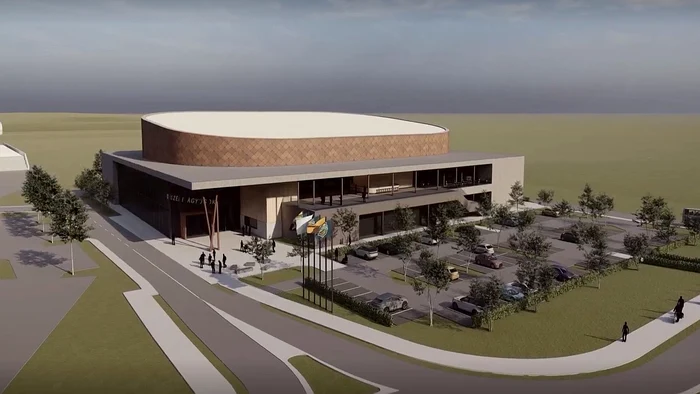
A great hockey player said that “90% of this sport is mental and the other half is physical”. But regardless of the pun of percentages, this sport requires a field covered with ice. As is known, Saint George is one of the centers of tradition in this sport. The city is known for its hockey and figure skating activities, with children’s, junior and youth teams operating here, and the senior team is part of the 8 of the national championship. Despite the high interest, at Sfântu Gheorghe, all hockey-related activities have been carried out so far on an artificial ice rink, covered with an inflatable tent and in other spaces that have become inadequate or unsuitable. Otherwise, if they can be called alternatives, they are at great distances. Meanwhile, the skating school program was integrated into the school curriculum, which substantially increased the interest in these sports. All this underlines the need to establish a modern center here, dedicated to ice sports. Now, through the National Investment Company, a new artificial ice rink will be built in Sfântu Gheorghe, on which work will begin next year. In the amount of 245 million lei, the contract provides for the construction of an ice rink equipped with a medical center and sports methodology, which will be integrated in the context of the development of the locality’s sports infrastructure. The requirements imposed by the project will make the future skating rink meet the specific standards for national and international competitions. By being adjacent to Arena Sepsi, the new objective will be integrated into the sports pole of the municipality, but will also offer complementary services to athletes and the public in the region, in conditions of superior quality and performance for all activities related to ice sports. The new construction will have two floors, a usable area of 12,000 square meters and will be able to receive more than 2,000 spectators in the stands. In addition to an exceptional setting for sports activities, the center will also be an architectural landmark that, together with the other sports facilities in the area, will significantly contribute to the development of the community. The complex also benefits from a diagnostic medical center, as well as fitness spaces, which will be open to the general public. The deadline for execution is 2026.
Two more big stadium projects are getting ready to become reality: Dinamo and Corvinul
But CNI’s plans do not stop there: among the almost 400 investments that are underway, two other stadiums with names loaded with the nostalgia of microbists are about to be reborn – Dinamo and Corvinul. They are now in public procurement procedures, at the end of which the contracts will be signed.
In the capital, the new stadium of the “red dogs” will have fully covered stands, 25,000 seats and will meet UEFA accreditation requirements for level 4. The new “pit” will also have exhibition spaces and a heliport for SMURD aircraft, with access to Floreasca Emergency Clinical Hospital. The estimated value of the project is 588 million lei without VAT.
And in Hunedoara, the “Corvinus nest” is on the verge of rebirth. With 10,000 seats in fully covered stands, the stadium will have a football pitch conforming to FIFA surface rules and the UEFA Guidelines for Quality Stadiums, with bleacher space for spectators, used for both official matches and other activities. The estimated value of the construction is 210 million lei, excluding VAT, quotas and taxes.
The financing of all investment objectives achieved by CNI SA is ensured by the Ministry of Development, Public Works and Administration.
