
The chances of asteroid 2024 YR will hit the Earth in 2032 have increased significantly, but experts say we do not have to panic, and the risk will decrease as more data about its trajectory will be obtained.
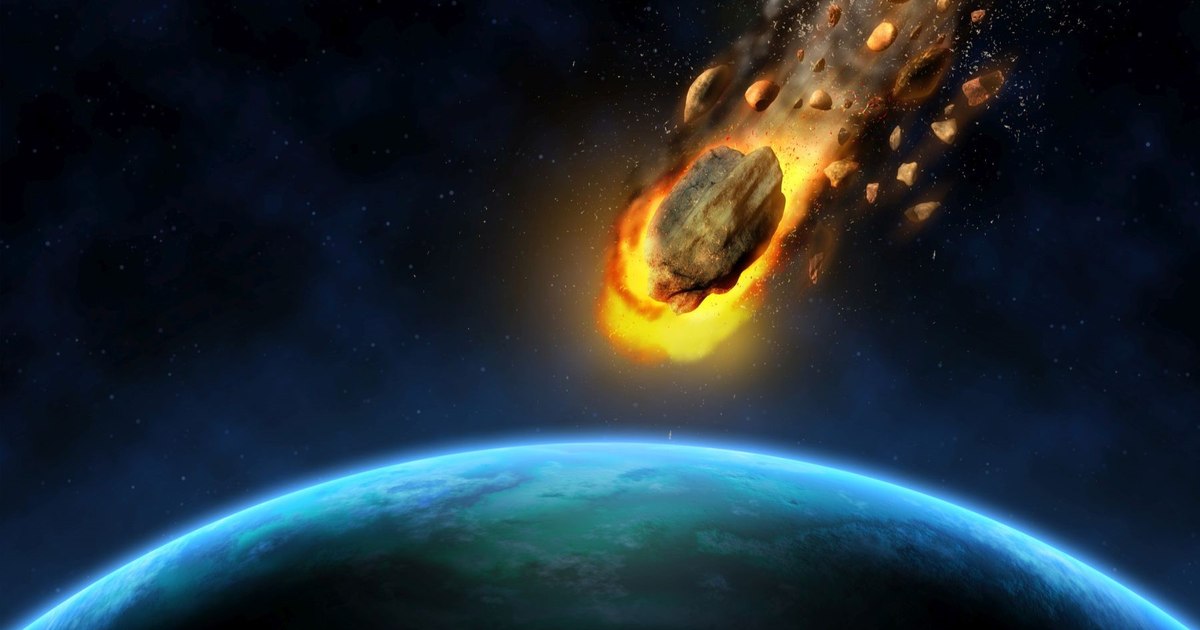
Asteroid. Photo: Frepik
According to the Center for Studies of Objects near NASA (CNES), the chances of a collision with asteroid 2024 yr have now been estimated at 2.3%, which represents a probability of 1 in 43. These chances have increased than 1, 3% as it was estimated in December 2024, when the European Space Agency (ESA) announced that the asteroid could hit the planet on December 22, 2032, the day it will approach the most. Therefore, in simple terms, there were almost 99% chance that the asteroid will pass without causing incidents.
With a width of about 90 meters, the 2024 YR asteroid is comparable to the Tunguska asteroid, which devastated about 2,150 square kilometers in the Siberian forest in 1908, when it exploded. It was recently discovered by astronomers, who noticed it from a Chile telescope before the New Year.
However, astronomers insist that the inhabitants of the Earth do not panic, even though the 2024 yr asteroid has climbed the top impact risks in both America and in Europe and received a rare three evaluation on the Torino impact danger scale. , ranging from zero (without risk) to ten (a risk capable of destroying civilization).
The fluctuations in the impact chances of a cosmic object so far are frequent and in a video posted on YouTube, entitled “How the asteroids pass from the threat to nothing to worry”ESA explains that the likelihood of asteroid 2024 YR will hit the planet will decrease almost to zero after more accurate data and trajectory will be obtained, data that will be available in the coming weeks and months.
The Planetary Defense Coordination Office of NASA, the United States Space Agency, agrees with this evaluation.
“There were several objects in the past that climbed the risk list and subsequently decreased, as more data appeared“Said researcher Molly Wasser. “The new observations could lead to the reassessment of this asteroid to zero, as more data will come.”
Also, Colin Snodgrass, professor of planetary astronomy at the University of Edinburgh, said last week for The Guardian: “Most likely, this asteroid will pass by the ground without a danger. It only deserves more attention from telescope until we can confirm this. The more we follow his orbit, the more our forecasts will become more accurate. ”
Other recent incidents, which have raised similar fears, seem to strengthen this message. Astroid 99942 Apophis, discovered in 2004 and greater than the Eiffel Tower, initially received an evaluation of four on the Turin scale, but was later calculated that it was no danger to Earth in its near 100 years.
However, even if the 2024 YR asteroid continues to go to the ground with a high probability of impact, the success of the NASA DART mission of 2022, in which a space shuttle was deliberately hit by a large asteroid and changed the trajectory, offers reasons for optimism for the future of humanity.
“This asteroid is the size at which a mission like DART could be effective, if necessary, so we have the technology and it has been tested”Said Snodgrass.
