
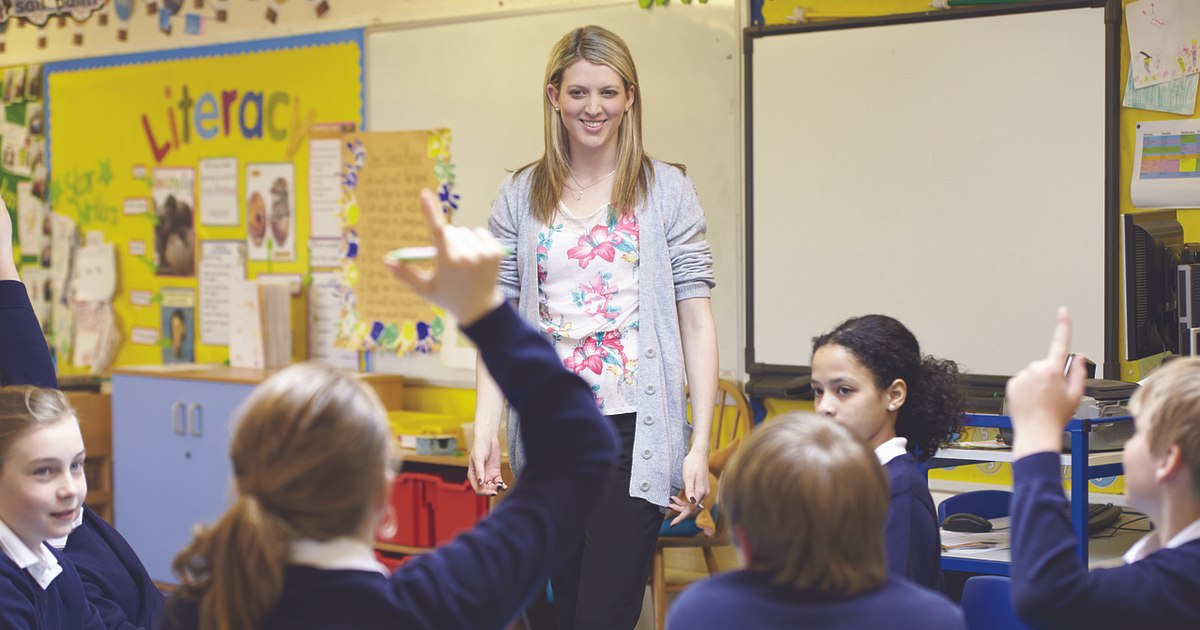
Almost half of Romanians no longer trust teachers. It is the result of an IRES survey, published at the end of last year, and which brings us in front of an extremely sad reality. Romanian teachers have lost the authority they once had in front of their students, they have also lost the respect of parents and, in general, the appreciation of the whole society. This, while the school itself has become for many children only a form without substance.
Romanians no longer trust teachers. Archive
Concretely, according to the IRES survey, 46% of the Romanians who participated in this research declared that they have little, very little or no confidence in teachers. The rest, 54%, declared themselves satisfied, but this percentage is extremely small. Trust in teachers increased slightly from 2023, when 52% of respondents expressed a lot or a lot of trust in them and 48% – a little, very little or not at all. But the percentage is still lower than in 2022, when 59% of Romanians had a lot or a lot of trust in teachers, and the rest – little or not at all.
Teacher: “If the Romanian state doesn’t respect you, how will the people around you respect you?” It is no virtue to be poor”
These figures no longer surprise anyone, although they should alarm us downright. The teaching profession has become less and less appreciated, and the teacher is, most of the time, disregarded. There are many reasons, stated the experts consulted by “Adevărul”, but this social trend is primarily due to the way in which the Romanian state itself treats teachers. “And at the moment when, in the last 20 years, the job of a teacher in the pre-university system has become so miserably paid, at the moment when the Romanian state itself doesn’t give a damn about you anymore, you, as a teacher, what do you expect to do do you have those around you?”Bogdan Bucur, university professor at SNSPA, asks rhetorically.
Teachers display a modesty that is not only immediately noticed, but is also harshly – but unfairly – judged. “It is not a virtue to be poor. It is not a virtue to be a loser in life. There is nothing glorious about going to school, doing a mediocre job, getting a mediocre salary, and dragging yourself through life from day to day. What can be spectacular about this? What can be worthy of admiration?”
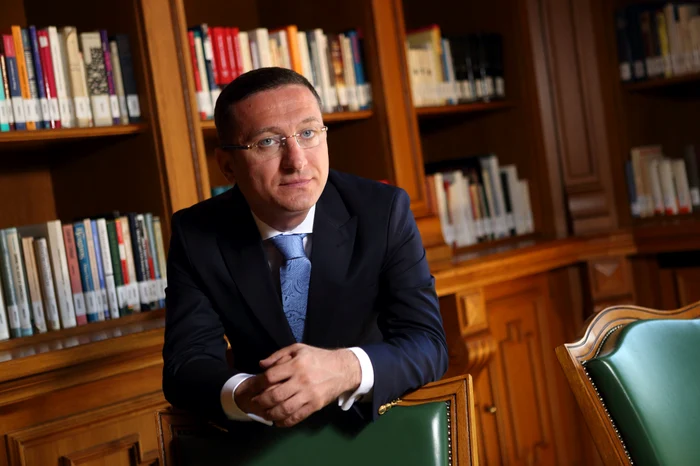
Bogdan Bucur, sociologist and university professor within SNSPA. Personal archive
The Education System, infused with a huge dose of mediocrity
Professor Bucur points out another aspect. He believes that what generates this state of affairs is the attraction to the system of people who have no chance in other fields of activity. “People who are poorly prepared and who enter education for lack of other opportunities. Because those who are well trained are looking for suitable, well-paid jobs”.
The teacher admits that many times it happened to him, interacting with people employed in corporations, to discover in them a huge potential, which could have been directed to the education system. “People who, for example, had all the skills to be excellent teachers of the Romanian language or foreign languages, but who did not perform in this direction. Because of the salary, obviously. Therefore, in my opinion, education should be kept at a salary level in the upper salary zone in society, so that you attract the best people. Then you have to know how to keep them in the system, make them want to stay in the public area, not migrate to the private area.”says prof. glad “But on the other hand, everyone understands the mission of education, everyone wants a good school. But, if possible, not to pay anything for her.”
The specialist believes that a 21st century salary would attract students to the system, and the quality of the educational act would increase. “Otherwise, we will continue to wake up with grade 5 or 6 students who end up in education and deliver information of grade 5 or 6 to children”.
Professor Bucur is of the opinion that people respect, first of all, jobs with special status. “They respect those who deal with criminal files, handcuffs, the intelligence area, and I mean the secret services here. I mean the institutions of force. And force is given by the ability to arrest, prosecute and inform. Force is not associated with the ability to educate, to civilize, to democratize. Force in Romania is not associated with a good education of the brain, with a good civilization of man and society, with its democratization”. the specialist points out.
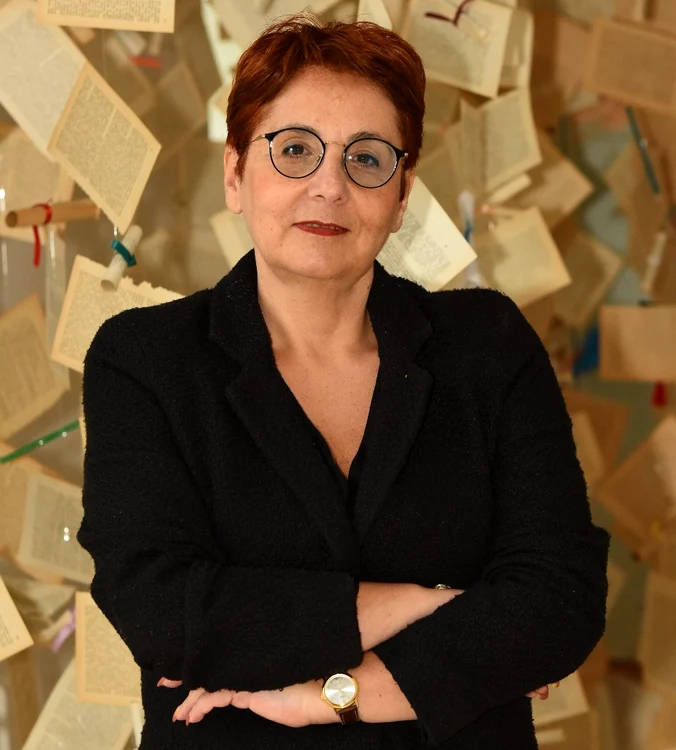
Daniela Claudia Orășanu, director of the “Unirea” Railway Technical College from Pașcani. Archive
Information is power. “When you no longer have information, the respect of those around you also decreases”
Daniela Claudia Orășanu, director of the “Unirea” Railway Technical College in Pașcani, Iași county, stated for “Adevărul” that the teacher was respected when he alone had all the information. “When you went to school and the teacher asked you about the world and geography and history and so on. Today, the information is on the phone, just a click away. The information is no longer with the teacher”. The teachers have kind of lost the object of their work – those who do not keep up with actuality, with the present, those who fail to adapt to the times.
This comes as many teachers are stuck in outdated teaching and assessment methods. “These people no longer show any interest in children because the information delivered no longer reaches them.” says prof. Claudia Orasanu. The headmistress believes that a teacher who entered the classroom and climbs on a pedestal looking at the children from above, with superiority, has lost the battle from the start. “The highlight is that this pedestal is not only figurative, but also as real as possible. There are those schools with those classrooms where the chair is raised on a step higher than the area where the benches are located. A small stage on which the teacher steps with confidence and which gives him – he thinks – authority and respect. But children no longer have the reflex to look up, but down, at their phones. And that step, instead of giving the teacher authority, does nothing but increase the already colossal distance between him and his students.”
The catalog, the ultimate weapon. “I have the bread and the knife. I have the power”
Claudia Orășanu confessed to us that, being a high school principal, she had one of the most disappointing experiences regarding the implementation of the digital catalog which was not seen favorably by many teachers. But the reason is not related to the difficulty of teachers to operate with this digital tool. “In the opinion of many, the lack of the classic catalogue, in physical format, spoke mainly of the authority of young teachers. The physical catalog was their last weapon against the students. That huge catalog, with yellowed pages and faded covers sets you apart from others on the principle of “the catalog is mine, I have the bread and the knife”.
Perched, thus, on a higher step than the children sitting in the benches, seated at an artificially high chair and with the catalog in hand, many teachers are nothing more than a “sad king left without a kingdom”.
