
The effects of the 2009 abolition of arts and crafts schools are still being felt today, say employment specialists. And they are quite serious, especially for poor counties. First, a shortage of tradesmen was created, and many were left without school.
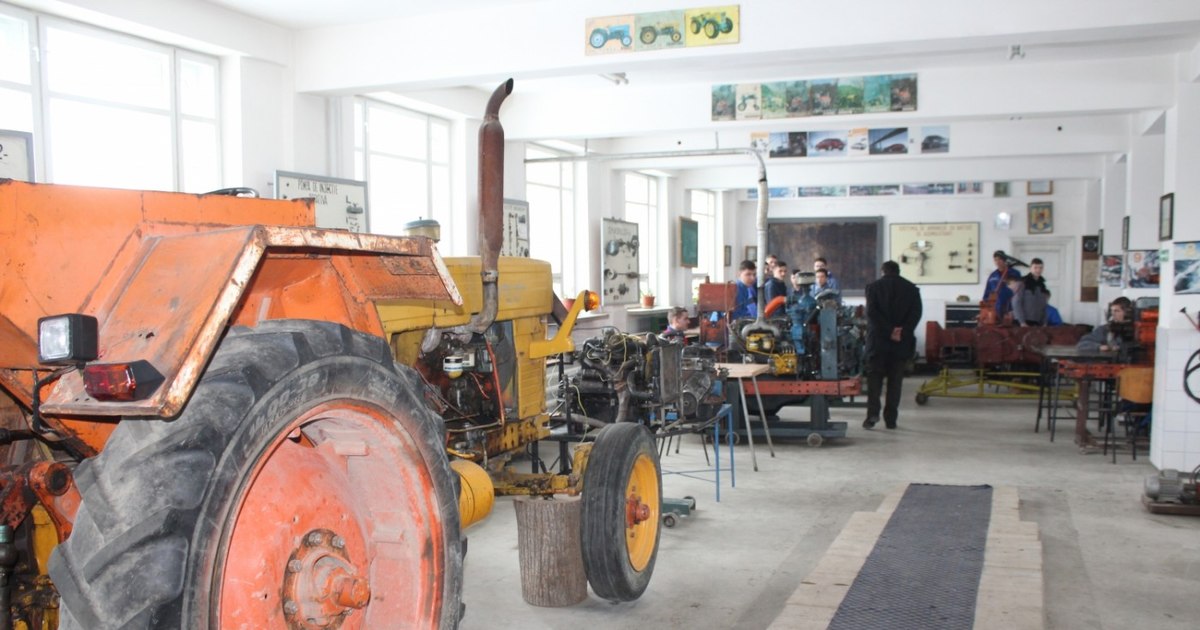
Vocational schools were re-established PHOTO Cosmin Zamfirache
On February 11, 2009, schools of arts and crafts, i.e. those “factories” of craftsmen in fields so sought after on the labor market in Romania, ceased to exist. Actually, by a decision of the Government, the schooling figures related to the arts and trades schools were taken over by the technological high schools. The reasons given were the increase in the number of students at the industrial and technological high schools, but also that “the technological high schools are better prepared for a quality education”, stated Ecaterina Andronescu, the Minister of Education at that time. The disastrous Baccalaureate results obtained by students from technological high schools for years in a row proved the opposite. It was a resounding failure, later reports show. In addition, as specialists in the employment of labor force say, that period of approximately two generations left deep traces both on the labor market, but especially in society, especially in poor counties.
Thousands of people without school
One of the main consequences of the closure of arts and trades schools was the creation of cohorts of eighth-grade children remaining at the eight-grade level. And that’s because the parents didn’t have the money to support them, for four years, at the schools in the city. In addition, they did not see the point, considering that many wanted to learn a trade, and from the age of 16-17 already go to work to support their family. This is how we reached the situation where, only in Botoșani county, around 2282 active people have only eight classes or less. Obviously, the closure of arts and crafts schools is not the only or the main reason for this situation, but it encouraged it in many cases. “A few years ago, when the Minister of Education was Ecaterina Andronescu, at the Government level the decision was made to close the Schools of Arts and Trades and orient all students to high school classes. The effects of that measure did not occur immediately, but we feel them even now, even if at the present time those vocational school classes have been re-established”says Anca Apăvăloaie, director of AJOFM Botoșani. At the national level, the educational impact of that measure is demonstrated by other official reports.
The most eloquent is the “National Strategy for the Protection and Promotion of Children’s Rights 2014-2020”, elaborated by the Ministry of Labour. In that report it is stated that, due to the abolition of arts and trades schools, 10% of the 8th grade graduates in Romania they could no longer continue their studies.The abolition of Arts and Crafts Schools led to the non-continuation of the studies of at least 10% of the students who finished the 8th grade, mainly due to the fact that families cannot cover the costs of 4 years of schooling“, the report states. The impossibility of continuing their studies, at professional schools, condemned them to modestly paid jobs, at best.
More precisely, with eight classes, they cannot access level 2 or 4 qualification courses and can only be agricultural workers or maids, among others. The most affected by the lack of arts and crafts schools were students from rural areas. “It represented an important challenge in terms of the right to education of children who had completed 8 study classes and who wanted to follow a 2-3 year professional course, which would help them learn a job”it is shown in the same document.
Lack of craftsmen on the labor market
This situation did not only affect students or employees, but also employers. Owners of construction companies, clothing companies or in general any activity that requires a need for craftsmen found themselves without qualified employees. Those who remained preferred abroad. “But there was a period of several years, when practically the non-existence of these arts and crafts schools led to a lack of qualified people for a certain period, a lack that was reflected in the employer’s need for qualified labor. Do not think that all employers need personnel with higher education. Employers also need mechanics, electricians, carpenters, fabricators, therefore average labor force, with which to carry out their activities“, adds Anca Apăvăloaie.
Many of those who could not access better paying jobs began to settle for social assistance or day labor in the villages. Others preferred to go to work abroad, in agriculture, where they could practice with the eighth grade level.
