
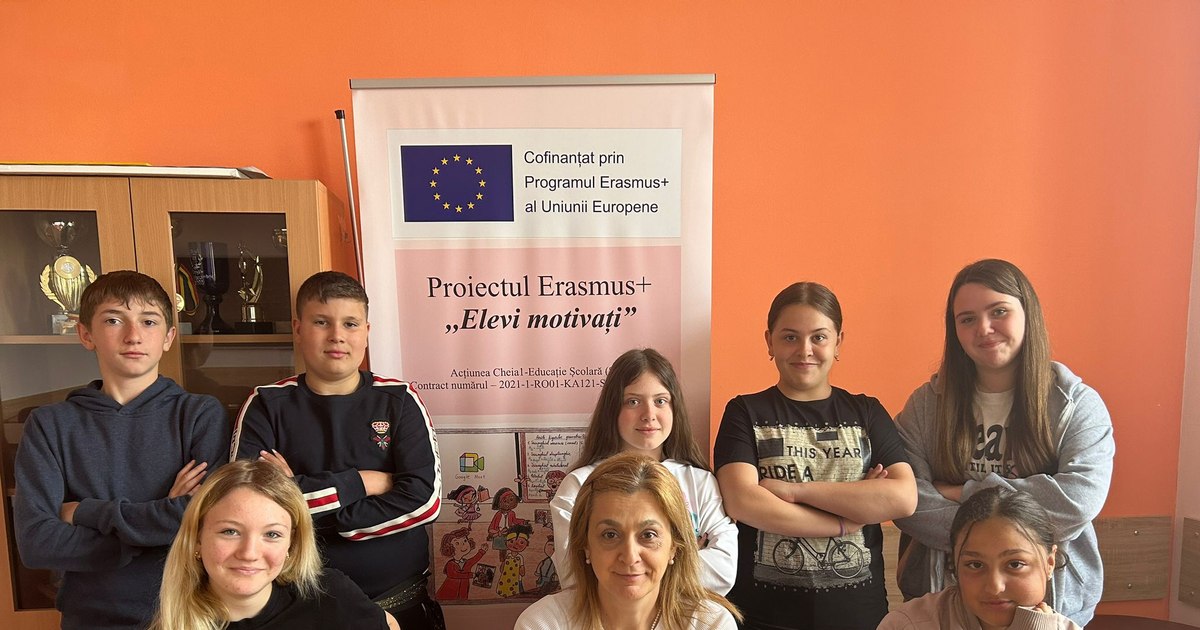
The teacher uses history to combat the discrimination of Roma children, but also to develop the students' communication skills by presenting the lessons in the form of stories.
Camelia with her students PHOTO personal archive
Camelia Costanțea, history teacher and director of the secondary school in Viișoara commune, Cluj county, is this year's winner of the trophy at the rural teacher of the year Gala, in the “Prevention of school dropout” category. She became passionate about history thanks to her high school teacher, who she says was a living encyclopedia.
“I didn't understand how he could teach history so beautifully, like a story, and have all the data in his head. It was fascinating! And now I remember with pleasure how he filled the blackboard with an extraordinary scheme of the lesson, which I did not even come across later.” Camelia told “Weekend Adevărul”.
As was natural, he attended the Faculty of History and Philosophy of “Babeș-Bolyai” University and also has a master's degree in Curricular Management.
At first, the organization
Camelia has been teaching for 20 years and has distinguished herself with a unique method at the national level for preventing school dropouts. The first thing she did when she became headmistress nine years ago was to go to the village community and identify the children who should be enrolled in kindergarten and school.
“Since I've been principal, my primary concern has been to reach out to the community and get kids into school,” explained the teacher. In this way, he prevented a problem frequently encountered in Romania.
Parents, especially those in the village, do not enroll their children in school either because they want to help them with the field work or because they do not see education as a way to succeed in life. Camelia thus managed to have a very accurate database of all school-age children in Viișoara, and when the time comes for this step, parents are notified in advance.
Approximately 39% of Roma children are enrolled in the local school and kindergarten. The number could be higher, because some parents do not declare this for fear of discrimination. In the 2023-2024 school year alone, she managed to reintegrate seven Roma children who had dropped out of school into the school cycle.
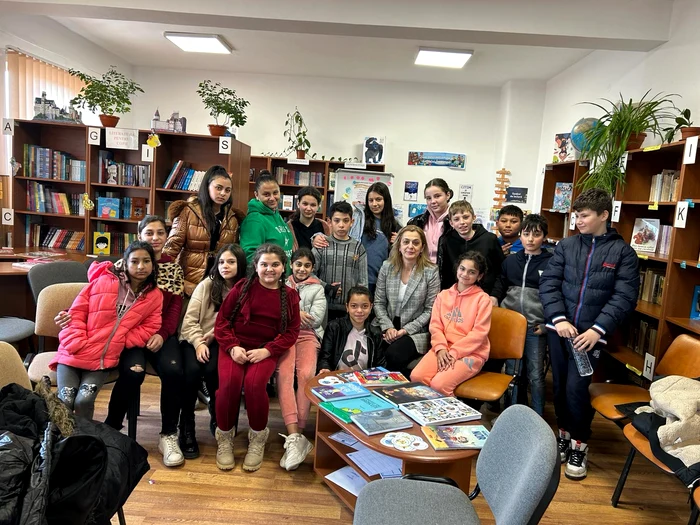
Camelia always puts her students in the position of thinking PHOTO personal archive
A reality of Romania today is that many parents are illiterate and, even if they would like to enroll their children in school or kindergarten, they do not know when to do so. The teacher tells us the case of a father who is still guided by the seasons in the 21st century.
“They ask me when the child will come to school and I tell them in September. He looks lost at me and I tell him that it is the time when he goes to pick potatoes. I practically fixed the moment on his mental calendar,” Camelia recalls.
It is also important that the little ones are enrolled in kindergarten, because if they take this step, says the teacher, there is a good chance that they will also come to school.
“A child who has not attended kindergarten has very little chance of completing primary school and then reach the secondary school cycle”, says the director. In recent years, he created a new group of children in kindergarten, not because the birth rate in Viișoara increased, but because he convinced the parents to enroll them.
The history lesson as a story
He says about History that it is a rather difficult subject for children. “The beauty of history is generally discovered in adulthood”, explained the teacher. Although at first glance the blackboard lesson plan seems an outdated method, Camelia uses it because it facilitates not only learning history, but also communication skills.
“I like to build my lesson around an outline. You don't dictate something to the child in a notebook, which he has to learn by heart. It puts him in a position to think,”
the teacher details his teaching method. He uses maps and different images a lot in class to associate the ideas and information he conveys with the visual part.
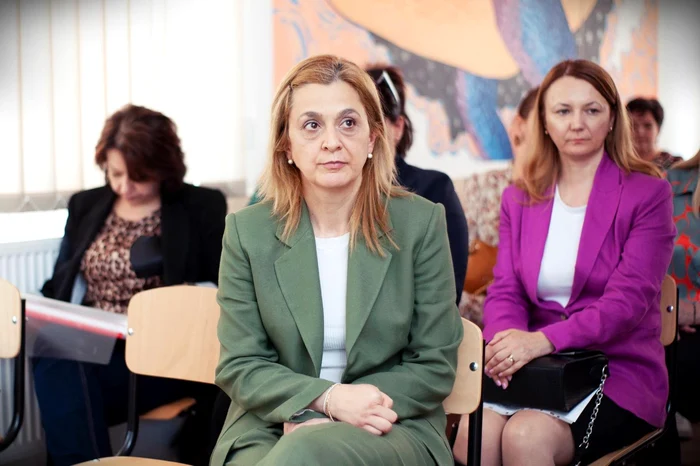
Camelia always introduces new elements in her history lessons PHOTO personal archive
He presents his history lessons in the form of stories, because that is the best way to capture the interest of the students from grades V-VIII he teaches.
“I always pepper the lessons with new information. It is the kind of information that the child, when he goes home, also asks the parent”, says the teacher. Many times, history lessons go into completely different areas than the topic being discussed. If he sees that they are passionate about a subject, he insists more on it and develops it to quench their thirst for knowledge.
Ethnic pride
Because their ethnicity is still a sensitive topic in Romania, Camelia uses history to encourage Roma students to recognize and accept their ethnicity.
“When there are sensitive topics, such as the Holocaust, I also emphasize the Roma Holocaust, which is not much discussed. In this way, I also sensitize the other children, Romanians and Hungarians, and I make the Roma people feel important”, the teacher tells with emotion.
A worrying situation is also that of ethnic Hungarian children. After graduating from secondary school, they do not return to the community. They attend traditional high schools in Cluj and then enroll in universities there or in Hungary.
“When I became a teacher in Viișoara 20 years ago, the classes for ethnic Hungarian children were independent classes, with 20 children in each class, on each level. Now there are simultaneous classes and there are about 10 children in two classes”, describe the directory as things currently stand.
School of parents
Camelia also ran several projects in the school with European funding through the Human Capital Operational Program (POCU), to prevent the risk of school dropouts. For example, in the period 2018-2021, 197 students from primary and secondary school were included in an afterschool program to recover the subjects of Romanian language, mathematics and English, and for four days a week they also received a hot meal.
In order to encourage parents to take their children to kindergarten, the project offered them monthly social vouchers. In another POCU project, the teacher involved, alongside her school, two other school units from the village, through which 115 children, 30% of whom are Roma, participated in personal development and creative workshops in a non-formal environment.
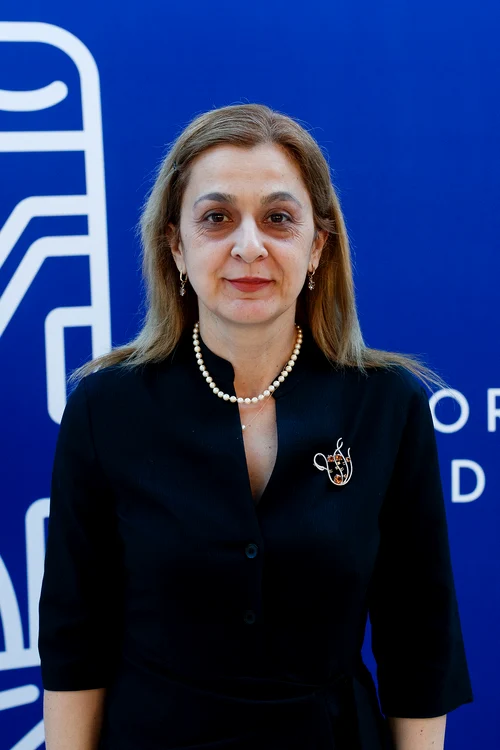
“School of parents” is one of the soul projects of Camelia FOTO Teach for Romania
Another extremely interesting project, financed with Norwegian funds and carried out with the support of the Noi Orizonturi foundation, involved the training of teaching staff from the school in Viișoara in what was generically called the “Parents' School”.
“The parents were then called to the school and became our students. They learned how to help their children. We also created a social inclusion camp, which was organized in the mountains, in which Romanian and Roma students participated”, says the teacher.
During the cold season, when he has classes in the first hour, he finds the children climbing on the radiators and always lets them stay for a few minutes. He knows what this means for them, when they stay longer in the cold at home.
It's another thing that connects them to school. In the end, Camelia wants only one thing: for her students to consider that she was a man who did everything in his power to make them feel good.
