
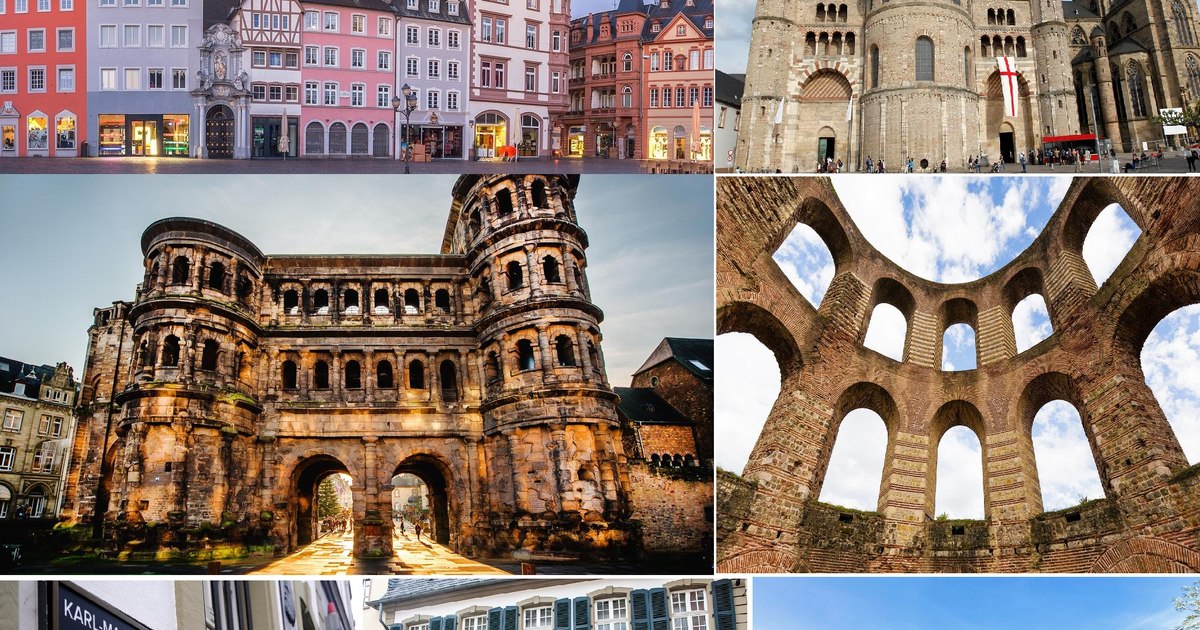
If you’re looking for an unforgettable getaway, we’ve got the perfect destination for you – and no, we’re not talking about the classics of Berlin, Hamburg or Munich. Why not escape from the routine and discover Trier, a fascinating city that will take you directly to the heart of history?
Trier the treasure of Germany or the “second Rome” Collage TripAdvisor&Shutterstock
With some of the most impressive Roman monuments in Germany, Trier is where the grand past comes to life in a special atmosphere.
Located at the crossroads of cultures, close to the borders with Luxembourg and France, Trier is the perfect choice for an unmissable experience in a lesser-known place. Whether you’re planning to explore these countries or looking for a truly special destination, “the other Rome” it awaits you with a special charm.
The city impresses with an exceptional monumental ensemble, which combines Roman history with medieval architecture, including no less than nine sites inscribed on the UNESCO World Heritage list.
A visit here is not only a journey through time, but also a foray into a unique cultural universe that promises to stay in your soul.
What to visit in Trier – foray into the heart of ancient Rome without the crowds
Trier, a fairytale city in western Germany, invites you to get lost among the impressive monuments of Ancient Rome, but without facing the tourist hustle and bustle. Here, you will experience the feeling of being in Rome, but with much more peace.
Plus, thanks to its compact size, you can explore the entire destination in one day. However, we recommend that you take your time, because although most of the attractions are a short distance from each other, Trier hides many treasures to discover.
How to start exploring the historic center
For an unforgettable foray into the heart of history, start your trip to Trier via the Porta Nigra, the fortified gate in the ancient Roman wall, built around 170 AD. Considered the best preserved from the Roman period, it offers you a first history lesson in an imposing setting.
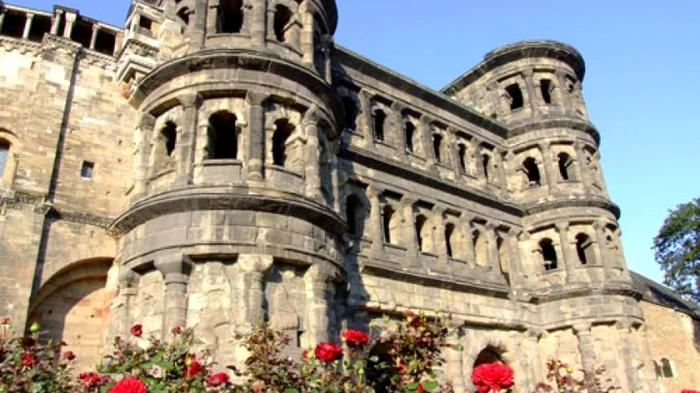
Porta Nigra – one of the historical and architectural treasures of Trier Germany Photo Archive The Truth
But don’t be in a hurry to just go through it! From the top, you can enjoy a spectacular panorama of the city, and a staircase will take you up to the fourth floor, where you will be rewarded with a full view of all the wonders that await you. On levels two and three, explore ironwork galleries that allow you to walk the inner perimeter of the gate and pass from tower to tower for a unique perspective on this fascinating city.
Main Square – a corner of history and elegance
The next stop will take you to the old town square – Hauptmarkt -, the vibrant medieval center of Trier, a place where past and present seamlessly intertwine. Surrounded by gothic and renaissance buildings, the square impresses with its elegance and will immediately transport you to a vintage atmosphere, reminding you of the charming traditional German markets.
In the middle of this architectural gem stands proudly the Gothic tower of the Church of St. Gangolf, an imposing symbol of the city that dominates the square and gives it a special charm, becoming a real point of attraction in the historical landscape of Trier.
Saint Peter’s Cathedral – the jewel in the heart of Trier
Leaving the Hauptmarkt and going down a quiet street on the left side of the main square, you will reach the Domfreihof, where St. Peter’s Cathedral shines. This Catholic place, dedicated to Saint Peter, the patron saint of the city, is not only the oldest temple in Germany, but also one of the country’s most impressive religious monuments.
Its spectacular architecture skillfully combines Gothic and Romanesque styles, with delicate Baroque accents that add a special charm. The cathedral was built on the ruins of some Roman constructions in Augusta Treverorum, and inside, in some chapels, you can observe fragments of brick walls dating from the 4th century, a true testament of the past.
If the exterior of the cathedral impresses you, don’t miss the opportunity to explore the inner courtyard, a place of rare beauty. In addition, one of the most valuable treasures of the cathedral is the Holy Tunic, kept in a special chapel, but which can only be admired on certain days of the year. A sacred place that really deserves a visit!
Constantine’s Basilica, the Imperial Baths and the birthplace of Karl Marx
Trier continues to delight travelers interested in history and art, offering a collection of monuments that transport you directly to the Roman era. One of the most impressive is the Basilica of Constantine, an imposing building, built at the beginning of the 4th century AD. to serve as Emperor Constantine’s throne room. Today, this masterpiece has been converted into a Protestant church, but its grandeur remains unchanged.
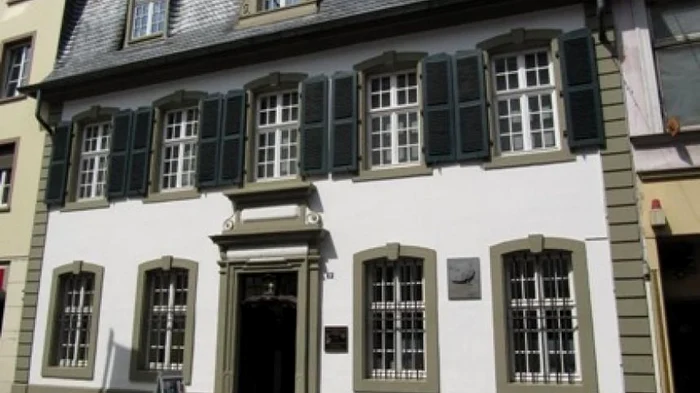
Karl Marx’s birthplace in Trier Germany Photo Archive The Truth
Along with the basilica, Trier also preserves evidence of Roman power: the Roman Bridge over the Mosel River, the oldest bridge in Germany still in use, the Imperial Baths from the 3rd century and the amphitheater from the 2nd century, the place where gladiators fought for glory in front of up to 20,000 spectators. Each step takes you deeper into history.
And for lovers of recent history, on the banks of the Mosel near Themes, you can visit the birthplace of Karl Marx – a baroque residence transformed into a museum essential for understanding the German and European past.
