
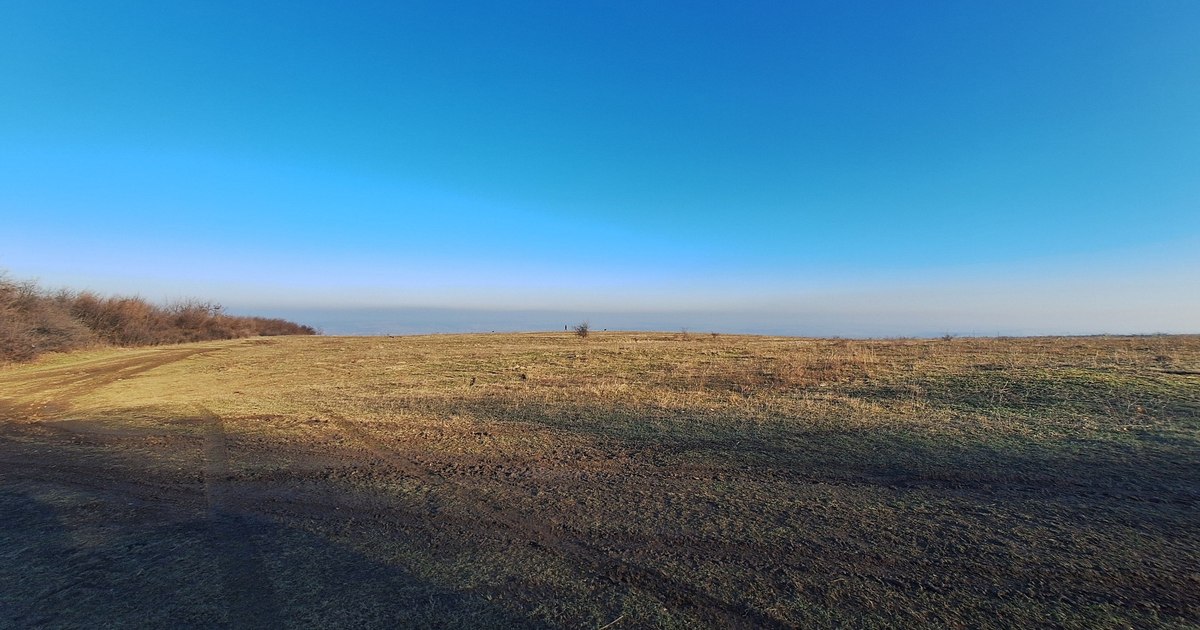
Romania still hides places of unimaginable beauty. Wild and undiscovered, testimonies of a distant past, full of fabulous stories and legends. One such place is Holm Botoşaniului, a huge hill on which forests, centuries-old trees and an untold history stretch.
The blankets at the edge of the clouds PHOTO Cosmin Zamfirache
Romania has special natural beauties, appreciated especially by foreign travelers who arrive here driven by abroad. They also talk about Romania as the last wild area of the central-eastern European area. Beyond the natural wonders that have become famous throughout Europe, promoted especially on social networks or in documentaries, there is a still undiscovered Romania, with secrets and unsuspected beauties.
One of the most underrated and little-known tourist areas in Romania is represented by Botoșani county, an unpolished pearl waiting to be discovered. One of the places that actually takes your breath away is the Holm plateau, dominating the streets above the village of Poiana, which belongs to the Famine Uprising of 1907.
Up there, close to the sky, on meadows beaten only by shepherds and winds in winter, is one of the most beautiful panoramic areas in the north of Moldova, from where you can freely admire the Upper Country of Moldova, immerse yourself in the forests full of deer, songbirds and other wonderful creatures that make their way through the old deciduous forests. For the latter, from the forgotten commercial road of the Upper Country, you can go to the Balș Hermitage, from where, on clear days, you can admire the peaks of Ceahlău, located hundreds of kilometers away. It is an area where the authentic and wild beauty of nature blends perfectly with the harmony of the vineyards but also with the outlaw stories told secretly by the village elders over a glass of peasant wine.
The “mountain” in the land of ancient hills and woods, deer paradise
One of the most beautiful areas in the north of Moldova is located in the area of the high hills of Botoșani. It is an administrative area between the communes of Vorona, Coșula, Tudora, Frumușica, the town of Flămânzi and Pârcovaciul Hârlăului, on the edge of Iasi county. It is a vast and wild land built, in geological times immemorial, of sandstones and all kinds of rocks over which whole layers of humus have been woven and forests stretched as far as the eye can see. There are old deciduous forests in which countless species of plants live, but also whole cohorts of sponges, champignons, champignons and other mushroom marvels that are especially delicious in traditional cuisine.
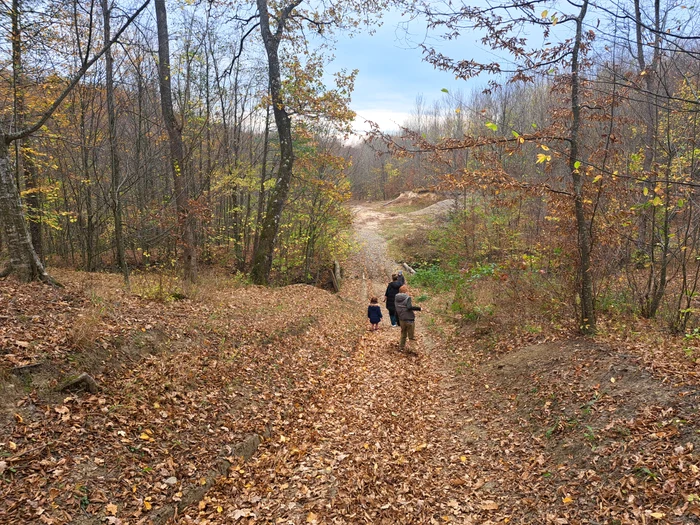
Through the yew reserve at Tudora PHOTO Cosmin Zamfirache
The tourist area actually starts from the commune of Vorona, on the famous road of the monasteries. Near the center of the village of Vorona, at the first roundabout, turn left and enter one of the most beautiful roads that cross the forest in Romania. A perfectly paved road with incredible panoramas. All the way to the end of E 58, the European road that connects Botoșani with Iași, there is the possibility of several extraordinary routes through the heart of the forest. And most of them are branded. They are not mountain trails, at high altitude, but they have a unique charm. That is, any tourist has the chance to immerse himself in a real green, wild paradise with healing silence, interrupted only by the chirping of birds. The most spectacular are the routes on the high, calcareous hills, with huge rock formations, with incredible shapes.
Here is the Moldavian sphinx, the robbers’ table, but also the grotto of Onufrie, the mysterious Russian schivnic, great miracle worker. Through the forests of Coșula, connected to the forests of Voronea, you can easily reach a kind of megalithic monument created by nature, on a route marked at the robbers’ table. From there all the way up Holm, above Flâmânziului. Here on Holm, at over 500 meters above sea level, you feel like you’re in the mountains. The increase in atmospheric pressure is felt in the eardrums but also in the decrease in temperature.
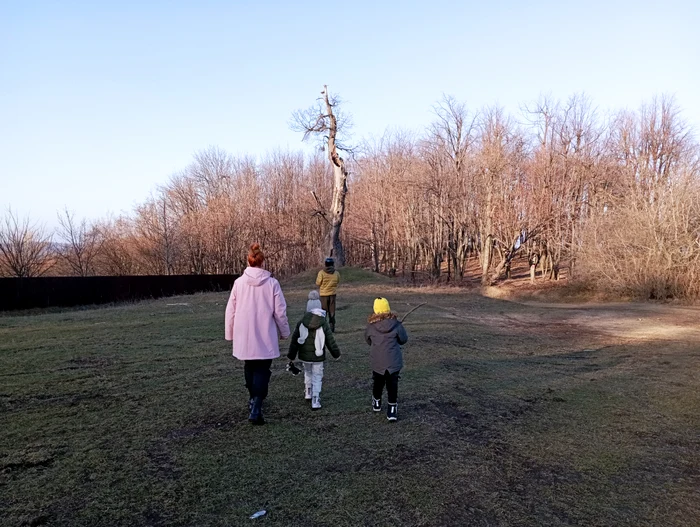
To the forests of the outlaws from Holm PHOTO Cosmin Zamfirache
On Holm, a wide plateau awaits you with a dreamy panorama. From here you can admire the northern tip of Moldova’s Upland, with vineyards, villages, woods and interesting limestone formations. See all the way to Hârlau. Following an old medieval road, almost lost in the grass, you get lost again in the forest kingdom. On marked paths, with fresh air and lots of greenery, you reach the Balș Monastery, a mysterious hermitage, built by the great boyars of Moldavia, high in the wilderness. From here, on clear days you can admire the Ceahlău ridges. Through these woods, other surprises await you, on picturesque paths to the commune of Tudora and Bobeica, the highest hill in the county, exceeding 550 meters.
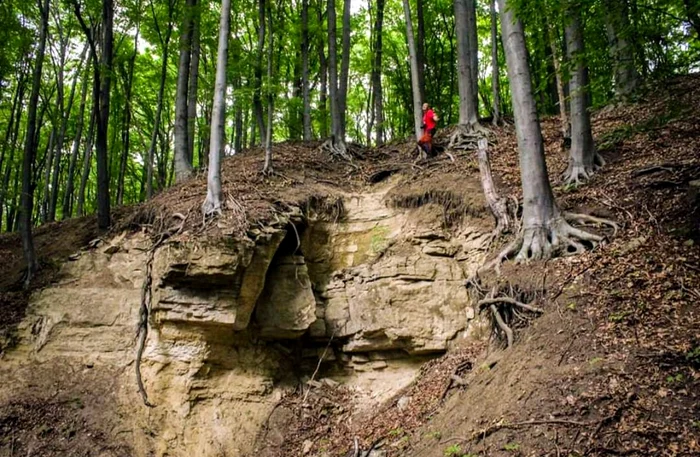
On the limestone massifs PHOTO Ionuț Haidău
Once you arrive at Bobeica, at the “mountain” in the land of hills, you know for sure that you are in the yew natural reserve, a true wonder of nature. Climbing the woods, it is impossible not to come across Cheile Bahluiului, a spectacular canyon, carved by water in the limestone blocks. The road through these forests, which can easily occupy two days, obviously with breaks at accommodation, are a total adventure. That means the chance to spot wildlife as well. The woods in this area abound in deer, deer, wild boar, wild cats, pheasants and numerous songbirds. It is a relaxed walk, especially since there are no bears or dangerous beasts in the area. This area is ideal for walks in a group of friends or family. Accommodations can easily be found in Botoșani at a maximum distance of 50 kilometers from the farthest point of the trip.
At Coroi’s oak and the stories of highwaymen
The route to Holm, for example, the high hill above Flâmânzi, with that plateau that leaves you speechless, is not just about a nature escape. It is also an ethno-cultural journey. Up at the end of the road, on the plateau, after leaving the deep forest paths you come across a solitary tree that dominates the meadow. Huge, weird and weather-beaten. It’s a secular oak, missing a good part of the crown and with a huge scurf in the middle of the trunk. It is a tourist attraction in itself. He is several hundred years old and has seen a lot. The old people say that bandits used to hide there to rob the highway. It is said that on those high peaks of Holm used to pass a great commercial road that connected Ieși, Târgul Frumos, Hârlău, to Botoşani and then, on the other side, it was lost to the Jewish Ștefănești, on the border with the Tsarist Empire. On this road, at the height, wagons loaded with goods passed, plus good cattle. Bandits are said to lurk in the forest canopy, in twos or threes in the hollow belly of the oak, and cut off the caravans. People say that especially Coroi, the last outlaw in Romania, was hiding there.
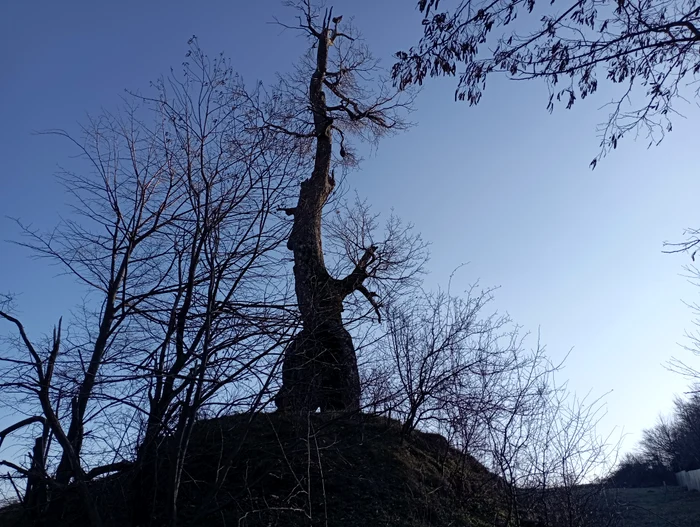
Coroi’s oak on Holm PHOTO Cosmin Zamfirache
“That tall tree is called Coroi’s flag. Because that’s where he was hiding from the police. And before many bandits came out in the way of merchants. That’s what the old people say, the road from Hârlău passed through there a long time ago”, says an old man from the village of Poiana, near Flămânzi. It’s full of outlaw legends in the area. The old people of Poiana, Coșula, even Copălău, know them very well. “There were forests full of bandits. At first the road went along the ridge. But then there was one on foot, around Frumușica. Anyway, they lived in the forest and attacked whoever passed by with a large load. Then they went to the robbers’ table, there to the big stones in the forest and they shared. It is said that there are also treasures there. No one dares to go after them because they are guarded by unclean spirits,” confesses another villager from Coșula.
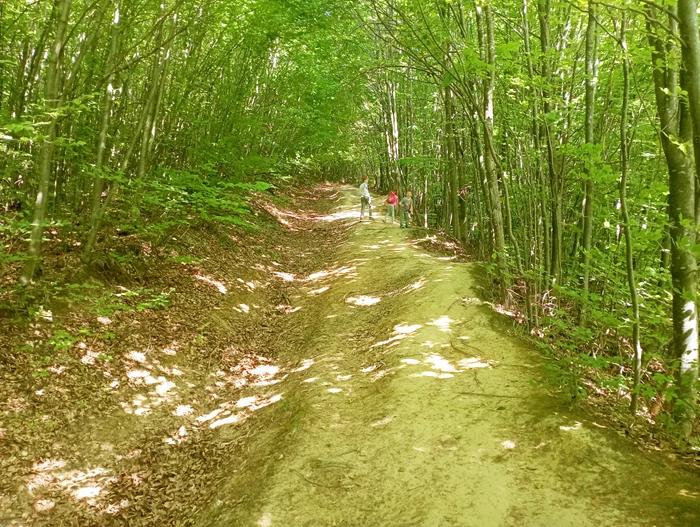
To the cave of St. Onufrio on a summer day PHOTO Cosmin Zamfirache
Anyone who is interested can learn these stories. People are welcoming and friendly. In addition, if the traveler detours to Frumușica, he enters a land of vineyards and wineries. Frumușica is part of the famous area of Cotnari with famous wines, including the peasant “sculău”, a strong red wine. Brandies are also at a great price, with the famous Rădeni brandy, liqueurs that can be used to tell stories about outlaws, Stephen the Great and great local nobles.
A place of confession and spiritual recovery
These realms can also be visited from an ecumenical point of view. After a purification in the wild nature, with the outlaw stories fresh in the memory, it is also worth a spiritual journey to the monasteries lost in the woods. Travelers can start from the Vorona Monastery, to climb higher to the Vorona Hermitage, with the miracle-working relics of Venerable Onufrie and a unique icon in the world, also considered miracle-working. The ecumenical road takes you to the Oneaga Hermitage and then to the Coșula monastery, one of the largest monastic centers in 16th century Europe, with its famous yellow, which, some say, rivals the blue of Voroneț.
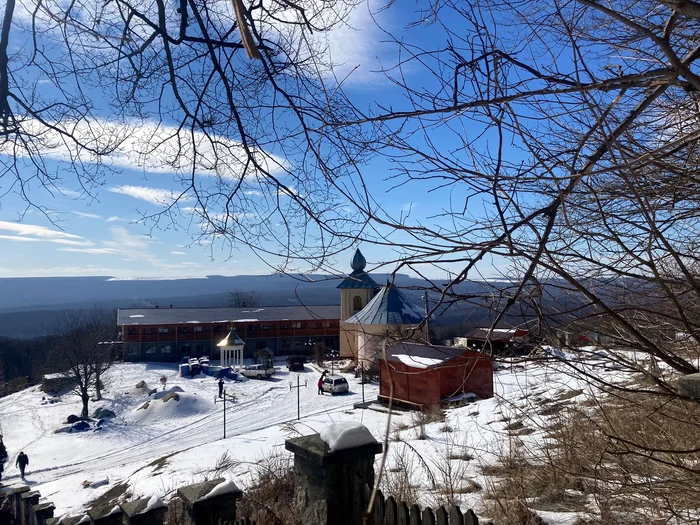
Balș Hermitage PHOTO Ionuț Haidău
The trip ends at the Balș Monastery, a hermitage hidden in the woods between Frumușica and Hârlău. It is a monastic settlement dedicated to the Holy Trinity, founded by the boyars Grigore Balș, Lascăr Sturza and also by Shimonah Ursachi from the middle of the 18th century until the beginning of the 19th century.
