
The months of January and February are ideal for booking holidays, offering Early Booking discounts of 40 – 50% of the value of a holiday for the summer and winter season, being also the period with the best prices for summer charters and plane tickets.
A study by an online travel and flight booking platform has compiled a “basic guide to smarter, easier and more affordable travel”.
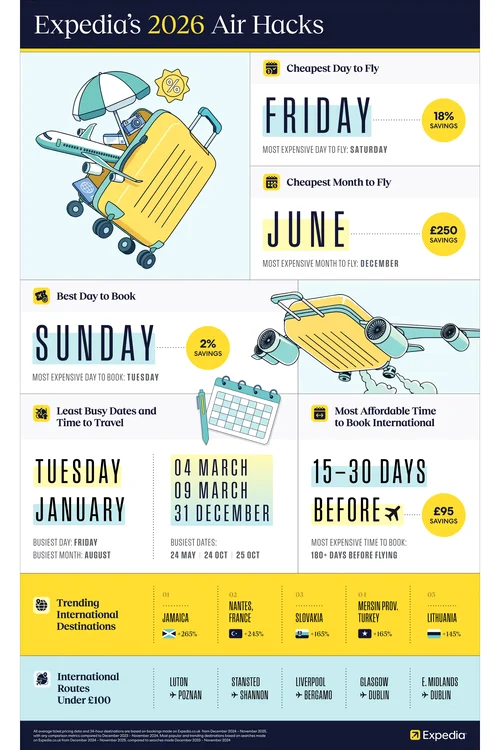
guide “Expedia, Air Hacks” presented a series of tricks with the help of which tourists can save significant amounts that they can use for other purposes or supplement their vacation budget:
- Sunday is the best day to book tickets: Friday is now the cheapest day to fly internationally – around 18% cheaper than Saturday, the most expensive day. For business class travel, Thursday is the cheapest day to fly, saving up to 17% compared to Sunday.
- Cheapest month to fly? June: June is the cheapest month for international travel, with fares around 68% lower than December (an average saving of £250).
- Travel on a Tuesday to avoid the crowds: Tuesday is the least busy day for flights, with Friday being the busiest. January is the least crowded month for flights, while August is the busiest; the calmest individual dates are March 4, 5 and 9 and December 31, and peak dates are May 24, August 22, and October 24 and 25.
- Book at the right time for substantial savings: International travelers can save an average of £85 by booking 31-45 days in advance instead of six months. For adventurous travelers, booking 15 – 30 days in advance can offer average savings of £92.
- “Extreme Day Trips” Take Off: 24-hour “microvacations” started as a trend on TikTok, but are going mainstream in 2026 – a quarter of millennials and Gen Z plan to fly somewhere for just 24 hours, with Dublin, Amsterdam and Paris the most popular destinations.
2026 holiday trends: from all-inclusive to personalized stays
Travel experts analyzed a range of reports and forecasts to identify key travel trends for 2026, drawing on reference sources such as Amadeus Travel Trends 2026, Skyscanner Trend Insights and EHL Hospitality Outlook 2026.
Trends are presented to help travelers choose the right destination and type of vacation, but also to inspire the more experienced with something new.
1. All-inclusive in 2026: more than accommodation and meals
All-inclusive vacations are undergoing a transformation. It’s not just about food and a hotel room anymore—today, they offer a full spectrum of experiences.
In recent years, all-inclusive vacations have begun to break out of the standardized area and offer tourists extra options as diverse as possible to create a personalized experience for them.
Cultural programs, wellness sessions, workshops, evening entertainment, as well as sports and nautical activities are becoming an essential part of vacations today.
In Egypt, the all-inclusive concept combines relaxation on the beach with diving sessions in the Red Sea, spa programs and entertainment for small and large children, because the destination wants to attract both couples and families.
In Turkey, travelers choose resorts with extensive entertainment programs and local culinary experiences, and on the Greek islands vacations can include excursions with scenic village walks and food tours.
2. AI and Travel Mixology
More and more travelers are planning their vacations with the help of artificial intelligence. Travel Mixology allows them to combine local events, leisure options and recommendations, creating trips tailored to personal interests and preferred vacation style.
For example, in the Maldives, AI instantly helps select the best beaches, water activities and excursions based on each tourist’s pace and preferences.
In Albania, customized itineraries combine seaside relaxation with mountain hikes and natural attractions, and in the United Arab Emirates, travelers are increasingly opting for customized city tours focused on architecture, gastronomy and local experiences.
Thanks to AI, vacations become more flexible and better planned, harmoniously combining relaxation, new experiences and cultural discoveries in one trip.
3. Whycation — travel with a purpose
Today, tourists want more than a classic beach vacation. Travel becomes an opportunity to learn new things, bond and explore local traditions.
For example, a yoga retreat in Sri Lanka can help visitors develop personal routines and mindfulness, while a cooking class in Thailand offers hands-on experience of local cuisine and culture.
In Cyprus, family holidays often include interactive workshops and excursions that involve all family members. Whycation allows travelers to combine relaxation with meaningful activities that leave lasting memories.
4. Tourism inspired by pop culture
Pop Culture tourism focuses on experiences inspired by modern culture, music, movies, series and local events. Travelers want more than a beach and a hotel—they’re looking for experiences to feel, share, and remember.
In Zanzibar, tourists can enjoy romantic or adventurous holidays that combine beach relaxation with nautical activities and cultural immersion. Such destinations capture the atmosphere seen in series such as The White Lotus, emphasizing natural beauty, tranquility and harmony.
In Turkey, tourists can explore historic cities, attend local festivals, and take part in cooking or craft workshops.
Pop culture-inspired tourism turns travel into a unique adventure, combining relaxation, activities and cultural experiences into memories that last for years.
5. Direct flights and new routes
Modern airlines offer more and more direct flights, making far-flung destinations more accessible. Organized groups can travel comfortably, non-stop, saving time and starting their vacation right away.
For example, direct flights from Europe to Hainan in China provide easy access to this exotic island with its unique nature, tropical beaches and local culture. Thus, Hainan becomes an attractive option for those looking for an affordable exotic vacation without wasting time on long connections.
6. Wellness and health tourism
Wellness tourism is becoming increasingly popular. Yoga, spa treatments, fitness programs and wellness rituals are now integral parts of many resorts.
Greece and Turkey offer beach and spa wellness programs, while the Maldives and Thailand attract tourists with retreats, yoga sessions and fitness activities. Wellness holidays combine relaxation with revitalization and harmony, creating a holistic travel experience.
7. Nature and active tourism
On the other hand, the demand for outdoor active tourism continues to grow, with tourists interested in continuing their healthy lifestyle while on vacation, according to experts Join Up!. Mountain hikes, national parks and eco-trails are increasingly popular with those looking for adventure and fresh air exploration.
Albania, Montenegro and Bulgaria attract tourists with mountain trails and themed tours, while Sri Lanka, Thailand and Hainan (China) offer eco-trekking, waterfalls and national park adventures. Active tours offer both excitement and physical effort, combining relaxation with adventure.
When planning a vacation in 2026, tourists began to choose first what matters most to them: relaxation, adventure, wellness or cultural immersion.
Tourism consultancy is gaining ground
Travel consultants play a crucial role in 2026, being able to create, on demand, customized itineraries that meet specific customer needs, for much lower commissions than agencies.
You can tell a travel consultant in which area you want to go, what accommodation requirements you have, how close or far from the beach or center you want the hotel to be, and you can even ask them to tell you how much a meal at a restaurant or a beer costs.
A travel consultant not only makes the reservation, which you can choose to pay there, at the destination, not in advance, but anticipates preferences and builds unique experiences.
On the other hand, early planning is becoming the norm, with 75% of customers booking holidays 5 to 11 months in advance to ensure access to the most exclusive services.
Personalized experiences will dominate the market, with itineraries designed to engage tourists in local culture, nature and history. In 2026, activities such as guided historical tours, personalized culinary tastings or sustainable nature adventures will be in high demand.
“Italy remains a magnet for luxury, with regions such as Tuscany and Lake Como where private villas and exquisite wine experiences attract sophisticated visitors. Greece strengthens its position with private tours and exclusive yachts, and Japan impresses by combining ancient traditions with modern luxury, especially with onsen resorts dedicated to wellness. Portugal is becoming an emerging destination, with the Algarve and Porto offering both seclusion and adventure,” said tourism expert Răzvan Pascu.
The motivations for luxury travel are varied, but celebrating milestones takes center stage. Over 81% of luxury travelers book vacations for anniversaries, weddings, or graduations. In parallel, multi-generational travel is gaining ground, with families wanting to reunite in exclusive places with private villas and dedicated spa retreats.
