
Worldwide, approximately 10,000 cases are registered annually, and in Romania, last year, 31 cases were treated, an increasing number compared to the previous year. The disease is not transmitted from person to person, but you can get sick very easily by eating infested meat.
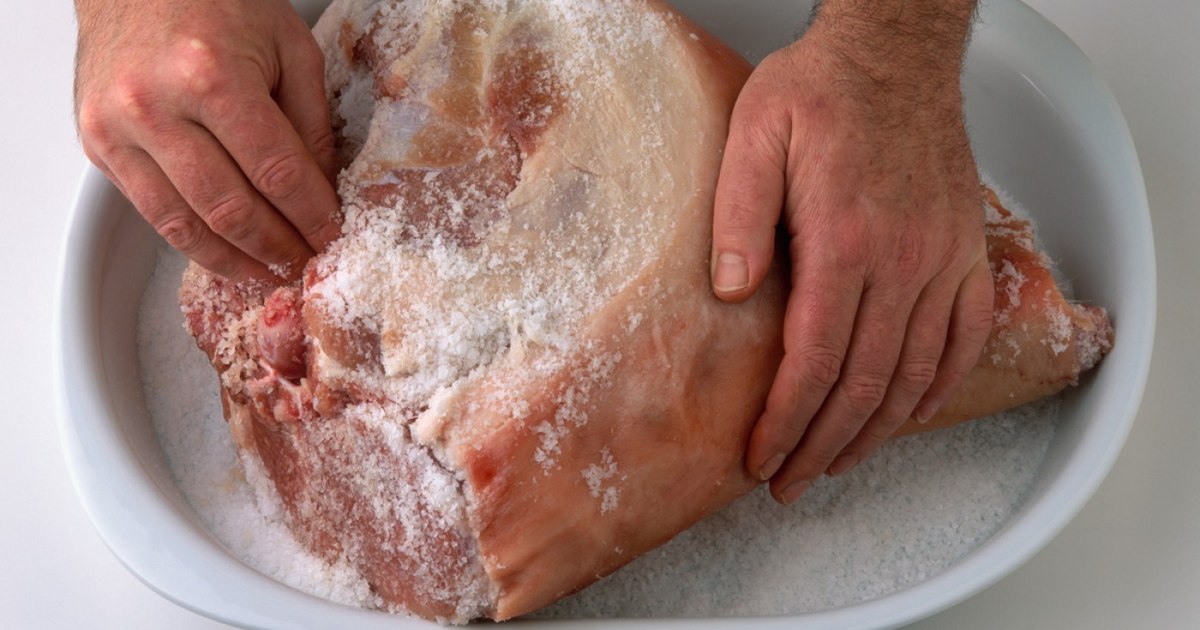
Salting and smoking do not destroy trichinella spp larvae PHOTO: Adevărul archive
Trichinellosis, or trichina, as it is also known, is a serious infectious disease caused by the larvae of some parasitic worms. You can get sick very easily by consuming raw or undercooked meat from infested animals.
The specialists of the National Institute of Public Health state, in an article published on the INSP website, that approximately 10,000 cases of trichinellosis are registered worldwide annually. In the European economic space, there were 39 cases in 2022, and in 2023, in Romania, 31 cases were registered, an increasing number compared to the previous year.
“The greatest risk of infection, through the consumption of meat from pigs raised on the farm”
People get trichinellosis by eating raw or undercooked meat, or meat products containing larvae of these parasitic worms (trichinella spiralis), INSP specialists say. We are talking about pork, horse, nutria or game (boar, bear).
“In our country, the greatest risk of infection is through the consumption of meat from pigs raised in the household, because they, not being sold through retail trade, are not subject to veterinary inspection, i.e. samples are not sent for testing from slaughtered animals” , mention the cited source. During Christmas, considering the fact that pig slaughter is still practiced in many rural households, veterinarians’ offices are open and, for a fee, the trichinelloscopic examination is performed.
The disease can be very easily acquired by eating preparations in which meat infested with larvae has been used, but it is not transmitted from person to person. And if thermal preparation at high temperatures destroys the larvae, processes such as salting or smoking, on the other hand, do not reduce the risk of disease.
“People who eat raw or undercooked meat are at risk of trichinellosis. Even eating a small amount of raw meat, such as tasting meat dishes during processing, can put people at risk. Sausages, homemade ham containing infested meat can cause cases of trichinellosis. The processes of salting, smoking or drying the meat do not destroy the larvae of Trichinella spp”, experts warn.
How do you prevent illness? Freezing, one of the methods
The first concern, when purchasing pork, if we do not slaughter the animal in the household, is to use a safe, sanitary-veterinary approved source.
If we slaughtered the pig on the farm, the microscopic examination performed in the veterinarian’s office is mandatory. We will consume the meat only after receiving the vet’s approval. The same should be done with game meat.
Another advice that doctors give us is to freeze the meat before preparing it.
“Before cooking, freeze the meat at a temperature between (-)15°C and (-)25°C for 20-30 days, the thickness of the meat slice should not exceed 15 cm; cook meat, minced meat and wild game so that the temperature is above 71°C throughout the meat mass (until the meat changes color from pink to grey); thoroughly clean all utensils that touch the meat; clean meat mincers well before and after using them to mince pork/game and clean all surfaces and tools used in this activity; wash your hands thoroughly after handling raw meat; avoid feeding raw game/pork offal/entrails/blood to animals, thermally process these meat products that are to be animal feed (pet/household/pigs); prevent the appearance of rodents in the household where pigs are raised”, there are other tips that public health specialists give us.
Worms can remain in muscle tissues for up to 40 years
If we have eaten meat infested with trchinella spiralis larvae, we will start to feel the effects in the next hours/days. “The clinical manifestation of the disease depends on the amount of meat ingested, the degree of infestation of the meat and the body’s resistance, varying from mild clinical forms of the disease to those with serious evolution leading to death, due to cardiovascular or neurological complications”say the doctors.
Here’s what happens after eating infested meat: “acidic gastric juice dissolves the protective capsule surrounding the larvae, and they are released and pass into the intestine, where they mature into adult worms and reproduce. Once they enter the muscle, the worms encapsulate themselves in the (striated) muscle tissue, where they can live for a long time, up to 40 years.” explain the INSP doctors.
The list of symptoms is quite long, but, doctors also say, patients manifest at least three of the following: fever; muscle tenderness and pain; diarrhea; facial edema; subconjunctival, subungual and retinal hemorrhages.
Suspected cases of trichinellosis are reported, as there is legislation in this regard. For diagnosis, doctors may ask for laboratory tests to demonstrate the immune response characterized by the appearance of specific antibodies against Trichinella spp and, less often, to highlight the presence of larvae of Trichinella spp in tissue obtained by muscle biopsy.
The disease has an incubation period of between two and 28 days. There is first an asymptomatic period (corresponding to the maturation of ingested larvae into adults in the small intestine). This stage is followed by the intestinal stage, manifested by nausea, diarrhea with or without fever, abdominal discomfort/pain, lack of appetite, vomiting, fatigue. The stage of tissue invasion (especially muscle), corresponding to the migration of the newly formed larvae in the circulatory system, to the striated muscles, is characterized by myalgias, swelling of the muscle masses, periorbital or facial edema, urticarial eruptions, fever 38°C -40°C , neuropsychiatric disorders (headache, up to delirium, coma), respiratory disorders, cardiac disorders (myocarditis with tachycardia, disorders of rhythm).
The receptivity to the disease is general, and the immunity is short-lived, relapses being possible, say the specialists.
