
Romania is in the European top in terms of the number of sheep and goats. And the Romanian spearhead in research and development of new variations and breeds in the sheep field is in Botoșani County. The Popouti Research Station is unique in Europe in being able to create a super-sheep.
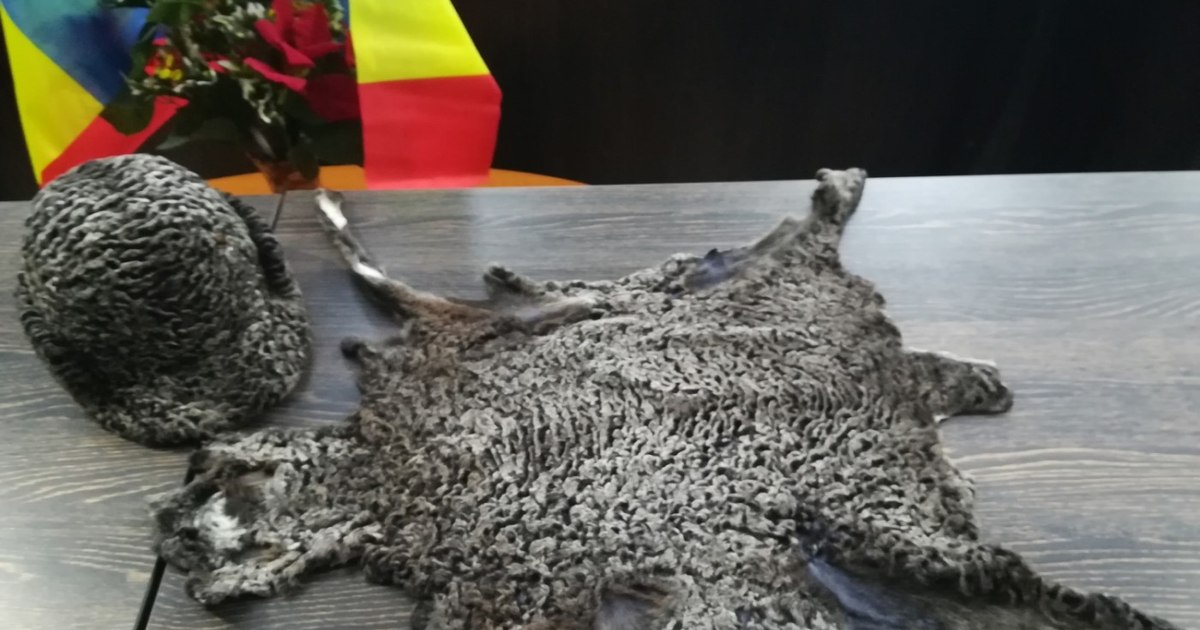
Botoșani karakul pie PHOTO The truth
According to official statistics, Romania is in second place at the European level regarding the number of sheep and goats, after Spain. In other words, the miorita represents a real national wealth. And this in the conditions where the tradition of raising sheep in Romania is more than two millennia old and Romanian sheep, especially certain species, are preferred on the Arab market. And the spearhead of the research and creation of performing sheep breeds and variations is a research station in Botoșani County. The Popouti Sheep and Goat Research Station is one of the best performing research institutions in Romanian animal husbandry. Specialists say that it is a real chance for our country at the European level, especially since the research institution from Popouti would be officially recognized at the European level. Here was created, genetically, a unique breed in Europe, a real delicacy in Arab countries, one of the most demanded for export.
Sheep research with a tradition of almost eight decades
Livestock breeding was a traditional occupation of the locals on the territory of today’s Botoșani County. In addition, Botoşaniul was a traditional agricultural area, with large landowners and animal breeders. In addition, due to trade and the development of the area since the beginning of the 19th century, the first research and development institutions in the animal husbandry field were established in Botoșani. Actually, the Popăuți Research Station was established in 1909. But back then it was more like a warehouse for Sura de Stepă bulls. It was only in 1947 that the Institute of Animal Science Research was established and, later, research stations throughout the country. In Botoșani, the Sheep and Goat Research Station from Popăuți, Răchiți commune, was established, with as its object of activity, exactly as the name suggests, the research of these species. The researchers actually aimed to improve the breeds and make them perform better. And that’s what they did.
The super-sheep from the Botoșani research laboratories
Representative for the Popăuți Research Station is a unique sheep breed in Europe. It’s called Karakul de Botoșani and it’s a genetic creation of specialists from this institution. It all starts in 1925 when a few large farmers and with funds from the Ministry of Agriculture, from that time bring the first 75 karakul rams from Russia. The Karakul is a Central Asian breed with a number of distinctive characteristics, notably long hair, an elongated head and abundant fat on the tail. By 1948, the flocks had grown to several hundred heads. With the determination of the specifics of the Popăuți Research Station, the researchers got to work as early as 1948. The goal was to create a new breed of sheep, by crossing the autochthonous sheep from the Turkan race and the Karakul rams from Central Asia.
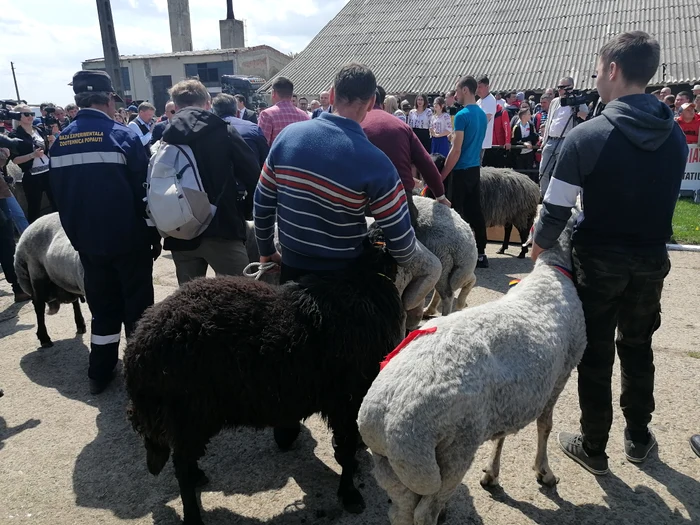
Karakul rams from Botoșani PHOTO the truth
Through genetic crossings carried out in a scientific way, after approximately four decades of research and work, a new breed was reached, the karakul de Botoșani. This breed was approved in 1988 and, due to its special qualities, remained unique at the European level. He had the endurance of the native breed to which were added the extraordinary characteristics of the Asian karakul. It was a breed especially valued for its hides of unique beauty. “It is unique worldwide, in terms of the color palette, but also in terms of quality. There is no other race with such a wide variety of colors”says Ionică Nechifor, director of the Popouti Research Station, but also a karakul sheep breeder. At the same time, Botoșani karakul became famous in Arab countries, where it is a delicacy due to the taste of the meat and the fat. According to the standards, a female karakul reaches 45 kilograms, and rams reach 75 kilograms, being very large.
The world-class skins even charmed Ceaușescu
Research at Popăuți did not stop with the approval of the breed. For more than four decades, solutions to improve and diversify this breed have been constantly sought. Including the creation of new races. One of the biggest achievements is the diversification of the color palette of skins, also through crosses and genetic studies. It is a unique sheep in the diversity of skin colors. Moreover, the karakul of Botoșani is famous for the black, glossy, shiny color of the skin, from which “Astrahan” hats were made.
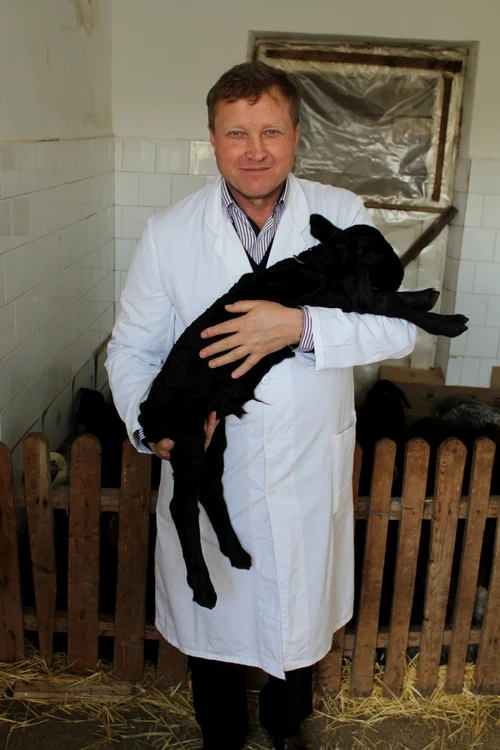
Ionică Nechifor with a karakul lamb PHOTO The truth
“It is the most valuable line within the karakul breed. It is not found in any other breed within the sheep species and is an extremely rare line, which is not found anywhere. In Romania there is no such line anymore”, says the director of the Research Station. The variety is very large. There is even a variety of pink skins, obviously the result of cross-breeding and genetic research. This pink skin is causing a stir at the profile fairs. Hats, shells and karakul skins from Botoșani are actually sought after all over the world. But especially in Germany, Canada, Russia and Ukraine. The karakul skins won an important award in 2009 at Messe Berlin, an exhibition fair in the top 10 worldwide. A coat made of astrakhan skins also costs 3000 euros.
“No station has been able to homologate six color lines within a breed in the sheep species”
Despite all these achievements, the Popăuți Research Station struggled, after the 90s, in severe underfunding, accumulating enormous debts. In the early 2000s, it fell into disrepair. Salvation came seven years ago, when the Romanian state, through the Ministry of Agriculture, paid off the historical debts of the resort and the management of the institution developed a very effective recovery plan. Given that the research station owns large areas of land, approximately 1000 hectares, it has invested heavily in agricultural machinery. More precisely, four million lei were invested in high-performance agricultural machinery.
The land was cultivated in a professional, modern way, achieving good harvests. In 2021, the resort had a surplus of one million lei, obtained from the exploitation of agricultural land. Repairs were also made, plus investments. The resort has been reborn. In addition, it also hosts scientific events and farmers’ fairs. Added to all this are numerous projects, worth several million euros, for equipping research laboratories and other modernizations.
Thanks to the research and the results obtained, the Popăuți Research Station is considered one of the most important zootechnical research stations in Romania. In fact, the management wants to approve it at the European level. “Nno other station has been able to homologate six color lines within a breed in the ovine species”says Ionică Nechifor.
