
Post-stroke spasticity (stroke) is a complication that occurs independently of the hemiparesis established immediately after the vascular event. Up to half of stroke patients may experience spasticity which, if not treated early, makes them dependent on the care of others.
Muscle spasticity is different from the initial hemiparesis that we all associate with the aftermath of a stroke. Spasticity does not set in suddenly, but appears in the period after the vascular event. If in the case of hemiparesis the muscles are soft, flabby, and the patient has no strength and can no longer control his limbs, in the case of spasticity the muscles become rigid, stiff. This spasticity, a complication of stroke, usually occurs at 3-6 weeks or even later and is extremely important to recognize in order to start therapy as early as possible to increase the chances of recovery.
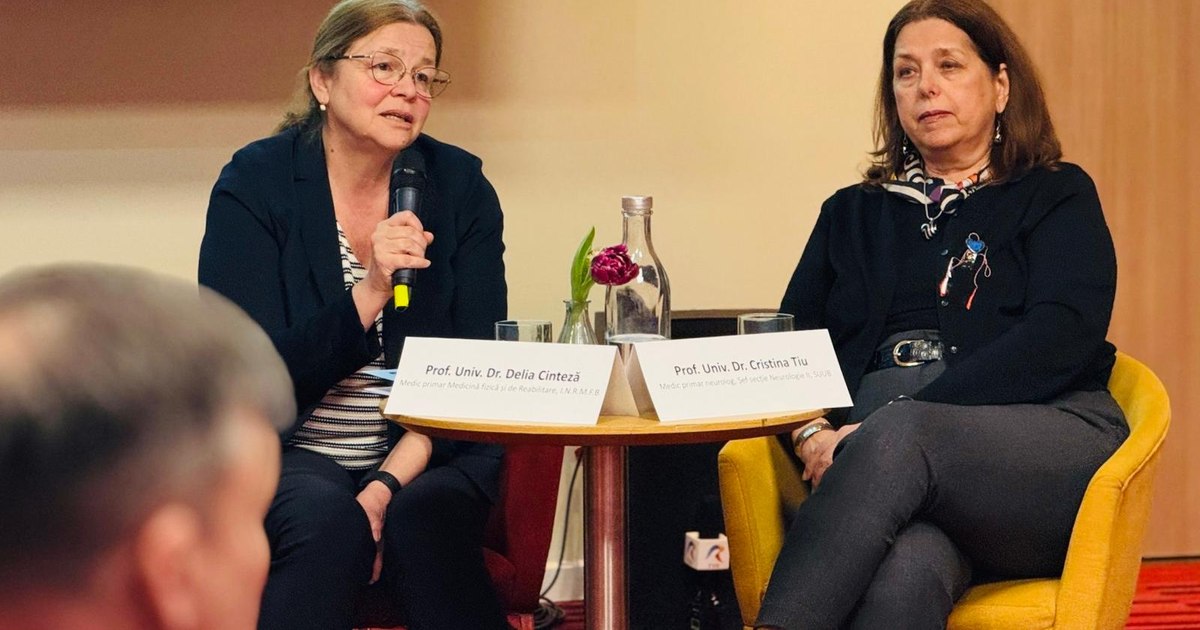
This potentially disabling complication was discussed at length at the “Post-Stroke Spasticity” event recently organized by the health platform Pacientul 2.0 and ALIA (Association for the Fight Against Stroke).
Official figures show that 60,000 strokes occur annually in Romania, and spasticity can occur in almost half of the cases. It sets in relatively quickly after the acute phase, after two weeks, in about 25% of patients, but it can also appear later. After 12 months, the percentage increases to 38% for those with their first stroke and to 44% for those with recurrent stroke, experts say.
“Spasticity is a motor and sensory disorder characterized by muscle hyperactivity that forces flexion and adduction of the limbs, locking them in abnormal positions. It is vital that patients and relatives are very attentive to the signs, so that they can intervene in time with various treatment and therapies, thus limiting the disability”, draw the attention of the organizers of the event.
Daily actions become impossible to accomplish
For a patient experiencing untreated post-stroke muscle spasticity, in a relatively short time simple tasks such as dressing, washing, eating, etc. they become impossible to complete, turning the affected person into one dependent on the help of those around them. Spasticity affects the arms, legs, or both arms and legs. Treating this complication with the best results depends greatly on when it is detected and intervention is started, for this reason it is especially important that families caring for a stroke patient know the signs.
Early intervention can prevent permanent loss of joint range. The process of soft tissue shortening, with restriction of mobility, joint stiffness, and chronic pain, varies from person to person, but medical reports show that it usually begins two weeks after the onset of spasticity and may peak within 3 months.
Muscle stiffness or abnormal limb positions are the main signs that should send the patient quickly to the doctor for a medical evaluation.
“The primary objective of the neurologist is to save the patient’s life in the acute phase of stroke, but it is equally important to inform the patient and family that early medical recovery can prevent spasticity and significantly improve independence and quality of life.” – specified university professor Dr. Cristina Tiu, primary neurologist, Head of Department Neurology II, Bucharest University Emergency Hospital.
Around 12 million people in the world now have a stroke each year, which is one stroke every three seconds, with figures showing an increase in incidence, alongside an alarming fall in the age at which stroke occurs.
Of all patients who have a stroke, 20% will die in the first 30 days, “this happens everywhere in the world, it depends on the severity of the stroke”, stated Dr. Tiu. Another 30% remain severely disabled, and they need recovery as soon as possible after the onset of signs.
“If you have spasticity – you walk badly, you do a certain posture, it hurts, because you are in a muscle contracture all the time and although you would have the muscle strength to do certain movements, you can’t because there is this increased tone that puts you in a vicious position”, Dr. Tiu explained.
Who needs to identify spasticity?
Ideally, if doctors had enough time to do medical education, the relative would be able to recognize the early signs and call the doctor, explaining in detail what is happening, but nowhere does that happen, Dr. Tiu said. In Romania, it does not even happen that the patient is followed up post stroke in a standardized way.
“You should see the man who had the stroke in three months, you should have a very good collaboration with an outpatient neurologist who will receive him, with the family doctor who will know what to look for”Dr. Cristian Tiu also mentioned.
The Society of Neurology is currently working on the development of guidelines with good practice recommendations, which also contain a “post-stroke check list”, a list of signs to follow post-stroke. Among the questions to ask, at the time of presentation for control, are: is he taking his medication?; were the investigations that were recommended done? Does it handle itself?; does it have good mobility? has pain; does he have incontinence?; can he communicate with those around him? is it sad?; is he depressed does he have cognitive impairment? how is his life post-stroke? did he go back to work? how are the relations with the family? And so on
It would be ideal for the doctor who evaluates the patient to have time to go through this questionnaire and later refer him to another specialist if the situation requires it and to evaluate the progress until the next visit, the doctor also pointed out.
“We must strive for better. If we say it can’t be done from the start and we don’t try anything, we won’t achieve anything”, Dr. Tiu also said.
“The role of the family is essential”
Prof. Univ. spoke about the importance of early detection of muscle spasticity. Dr. Delia Cinteză, primary physician Physical Medicine and Rehabilitation within the INRMFB, explaining that there are no secrets. Instead, there are two important elements in early detection: the very high attention of the medical teams that care for patients with stroke, through a thorough surveillance carried out daily during the care period, and, respectively, the increased attention of the patient’s family when he arrives in the care of the family.
“Even though patients with post-stroke spasticity are not the easiest to treat, physical therapy, specific exercises and appropriate drug treatment can make a difference. The role of the family is essential: their support and involvement in the recovery program increase the chances of success of the therapy”, mentioned Dr. Delia Cinteza.
Early intervention should be achieved with the integration of several therapies, thus increasing the chances of recovery of motor functions, increasing independence and improving the quality of life for both patients and their families.
More therapies also mean a multidisciplinary team, in medical rehabilitation wards, which in very few cases, relative to necessity, is available. After initial rehabilitation, recovery programs should be followed for life, on an outpatient or day-hospital basis, or, if recovery has been satisfactory, with a home-based program with periodic reassessment. The program should be individualized, and the family doctor has a particularly important role for this, as he will make the connection between the specialists and the patient’s family.
As for the interventions available today, there is treatment to keep spasticity under control, Dr. Cinteza also stated. There are both non-pharmacological and pharmacological treatments (injections or pills). Treatment must be started as quickly as possible, taking into account the severity of the stroke, other diseases the patient suffers from, the patient’s age (after 80 years, the body’s ability to recover is lower).
Prevention can start from the acute phase. The patient who has suffered a stroke will be placed correctly, the patient’s position in bed is changed every two hours at most (thus also avoiding bedsores, which are a source of infection and which can cause spasticity), etc.
As for the multidisciplinary team that should ideally care for a post-stroke patient, it brings together: the rehabilitation doctor (coordinator), physiotherapist, speech therapist, psychologist, occupational therapist, orthotist, specialist assistants, family members and the patient (these being the most important members of the team).
Local realities make it impossible to apply the above model, said Dr. Cinteza, as the teams are often incomplete. Also, the ambulatory resource and the possibility of day hospitalizations are used under potential, which could ensure the continuity of the therapy.
“My hope is, now that a national strategy is being discussed in this regard, that home services will be greatly improved in terms of medical rehabilitation services, at least for the stroke patient who is unfortunate enough to develop spasticity.” Dr. Cinteza also mentioned.
Services available on paper, inaccessible in practice
The chance of recovery of patients who have suffered a stroke depends, in practice, on many factors. Although in theory they can benefit from many services, in practice things often get bogged down. Not to mention the fact that “being a patient in Bucharest is one thing, being a patient in the country is another”, there are limitations imposed by legislation. The family doctor Daciana Toma pointed out, for example, that a patient is billed with a referral ticket for only 21 days of recovery per year, or if he was unlucky enough to have sought recovery for another acute episode before the stroke, for example lumbago, the days spent are deducted from the 21 provided annually.
“On the other hand, there are home care. They are absolutely wonderful people, but extremely rarely do they have a physiotherapist in the team, although theoretically it is settled”, the family doctor pointed out. This is how it happens that in theory many services are covered, but in practice there is no one to provide them. It is also the case of psychological therapy, for which there are not enough medical specialists who in turn have collaborations with psychologists under contract with CAS, and the examples can go on.
