
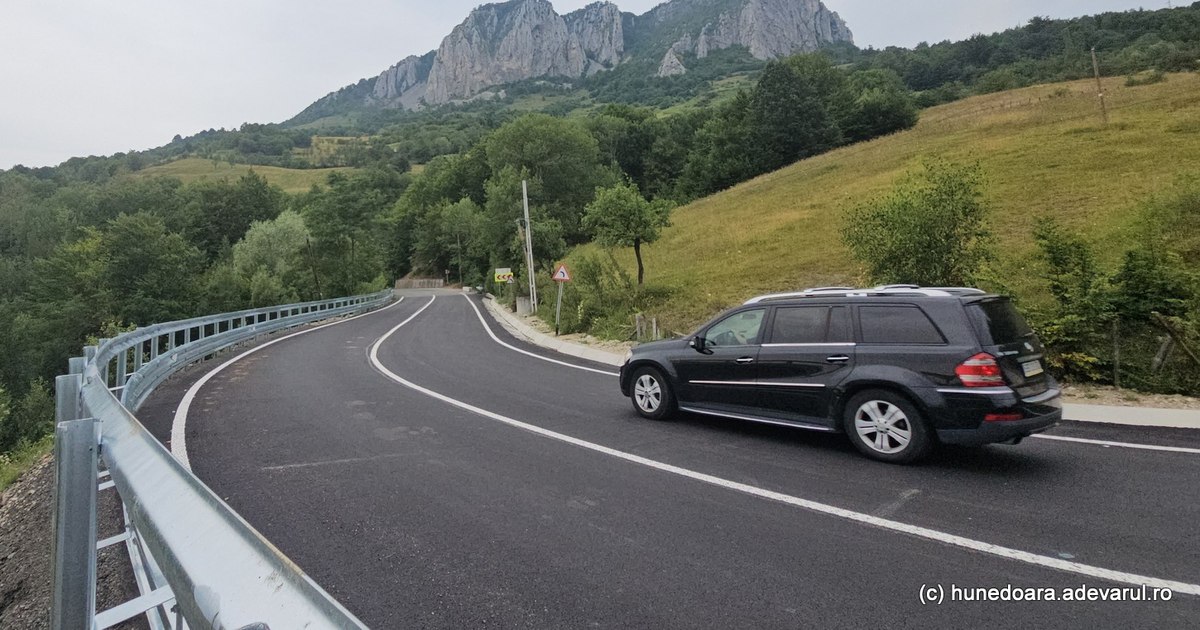
A section of National Road 74 Brad – Abrud, which crosses the Buceș Vulcan Pass (video), connecting the counties of Hunedoara and Alba, was recently rehabilitated, and the journey of drivers through the most spectacular place of the route in the Apuseni Mountains thus becomes more attractive.
DN 74, Pasul Buceș- Vulcan. Photo by Daniel Guță. TRUTH
In the north of Hunedoara county, the passage of travelers from the lands of the Metalifers to the Apuseni mountains takes place at the foot of Mount Vulcan, where the Buceș Vulcan Pass connects Hunedoara and Alba counties.
Located 25 kilometers from the municipality of Brad, the gray mountain surrounded by National Road 74 Brad – Abrud (video) appears as a wall of rocks with prominent shapes, rising above the forests and villages of the locals.
The national road 74 Brad – Abrud has recently been rehabilitated, on some sections, and is among the spectacular routes that cross the Apuseni Mountains. It is the entrance route from Hunedoara to the moti settlements around the town of Câmpeni and to the mining towns of Abrud, Zlatna and Roșia Montană, surrounded by the picturesque views of the Apuseni mountains.
Mount Vulcan, nature reserve
Its most attractive place is Vârful Vulcan (1,263 meters high), whose rocky formations occupy an area of five hectares and present a difference in level of over 500 meters compared to the Buceş pass.
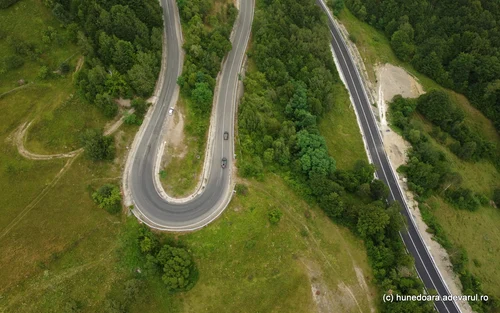
Image 1/19:
Pasul Buces Vulcan Photo Daniel Guță THE TRUTH (2) JPG
Its limestone preserves numerous traces of fossils, and on the plateau on top of Vulcan (video) several sinkholes were formed, surrounded by forest. Hundreds of plant species, some rare, adorn the mountain visible from tens of kilometers, from Alba and Hunedoara.
“The steep rocks, fragmented into towers, pillars and colonnades, dungeons and forts, separated by deep ravines in which huge cones of thunder have gathered, the linear slabs and those in the form of furrows or furrows, the sinkholes and ravines that appear before the climbing tourist slopes or rests on the expanse of the calcareous plateau, all create the impression of a grand edifice fallen into ruin, following an apocalyptic cataclysm“, informed the magazine Romania picturesque, in 1985.
Going up from the municipality of Brad, once they go through the serpentines at the foot of the mountain, from the village of Buceș-Vulcan (Hunedoara), the travelers then descend gently through the forests of Valea Cerniţa towards the town of Abrud from Alba (video), located about 40 kilometers from Brad. Several parking lots on the national road are places from where travelers can climb to the heights of the mountain.
“The paths that lead to its heights are numerous. The main access road is the one that branches off from DN 74 at the Cotonou point. After an hour of hiking, during which we will cross the 500 meter difference in level between the pass and the peak, we will reach the point with the highest altitude. From here, other roads will perhaps lead us to Strîmba, Brădisor or the sources of the Crişului Alb. For its scenic value, the geological reserve on Mount Vulcan has been declared a natural monument, thus constituting a prime objective for tourists of all ages“, informs the magazine România Pitoreasca.
At the foot of Mount Vulcan, travelers can also reach a local road of about five kilometers, recently modernized, which goes up from the center of the commune of Blăjeni in Hunedoara (video).
Fewer than 1,000 people live in the commune of Blajeni in Hunedoara, and the land in the north of Hunedoara county is known to hiking enthusiasts for the massive Buceş Vulcan, which offers its guests a spectacular panorama of the Land of Motilor.
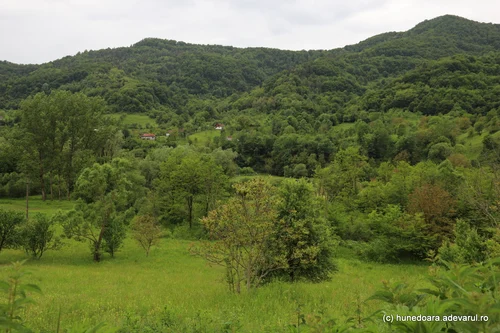
Image 1/23:
Blajeni commune, Hunedoara Photo Daniel Guță THE TRUTH (40) JPG
Mount Vulcan is also a historical landmark. During the Transylvanian Revolution of 1848 – 1849, at the foot of the Buceş – Vulcan Massif, the Moti set up camp and fought hard battles for the defense of the gorge.
The historic site is now sought after by photography and nature tour enthusiasts.
