
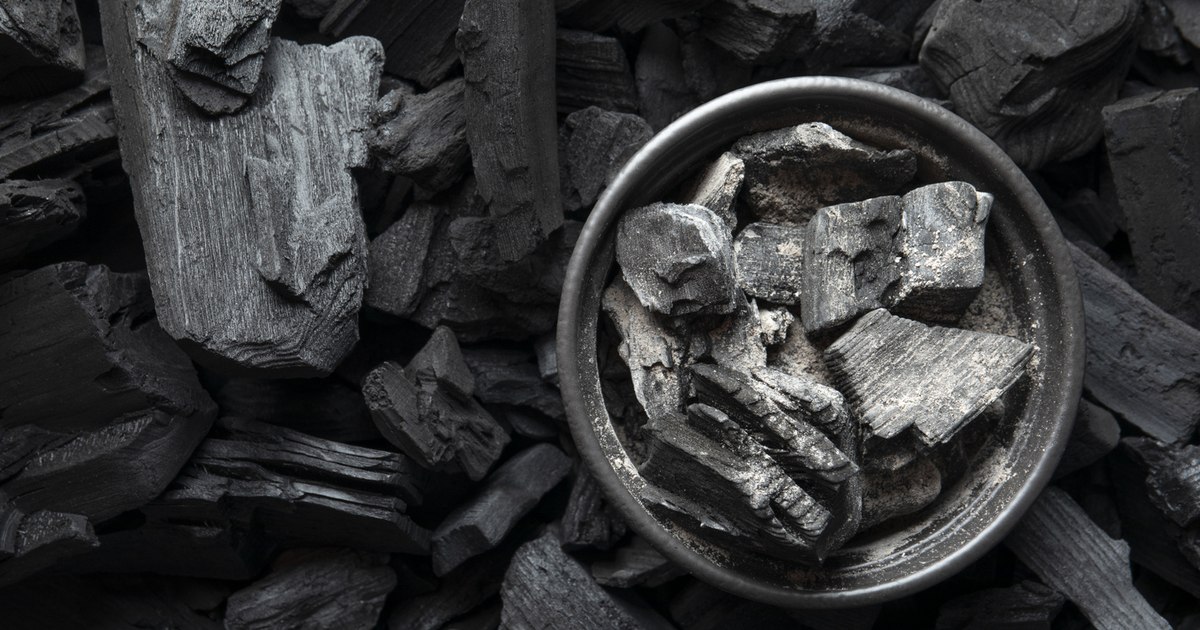
The only graphite mine in Romania worked for half a century, until the 1990s, but recently, the mineral deposit came to attention, being considered an important natural resource that could be used in the coming years.
The graphite. Wikipedia source
Romania owns, at Baia de Fier, one of the most important graphite deposits in the European Union, and the mineral exploitation has been brought back today in recent years, over two decades after the closure of the former Mine in Gorj.
In the village at the foot of Parângului, with a long tradition in shepherd and in forest work, it worked for half a century and a graphite mine.
Plans for the Romanian graphite
Recently, the Minister of Economy, Radu Miruță, announced that he has signed a government decision that allows Romania to exploit the graphite deposits in Gorj County.
“We have signed today the Government Decision by which Romania receives the operating license for the graphite at Baia de Fier. An extremely valuable mineral, sought throughout the world, remains in Romania and will produce value to our economy”, declared, on August 8, the Minister of Economy, on his Facebook page.
The exploitation of the graphite deposit, under the administration of Salrom (the National Salt Society), requires an estimated investment at 200 million euros, which would include the modernization of the infrastructure and the construction of a local processing plant.
In 2024, Salrom announced that it had submitted two applications for financing for projects in a cumulative value of almost 450 million euros, which aimed at capitalizing on the national graphite deposits. Romania is, according to society, among the few countries that benefit from this natural resource, which became extremely precious in the context of developing new green technologies.
“The first project, for which the amount of 198.306.135 euros is requested, refers to the extraction of the quality graphite for batteries in the Baia de Iron area and involves the extraction and primary processing of the graphites to produce quality graphite. This includes the development of the necessary infrastructure for the extraction, as well as the installation of processing equipment that transforms the raw material in the graph. Battery production, especially for electric vehicles and energy storage systems, ”said Salrom.
The second project, estimated at 250 million euros, aims to finalize the graphite shales in a processing complex in which to use state-of-the-art technologies.
Although the first project, the one for the exploitation of the graphite, was declared strategically, the Romanian state did not find funding for it. “Romania has submitted two projects to the European Commission: one was rejected and one approved, but the approval involved the introduction in the category of strategic projects. However, it was not funded, which is very serious and is a concern for me,” the minister recently said.
The Romanian graphite mine worked five decades
Graphite, traditionally used in pencils, solid lubricants, in bricks and containers resistant to extreme temperatures, but also in steel surgery, has become an essential mineral in the future industry, especially in the production of lithium-type batteries, those for sun parks and electronic components.
In Romania, the only graphite mine was exploited during the communist period, in the Oltenia Mountains, in Baia de Fier.
The graphite deposits were identified at the end of the 19th century by different researchers. In the years 1917 – 1918, while the area had reached German military occupation, German specialists did research at Baia de Fier, in search of graphite resources, and proposed its exploitation.
“Like the graphite deposit in Bavariei Forest, in Passau, the Iron Baia Department contains the graphite with scales, the called flinz and no less and in the amorphous state. This state in scales Flinz makes this deposit be a great importance in order to manufacture the graphite and to the graphite. Caolin etc.), both in the hard and in the earthly graphite ”, showed an archive document.
After 1918, the research was resumed by the Romanian specialists.
“In Gorj there is a graphite in the Polovragilor region, the yellow valley, on the Olteț Valley (north of Polovragi and Baia de Fier); in the granite are caught syncline of crystalline shales, especially filled with nests and graphite lenses. The organic origin of this graphite is indisputable”,, ” He showed, in 1922, the geologist Ion Macovei, from the Geological Institute of Romania.
Gheorghe Damaschin’s open graphite mine
In the 1930s, the Romanian state instituted in the Baia de Fier region seven exploration perimeters, with an area of over 6,000 hectares, and issued seven exclusive exploration permits for the execution of the works, informed, in 1964, the engineer Gheorghe Damaschin, in the magazine of the mines.
In 1945, Gheorghe Damaschin, together with his wife, who was a chemist, opened the first graphite mine in Romania, at Baia de Fier, after years of research that led to the identification of the graphite complex in Mount Cătălin. Dozens of locals worked here, but the small mining exploitation was nationalized in 1948, and for a few years, its former owner was passed among the “enemies of the people”.
In the 1950s, graphite production gradually increased with the workers in the area at the foot of Parang. A road was built in the 1950s on the Olteț Valley, which passed over the graphite complex, and the mining works increased. In the 1980s, several hundred miners worked at the Baia de Fier complex, to extract the graphite.
The mineral was used in steel surgery and refractory bricks, but since 1981 it has received a new use: it was purified and used as a material for pencil mines manufactured in a factory in Sibiu. The graphite mine survived a few years after the 1989 Revolution, and in 1999 her fate was sealed by the floods that devastated her.
