

Although education unions announced that over 70% of unionized teachers would not participate in the simulations, today’s data shows otherwise. The simulation of the National Assessment of Romanian Language and Literature took place in almost 98% of schools, the Ministry of Education announces. The institution also sent the grading scale.
Percentage of schools where the simulation was held
At the national level, the simulation of the Romanian Language and Literature test took place in 97.8% of schools, according to the data sent by the county inspectorates to the Ministry of Education.
In total, 145,200 works were uploaded to the platform. In the units that organized the simulations, however, there were also absent students. Their number was 11,800.
In how many schools the simulation was not organized
According to the Ministry of Education, 104 educational units, with a total number of 5,200 students, did not organize the simulation.
It remains to be seen if the numbers will remain the same tomorrow, when the Maths test is simulated,
About 5,000 teacher evaluators for Romanian Language and Literature and 4,500 for Mathematics are registered on the platform.
The subjects that the students had to solve
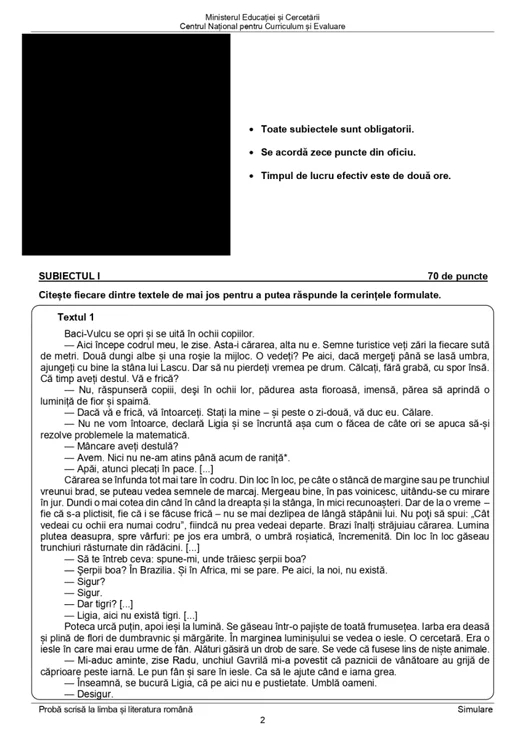
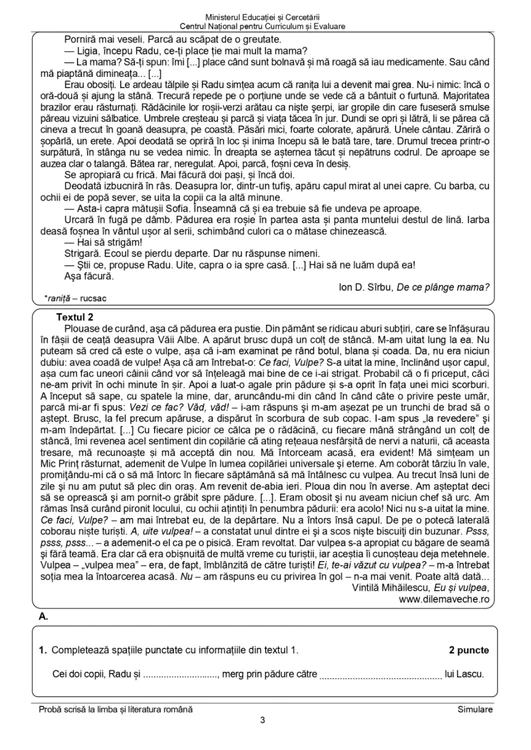
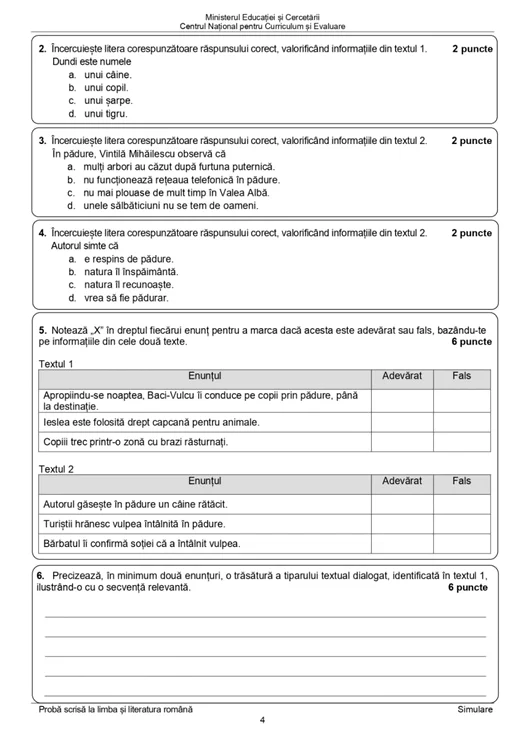
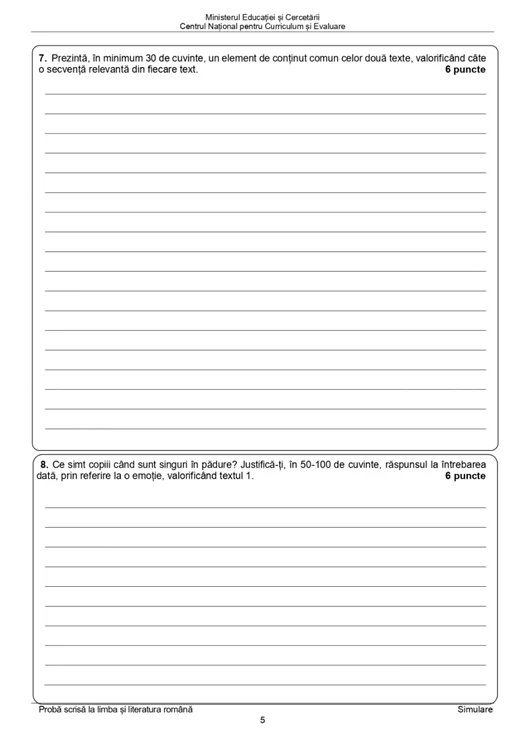
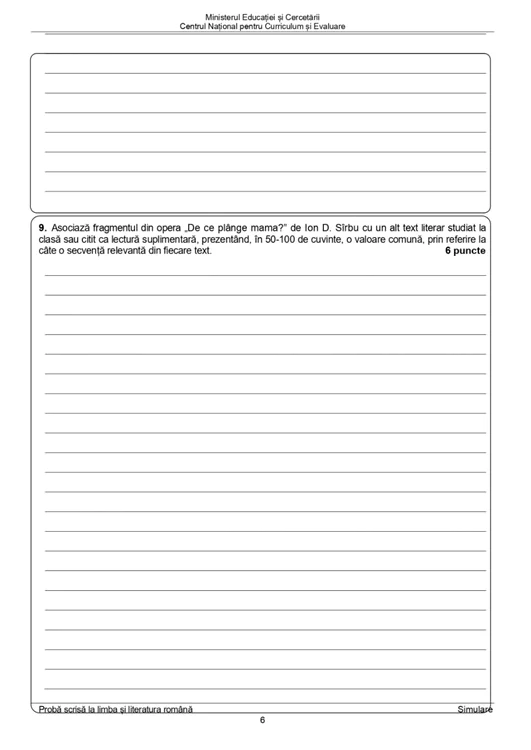
In subject I, the texts on the basis of which they had to solve several requirements were “Why is mother crying” (by Ion D. Sîrbu) and “me and the fox” (an article written by Vintilă Mihăilescu and published in Dilema Veche). In point 9, for example, the students had to associate the fragment from the opera “Why is mom crying?” with another literary text studied in class or read as additional reading and to present, in 50-100 words, a common value.
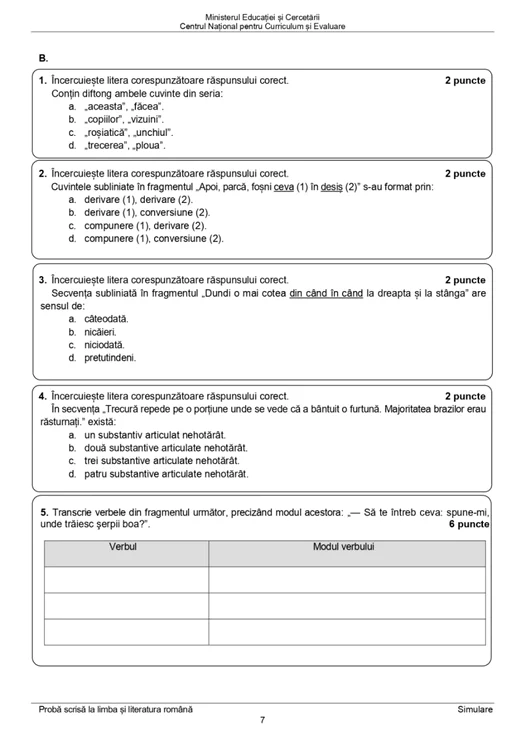
In the IB subject, the students had to solve eight points related to the area of grammar
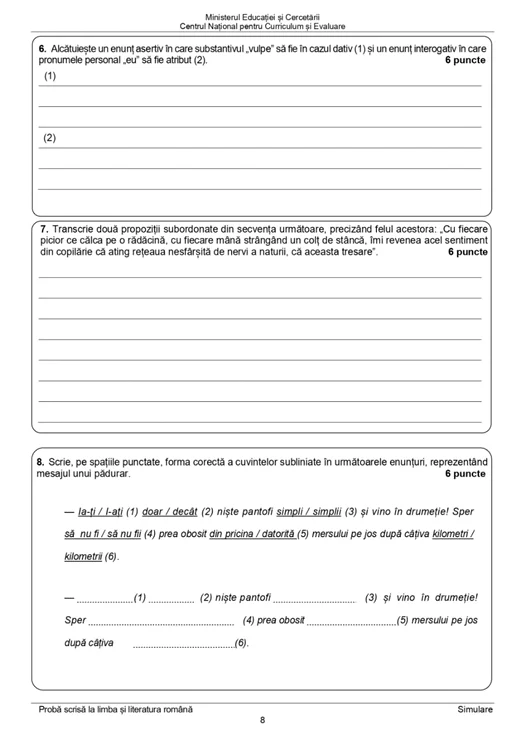
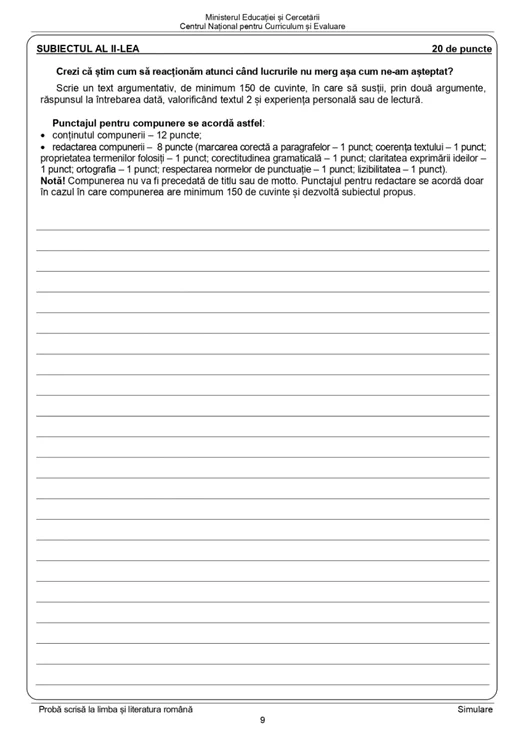
And for subject II, the requirement was to write an argumentative text, of at least 150 words, in which to support the answer to the question “do you think we know how to react when things don’t go the way we expected?”by capitalizing on text 2 and personal or reading experience.
Why boycotting simulations is likely to fail. “We’ve been doing this for two years to encourage people to participate”
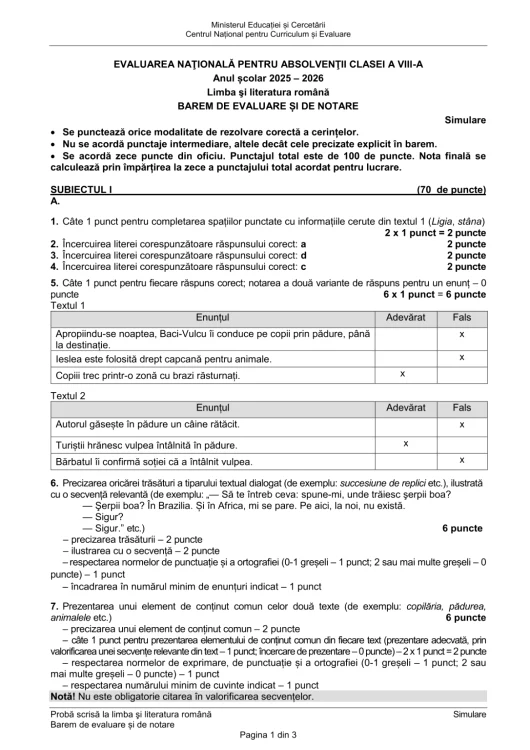
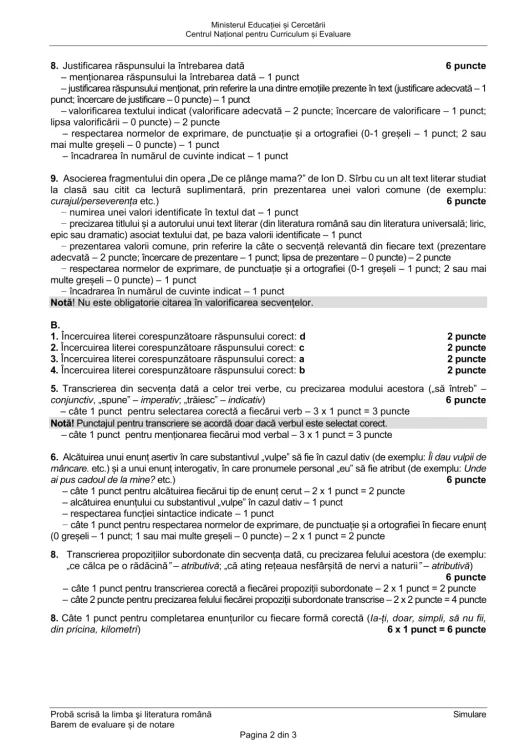
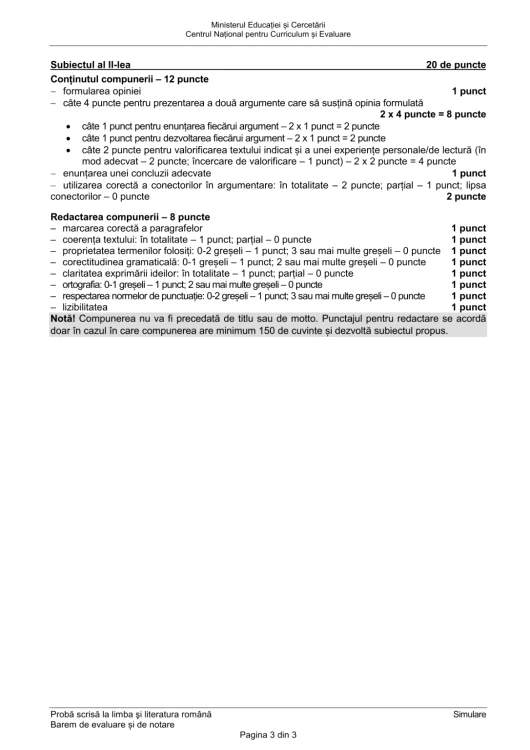
The scale for the Romanian Language and Literature test
The Ministry also published the correction scale.
Simulation calendar
The set schedule of simulations looked like this:
- March 16, 2026 – Romanian language and literature
- March 17, 2026 – Mathematics
- March 18, 2026 – Mother language and literature
- 30 March 2026 – Communication of results (at individual level, not by display)
Schools can organize their own simulations
Secretary of State Sorin Ion announced to Euronews that the schools where the simulation was not held today, due to the teachers’ boycott, can organize their own simulations, with topics written by specialists from the National Center for Curriculum and Evaluation (CNCE). Moreover, the Ministry of Education can give them access to the evaluation platform.
National simulations have begun. What subjects did the students have in the Romanian Language and Literature exam
“The Ministry of Education can support these schools by providing subjects made by professionals from the National Curriculum and Evaluation Center and, if necessary, even making the evaluation platform available, because there the rigors are different, it does not correct the classroom teacher: the papers are randomly distributed to other teachers in the system, as is happening at the moment, when the papers will be sent to the approximately 10,000 teachers who have chosen to be involved in the evaluation of the papers. So, in conclusion, we can say that for almost all children in Romania, simulation takes place today”declared Sorin Ion.
