
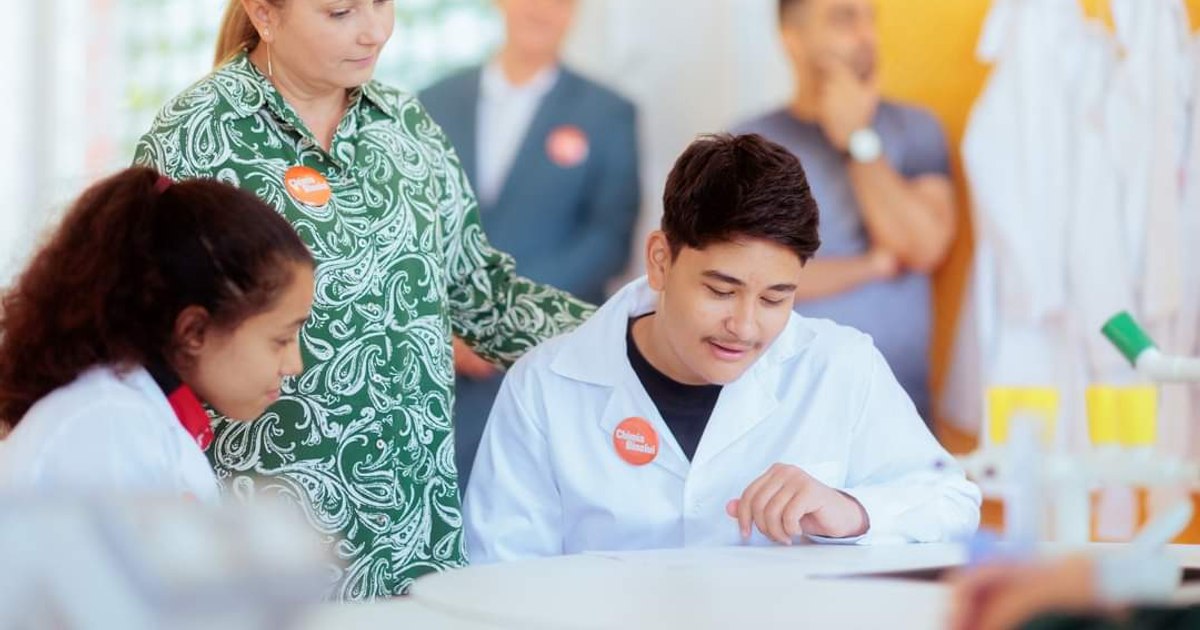
Valeria Florentina Neagu uses atypical methods to eliminate illiteracy and functional illiteracy in the school where she teaches: additional reading hours, original games that test their knowledge and literacy workshops.
Valeria with her students PHOTO personal archive
Valeria Florentina Neagu, Romanian language teacher at Secondary School No. 1 from Curcani commune, Călărași county, won first place in the “Literacy Development” category at the 2023 Rural Teacher of the Year Gala organized by “Teach for Romania” for his deep involvement in the life of the community he belongs to.
The teacher now teaches at the school she attended as a child and confessed to “Weekend Adevărul” that her Romanian language teacher, who was also the principal at the time, was her mentor.
His model was also Ionela Neagoe, the current director of the “Gheorghe Lazăr” National College in Bucharest, one of the most prestigious in the country, who was his French teacher in the second grade.
“I always look at my students as friends, of course with strict limits. I always try to understand them, to be with them, to find out what they like and how they would like things to go, so that we can get results”, the teacher explains her working style in the classroom.
In 2017, together with a colleague from school, she wrote an Erasmus project, which she won, and at the school in Curcani, she coordinated it together with other school units from Turkey, Greece, Portugal and Bulgaria.
In the summer of 2023, he opened a summer school in the locality, where several colleagues from the department joined him as volunteers. More than 100 children participated every day in literacy, numeracy and art workshops, and the eighth grade students were prepared to pass the National Assessment.
The students also participated in a robotics workshop, where they were fascinated by the robots they had the opportunity to handle.
Math treasure hunt
The little ones liked the treasure hunt the most at the summer school.
“They solved certain exercises, which are also found in the National Assessment, and thus they found different clues, and through them they reached the treasures. It's about chocolate, candies or the competition cup, and those who won, one by one, took the trophy home for a day”,
explains the teacher how he turned math lessons into a game.
In 2021, the school in Curcani was included in a project of the Ministry of Education, which involved changing teaching methods. Valeria introduced an additional reading hour in the 5th grade.
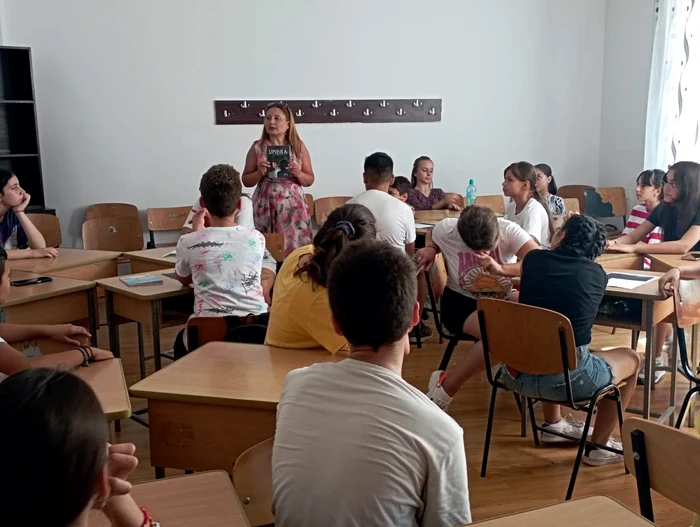
The teacher uses atypical teaching methods in the classroom PHOTO personal archive
“I have noticed over time that students read very little, and some even not at all,” says the teacher. In 2019, with a project she wrote herself, she managed to bring 650 new books from the “Melior” Foundation to the school library, for the children to enjoy:
“They don't read anymore because they can't find themselves in the older books anymore. They consider it a difficult language for them and there are a lot of archaisms”, Valeria explained.
Through extra reading time and new library books she was able to captivate her students and reignite their passion for reading. They tirelessly went through the “Harry Potter” volumes, as well as those written by Mircea Cărtărescu, Adina Popescu and Ioana Nicolae.
Online games and musical chairs
The Romanian language teacher constantly finds new ways to attract students to school. For example, through the online platform kinderpedia.co, he sends them materials, even the next day's lessons in class.
“The kids read them and it's easier for them to work on that topic because they already know what it's about. For example, when we taught the noun, we were able to do more exercises precisely because the information had already reached them and we only clarified what they did not understand”,
Valeria elaborates.
He often teaches a concept in class and then tests them with an online game to see how well they understood it.
Another teaching method he uses is musical chairs: students are given various questions or tasks and spin around a chair to the music. Those who fail to sit on the chair are given questions, and if they do not know the answer to two of them and have not completed the tasks, they are eliminated from the game.
Literacy workshop in school
Last summer she opened a literacy workshop in the school, where she teaches students to use spelling and punctuation, to understand the meaning of the concepts they read, including in mathematics, but also to extract the main ideas of the lessons.
“Some of the students are in the situation of functional illiteracy and I thought that such a workshop would help them. Two years ago we met twice a week and we also did art classes with them, because we discovered that we have children who have an inclination towards such things”, says the Romanian teacher.
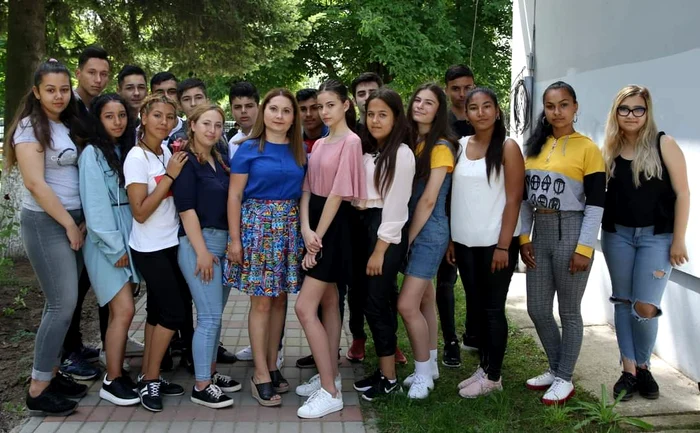
The teacher also opened a literacy workshop in the school PHOTO personal archive
Through a partnership with the non-governmental organization ACEDO, 25 parents of students from the school also participated in reading and literacy workshops.
“Parents were given books and had a week to read them with their children, and then they had to tell us what they understood and if the students had any questions. It was fantastic, because the parents saw what level their children were at and spent time with them. At the end of the project, many mothers told me that they want us to continue without receiving any more books, just to come with some printed sheets”, recalls Valeria with emotion.
Online platforms in the classroom
The teacher extended the leadership project from her colleagues in the department to the students and taught them how to communicate better and work in a team. The children also discovered through her how to identify their skills in which they excel and develop them in the future.
Valeria uses an online platform (livresq.com), which she adjusts according to the students' ability to work on one subject or another. Standardized testing from brio.ro is another method that helps her check the literacy level of her students, so she knows where she still has to work with them.
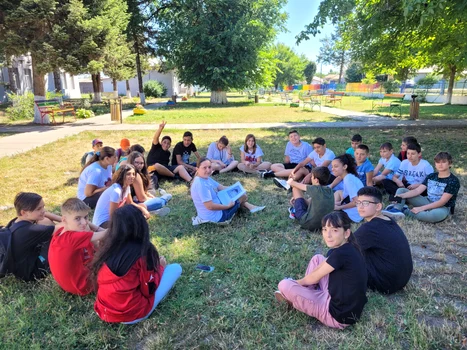
Image 1/7:
Valeria Florentina Neagu teacher Teach for Romania PHOTO personal archive (10) (1) jpeg
VALERIA FLORENTINA NEAGU PHOTO GALLERY
She remembers that there were children in the 5th grade who could not read and write, and Valeria and her classmates are still struggling with illiteracy.
“It's hard for us to take first-grade notebooks and make letters with them or write sentences, or discover the meanings of words. But we work with them, so that by the eighth grade they learn to write and read and be able to manage in life”, the teacher explains the reality she is facing.
Her students have now made a habit of reading and understand better the texts and words they read.
Her wishes are simple: “I want to prepare them for life, to cope when they have an application to fill out or write up. No one will ask them what the noun is, but they must certainly know how to write and read, but also understand the concepts they are going through”.
