
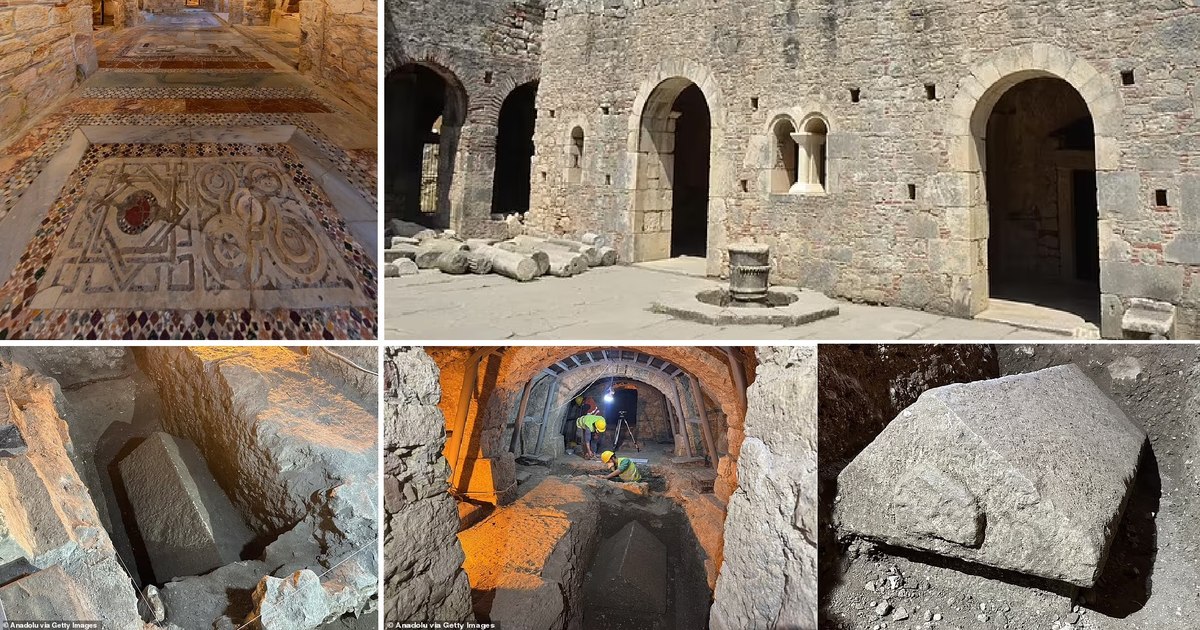
In 2022, archaeologists began digging under a church in southern Turkey, suspecting that the tomb of Saint Nicholas might be there. Recently, their efforts unearthed a limestone sarcophagus, believed to have housed the remains of the bishop who inspired the legend of Santa Claus.
Church of St. Nicholas in Demre Antalya Turkey and the sarcophagus of St. Nicholas Collage AnadoluGettyImages
The remarkable discovery was made near the city of Demre, near the original burial site, under the Byzantine Church of Saint Nicholas, located in the province of Antalya. The tomb discovered in the ancient basilica, on whose ruins the current church was built, could be the key to solving the mystery related to the remains of Saint Nicholas.
It was known until now that his remains were stolen about 1,000 years ago by traders and transported to Italy. From Bari they then arrived in Venice. In 1953, an examination of bone fragments from Bari and Venice determined that they came from the same person, although their authenticity and connection to Saint Nicholas was not definitively confirmed.
Researchers now suggest that the remains preserved in Italy may actually belong to another, anonymous priest. This new discovery raises the essential question: do the holy relics preserved in Italy belong to Saint Nicholas or someone else? Ongoing research may clear up this mystery.
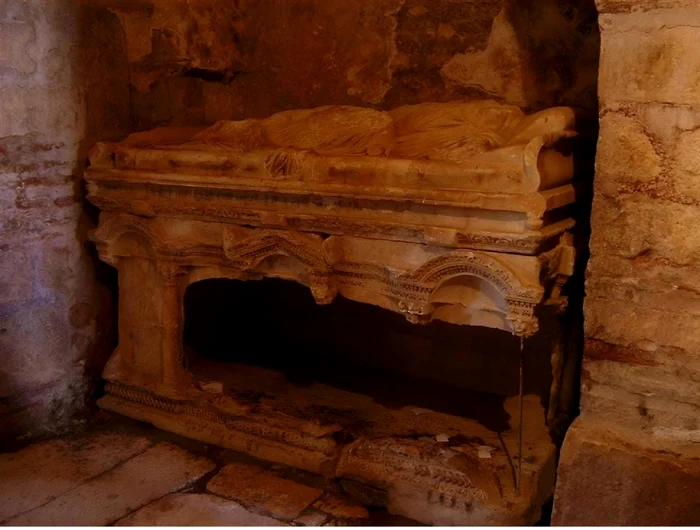
The sarcophagus in the Church of Saint Nicholas in Demre Antalya in Turkey Credit Sjoehes CC BY SA 3 0 arch
The mystery of the remains of Saint Nicholas
Although historical records indicate that Saint Nicholas was buried in a church built in his honor in southern Turkey, the exact location of his tomb remained an enigma until recently.
After the saint’s death, the Byzantine emperor Theodosius II ordered the construction of the Saint Nicholas Church on the site where he had served as bishop. His body was exhumed and reburied in the church, and later, in 1087, his remains were stolen, to be transferred and venerated as sacred relics in the Basilica of San Nicola in Bari.
During the First Crusades, Venetian sailors recovered most of the remains and transported them to Venice, where they were buried at the Basilica of the Monastery of San Nicolò al Lido.
Current research reopens the debate over the authenticity of these relics, raising new questions about their identity.
Archaeological excavations have been carried out in southern Turkey since 1989, but only two years ago archaeologists have been conducting a study on the Church of Saint Nicholas, part of the project “Legacy for the Future”initiated by the Turkish Ministry of Culture and Tourism.
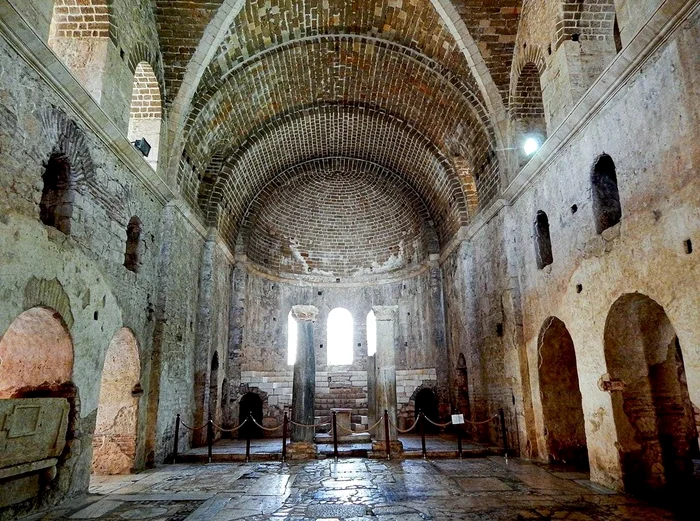
St. Nicholas Church in Demre Antalya Turkey Credit Sinan Şahin CC BY 3 0 archeologymag-com
Saint Nicholas Church – a historical place of worship
The church under which the sarcophagus was found was an important place of pilgrimage for Orthodox Christians between the 5th and 12th centuries. Included in the world heritage list Unesco in 1982 it was built to protect the sacred site after the original sanctuary was destroyed.
The researchers used advanced underground scanning and imaging technologies, including ground-penetrating radar and other non-invasive techniques, which allow detailed analysis of underground structures without damaging them. These methods revealed voids between the church floor and the ground, indicating the existence of hidden elements beneath the Church of Saint Nicholas.
As early as 2022, the team announced that they could be close to uncovering the tomb, working carefully to remove the floor of the Byzantine church without damaging it. Osman Eravsar, head of the Antalya Cultural Heritage Conservation Council, says Demirören News Agency: “The first church was buried with the rise of the Mediterranean Sea, and a few centuries later, a new church was built on top. We have now arrived at the remains of the original sanctuary and the floor on which Saint Nicholas walked. The tiles on the floor of the first church were discovered”.
Recently, the team announced the new findings, strengthening the idea that the tomb of Saint Nicholas could indeed be here.
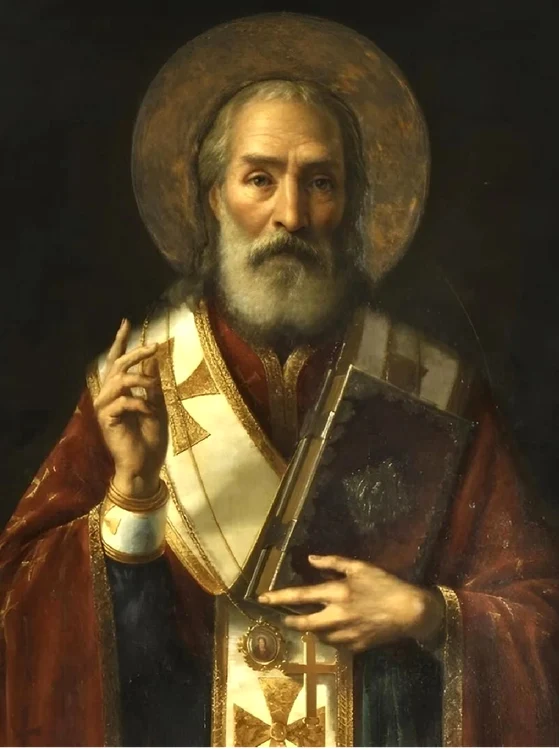
Saint Nicholas 19th century iconography author Jaroslav Cermak Credit Jaroslav Cermak
In search of the tomb of Saint Nicholas
During the excavations carried out under the Byzantine church of Saint Nicholas, archaeologists brought to light a limestone sarcophagus of approximately 1.8 meters in length, buried at a depth of almost two meters. With a raised lid and sloping roof, the sarcophagus was discovered in a two-story church annex located on the southern edge of the property. This significant discovery strengthens the hypothesis that the tomb of Saint Nicholas may finally be found.
The research team is now analyzing the sarcophagus, hoping to find an inscription that will reveal the date and identity of the person buried.
University lecturer Ebru Fatma Fındık from Hatay Mustafa Kemal University said for Turkey Today: “The fact that we discovered a sarcophagus near the church, which is believed to house the tomb of Saint Nicholas, could indicate that this is the sacred area we were looking for. Our great hope is to find an inscription on the sarcophagus. This would help us clarify the contents of the tomb and determine the exact period from which it dates.”
Archaeologists continue excavations in Turkey
The team of archaeologists in Turkey is continuing its efforts to fully uncover the discovered sarcophagus, hoping to find conclusive evidence to confirm that it belongs to Saint Nicholas. To date, only part of the sarcophagus has been uncovered, and excavations are proceeding cautiously to protect the fragile surrounding structures.
University lecturer Ebru Fatma Fındık explained the state of the works: “So far, only the lid of the sarcophagus has been uncovered, and a small portion of the mortuary chamber has been exposed. In the next stages, we will dig deeper to reveal it in its entirety.”
Saint Nicholas – a figure known worldwide
Stories about Saint Nicholas, who lived in the ancient city of Myra between 270 and 343 AD, suggest that he inherited a considerable fortune which he used to help those in need, notably rescuing three girls from a life of prostitution. However, these accounts are not supported by historical documents, being transmitted mostly through oral tradition. However, it is certain that the tradition of winter gifts has its roots in his acts of charity.
While in many cultures, such as the Romanian one, Santa Claus and Santa Claus are distinct figures, in the West the two characters have merged over time. Thus, Santa Claus has his roots in the legend of Saint Nicholas, and every time he is mentioned, the connection with the mythical figure of winter gifts is specified.
Recently, researchers announced that they had reconstructed the face of Saint Nicholas using his skull, preserved in Italy. see HERE more details on this topic.
What’s next
The discovery of the sarcophagus and the Byzantine church under it, in Turkey, could bring important clarifications regarding the remains preserved in Italy. The excavations will continue, and their results could answer the question that has troubled the world for almost a millennium: are the bones in Bari of Saint Nicholas or of another priest?
The new discoveries would strengthen the connection between the history of early Christianity and modern traditions, linking the story of Santa Claus with the charitable deeds of a bishop who became a symbol of generosity around the world. They have a wider significance beyond archaeology, with Saint Nicholas being revered as the patron saint of children and sailors, and his legacy continues to be celebrated every December.
Until the enigma is solved, the mystery of Saint Nicholas’ remains will continue to captivate researchers and historians, and these new revelations could deepen our understanding of the figure who inspired the tradition of Santa Claus.
