
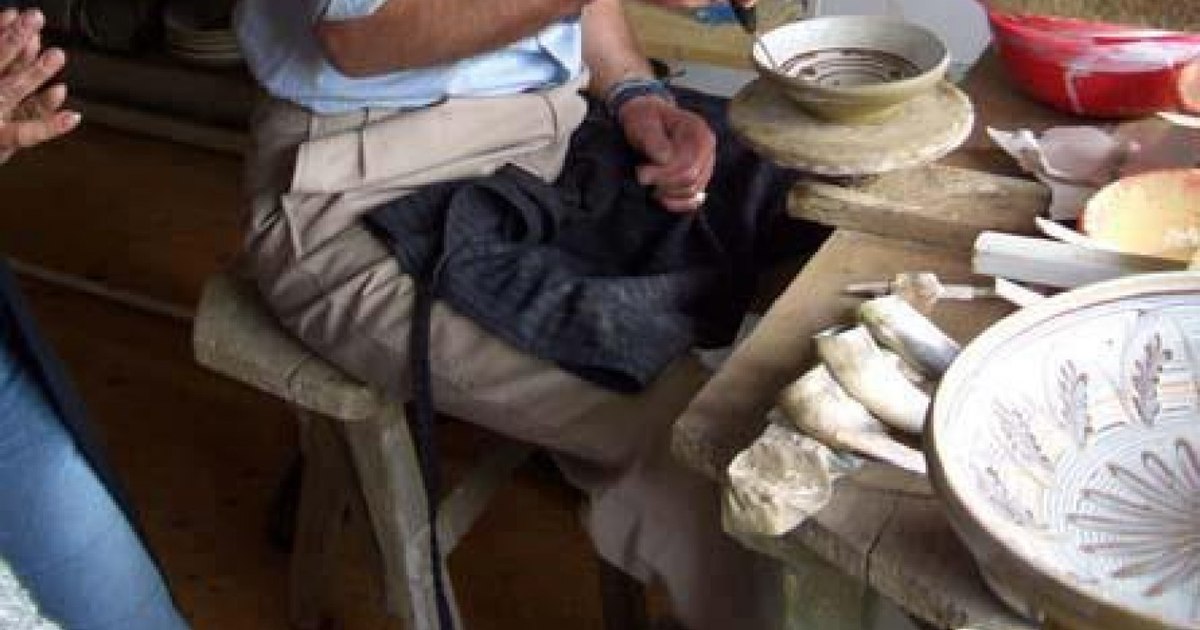
In a time when Romania seems more and more hasty to forget its roots, a corner of Dumbravă comes to life with baked poems, old icons and voices of craftsmen who give lessons to the past. In the largest open air museum in Romania, Astra in Sibiu, the Oltenic traditions are not only preserved, but are reactivated by a unique project: “Poys and icons from the orchard with people”.
Traditional Oltenian crafts have impressed even King Charles Photo Mischiu Archive
The initiative belongs to the Artistory Association, in partnership with the Astra Museum, and is co-financed by the Administration of the National Cultural Fund. But beyond the official title, the draft is a sincere invitation to find the connection with the former world-a world in which man and nature lived in a subtle balance, and the useful and beauty coexisted in every daily object.
Lived tradition, not just regarded
For two months, between August and September 2025, the Agriculture -Pomiculture Sector in the Astra Museum becomes a living scene of the village of Oltenc, where the authentic households in Bălănești, Vlădești and Comănești (from Olt, Vâlcea and Gorj) become cooking spaces, created and told.
It is not just about exhibits, but about experiences: workshops of traditional gastronomy, old reinterpreted crafts, modern curator, with multimedia, animation and fictional inserts. Visitors will not be passive spectators, but actors involved in a living story of rural heritage.
“The objects in the museum are not just relics – they are witnesses of some ways of life, carriers of collective memory. Our goal is to reactivate that memory,” explains the organizers.
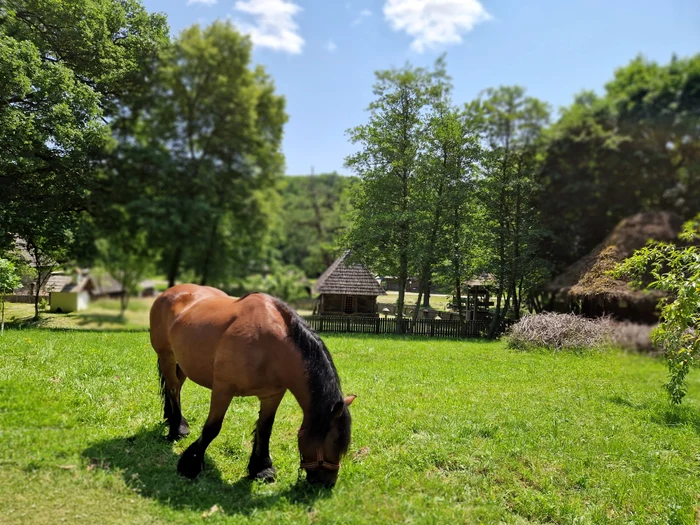
Oltenic village forgotten from the Astra Sibiu Museum Astra Afcn Museum
An orchard with people – about resources and identity
The poetic title of the project – “Poys and icons from the orchard with people” – It’s not accidental. He sends to a deep symbol: man as part of nature, the object as a depository of meaning, the community as a perennial value.
Using local materials and traditional techniques, the project explores the relationship between useful and decorative, between functional and identity. The architecture of the Oltenic houses becomes a language itself, and the crafts – from tissue to carpentry and pottery – become forms of cultural communication.
From poems to stories: workshops for all senses
Among the activities within the project are:
- Interactive cooking workshops in Oltenian households, with old reinterpreted recipes;
- Craft demonstrations supported by traditional artists and crafts;
- Participatory curator of exhibition spaces – visitors contribute stories, ideas and interpretations;
- Creative workshops series: August 4-8 and September 11-14, followed by special events on August 9-10.
The created spaces will remain open to the public and after the completion of the project, contributing to the development of long -term cultural and educational tourism.
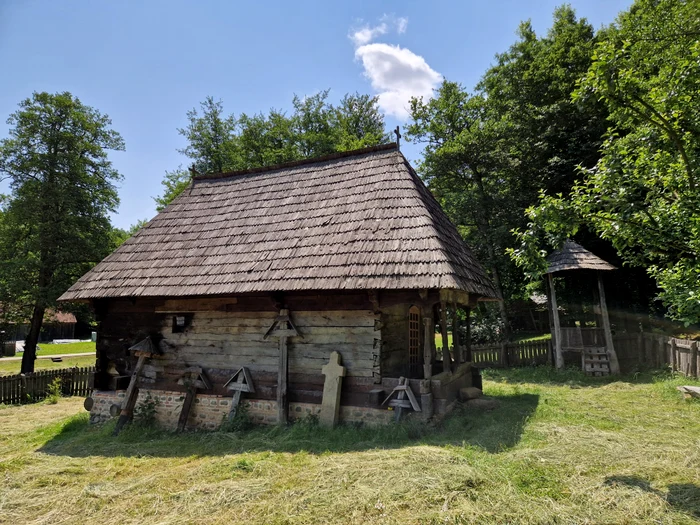
Oltenic village forgotten from the Astra Sibiu Museum Astra Afcn Museum
A model of the future of the past
The project also discusses current topics such as sustainability, relationship with local resources or harmonious cohabitation with the environment – traditional values that come to the center of global concerns today.
In an era of digitalization, traditions do not disappear, but transform. And the Astra Museum, together with initiatives like this, shows that immaterial heritage can become a strong reconnection tool, not only with the past, but also between generations.
Back to roots, face to the future
“Poys and icons from the orchard with people” It is not just a cultural project. It is a lesson about who we were and who we can be. A reminder that identity is not kept in windows, but in gestures, smells, tastes and shared stories.
And if we ever get lost in the tumult of modernity, maybe a visit to Dumbrava Sibiului, among the orchards and the houses with icons, will show us again at home.
