
An exercise can help parents and teenage children more easily negotiate what is allowed and set limits where appropriate. From both sides. The psychotherapist Diana Stănculeanu spoke in a debate that brought together both generations about the “traffic light” exercise. It involves color-coding the things that parents and children want or don’t want from each other, but also where they are willing to compromise.
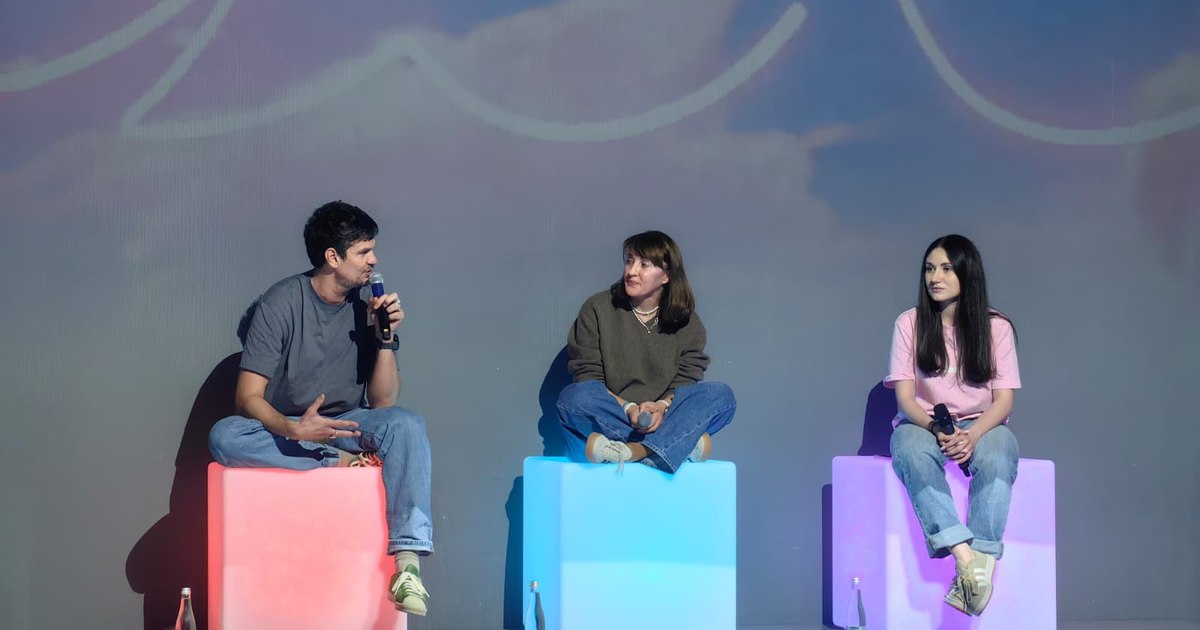
The “Dialogue about trust” debate. In the middle, Diana Stănculeanu PHOTO Adevărul/Ana Maxim
What does the exercise entail?
To carry out the exercise proposed by the psychotherapist, parents and children need a sheet of paper on which they can first write down the colors of the traffic lights.
On “red” we will put those things that, as a parent, if I could ever ban them, remove them from my child’s life, I would like them to be there; and the teenagers who would like to never hear or see their parent doing it again. Do not interfere, do not judge, do not wink, do not judge. The comments are made at the end.
Both the parent and the child that they give “for free” will put on “green”. What are those things that if my child wants to do whenever, however, however, I’m ok with that. I dare you to find it! And don’t be there to “do homework”. Let’s see what I give free for my child. And the children, the same, for the parents. explained Diana Stănculeanu, psychotherapist and national expert in mental health.
“The parent-adolescent relationship is played on yellow”
The yellow color remains.
“What does the yellow mean at the traffic lights? It is somehow the training area (…) Take the yellow as an invitation to negotiation and meeting halfway. What would be the things in our family dynamic about which we are willing to do conversation and negotiation? Somehow, in my experience with parents and children alike, we should have the most things in yellow. The parent-teen relationship is actually played on yellow. From grades, time to come home, time on screens, the way they dress, etc.” said Diana Stănculeanu.
What is essential during this negotiation? Listening.
“And because we are adults, dear parents, we will set the example of obedience. And we will listen to them, the children, remembering that they are at this age when they need to discover themselves, to learn who they are. And then the child will also listen, by the way, to what the parent has to say. (…) Beware that the risk is that no one will come out completely happy from the negotiation. But at the same time, no one will come out completely unhappy. That’s why it’s a negotiation, a compromise”the psychotherapist drew attention.
She spoke about what she noticed in the office when parents and children did the exercise:
“What I can tell you that usually sets parents off is their list of parenting nightmares. “to have a safe child, not to drop out of school, not to become a delinquent, not to have children at 15”. What are they most afraid of that could happen if they give up control.
Often, all that reaches children in the form of control is all a parent knows or can do to make sure they are safe. It just sometimes takes the form of control.
Green is born very hard, both on one side and on the other”.
Uncertainty, normal in adolescence
Diana Stănculeanu also spoke about the expectations that parents have from their children and the stigmatization of some natural things in the growing process.
“What I hear from parents often – and I also hear from teenagers – is this label about <
Another trap parents can fall into is trying to turn their children into enhanced versions of themselves. A desire that also comes from the need to protect. But that doesn’t make it the right approach.
“Biology teaches us that all growth is based on pain. When we grow up, we get big, our joints hurt. Growth processes are made on discomfort. And it is probably also one of the parents’ missions to contribute to children’s discomfort, because learning and growing means newness, it means getting out of what I already know. If we raised our children to be our mini-children, humanity would stop evolving, everything would remain the same.
I think that many times in this very complicated period of adolescence we have a hard time with each other. Parents also have a hard time with their children, and teenagers have a hard time with their parents. That’s the common ground. Part of this difficulty comes from the fact that we, as parents, want teenagers to learn from the mistakes we have made and from what we tell them is already established or not established; it is very difficult for us to see you in this area of uncertainty and sometimes helplessness, and we would like to save you from this; what we don’t realize is that sometimes right in the process of relieving you of this we are preventing you from taking your mission forward. And this story is from when the world” said Diana Stănculeanu, during the “Dialogue about trust” debate, organized by the “Zbor” community.
Parents and children were present at the event, in dialogue with the renowned psychotherapist, but also with Tudor Chirilă.

The “Dialogue about trust” debate PHOTO Adevărul/ Ana Maxim
What is the “Zbor” community and what it offers to young people
“Zbor” is a program for young people between the ages of 14 and 25, which offers a series of activities, workshops and events with free and open access. “Zbor” hubs operate in nine cities: Constanța, Iasi, Brașov, Ploiesti, Târgu Jiu, Cluj-Napoca, Baia Mare, Vaslui and Timișoara.
“In Zbor hubs, young people find a safe space where they can explore, experiment, collaborate and access educational resources. (…) The events and activities in the hubs are constantly evolving, depending on the feedback and interests of the community, what young people want to learn and discover.
ZBOR has a non-formal education curriculum, structured around five pillars: financial education, entrepreneurship, sustainability, digital skills and personal development, but in addition we build a relevant program of events and meetings with the people, fields and activities that matter for young people and the economy of the future”. says Nicoleta Deliu, the project’s communication director.
Meetings are also organized in other cities, such as Bucharest.
“Teenagers want to feel heard, seen, understood”
“I think the biggest need a teenager has is a sense of belonging, which comes automatically and with self-validation. We hear more and more that young people spend a lot of time on social media, and we often forget why they are so successful, especially among Generation Z. They are looking for this sense of belonging, they want to feel heard, seen, understood. The need is the same, but the way young people experience this sense of belonging has changed. They’re looking for someone like them to validate their own values.” says Ana Radovici, Zbor community manager. He is 23 years old so not long ago he went through the same challenges.
One thing many adults forget is how much other people’s opinions matter in the teenage years.
“At this age, when you are still polishing your principles and forming your backbone, the opinions of those around you can have a big impact on your personal vision. Including what we see in the online environment influences us a lot in making decisions. That’s why it’s important to listen to your inner voice.” Ana conveys to the young people.

Ana Radovici PHOTO Facebook
And he talks to adults about the importance of the trust they have to give to children:
“It is essential for a young man to receive trust. Its lack leads to inhibitions, deviations, discouragements. It’s an age where you can afford to dream, but if you don’t trust you can miss this very beautiful stage of life. A young person should be encouraged to express themselves, experiment and try again. This makes him believe in himself, which will become a pillar in his personal life.”
Why we need community for young people
Nicoleta Deliu also follows the idea of the importance of expression and validation.
“Recently, we did research with Cult Market Research, which showed us that although 61% of young people have confidence in themselves, almost as many (57%) get stuck when they have to support their ideas in public. Confidence exists within, but exposure, fear of evaluation and lack of safe spaces for expression remain major barriers. (…)
Furthermore, all this research has shown us that trust is built in relationship and interaction, not in isolation. The family remains an important pillar, but young people also need communities that validate them, challenge them and give them the context to express themselves. The activities in ZBOR, meaning workshops, team projects, mentoring sessions, open discussions, create these contexts. They help young people find their voice, gain the courage to express themselves and turn inner confidence into a resource for the future.”
To find out about Zbor projects and events, young people can download the application from the AppStore. And this is free.
