
A part of Romania is collapsing at an increasingly accelerated rate. The rural world, especially in the poor areas of the country, is on the verge of extinction. Whole villages are populated only by the elderly while village schools close one after another. The explanations are simple and dramatic.
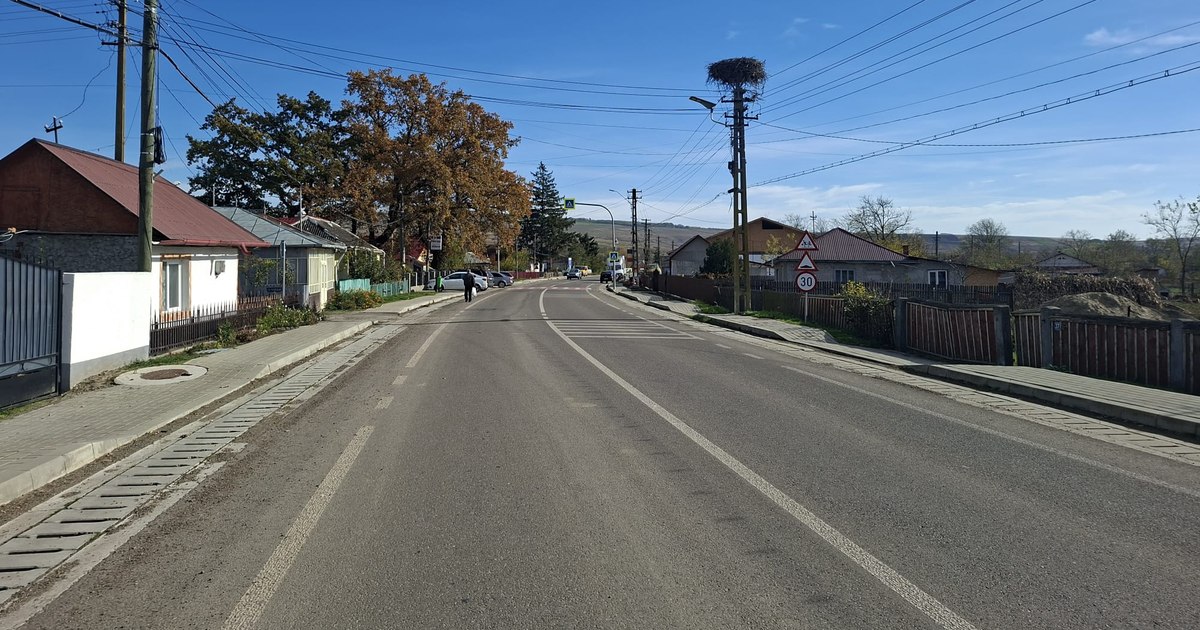
In the middle of the day, the streets are almost deserted PHOTO Cosmin Zamfirache
Thursday, October 30, 12:00 p.m., Dângeni village, Dângeni commune, Botoșani county. On the main streets but also on the village streets, hardly a person passes by from time to time. Most are elderly people. Rarely does a woman pass by with one or two children, taken from school. At the village tavern, where 15 years ago, you barely had a place to throw a needle, two people serve a brandy, hurriedly, standing. The smaller hamlets, surrounded by the commune, seem effectively abandoned. And this situation is encountered in many villages in Romania in 2025. In short, the rural world, especially in the poor areas of Romania, seems to have reached the brink of extinction. The statistics, but also the reality that is easy to observe with the naked eye, reveal a piece of Romania that is dying, at an increasingly accelerated pace. The reasons are clear, simple and dramatic.
Romania loses almost 10,000 citizens annually
According to official birth statistics in the European Union, the entire continent is, in fact, on the verge of extinction. That is, the birth rate is much lower than the death rate. People are dying, but not enough are being born to cover the shortfall. The birth rate in the European Union decreased by 5.4% in 2023, reaching only 3.67 million births, the lowest level in the last 60 years. In the European context, Romania has one of the fastest declines in the birth rate. Once a reservoir of children, now our country is becoming more and more desolate. Romania’s natural increase in 2024 was negative, with a peak in December, with minus 9,617 people.
That is, our country was left in the last month of 2024 without 10,000 citizens, without others being born in their place. “During the period 2021-2024, the population recorded a persistent negative natural increase, confirming the natural tendency of the population to decrease specific to the last decade”says Valentin Popa, director of the Botoșani County Statistics Directorate, referring to the negative natural increase for the entire country. Actually, the birth rate in Romania in 2025 is half that of the 90s. The most affected are the rural localities in the poor areas of the country, such as those in the north-east of the country but also in the south-east and south-west, in regions such as Moldova, Oltenia or Dobrogea.
A part of Romania is dying at an increasingly accelerated rate
In Botoșani county, for example, there are at least 13 communes on the verge of extinction. They have less than 2000 inhabitants and the population consists mostly of elderly people. The worst case is in the Adășeni commune, where 80% of the inhabitants are elderly people, many over 70 years old. In Oltenia, in Dolj county, it is predicted that almost a quarter of the villages are in danger of disappearing due to the decrease in the birth rate. There are situations where there are less than 0.5 children per household. One of the most affected villages is Urdinita, from Brabova commune.
Returning to the north of Moldova, in Adășeni, at most six children are born per year, in the entire commune. During all this time, the village cemeteries become unusable. “It is very much at risk of disappearing altogether. Like many other communes. Already very few are born. There are no signs that youth will rise too much. On the contrary. The elderly will continue to predominate, i.e. over 70% percent”, stated Relu Rusu, referent in Adășeni City Hall. In the Dângeni commune, there are only a few children left in the kindergarten groups. “There are very few children, only 7-8 in kindergarten now”, confesses the vice-mayor Andrei Necular. The locals say the same thing.
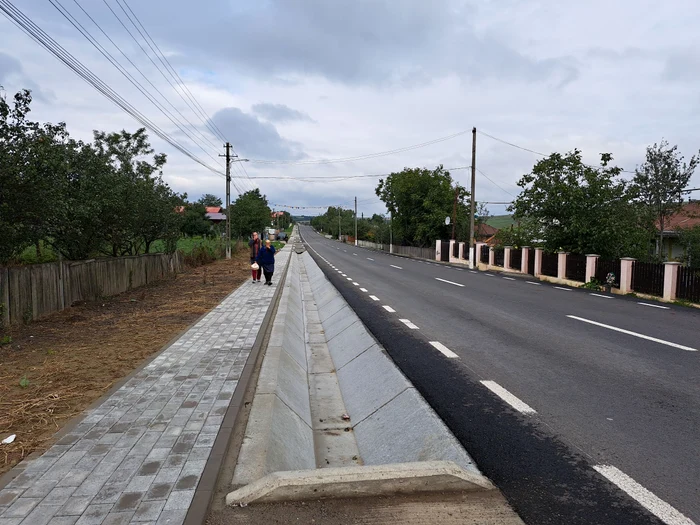
The villages are full of pensioners PHOTO Cosmin Zamfirache
“There are a maximum of 12-13 children in grades I-IV. I don’t think there are more. There are villages that are disappearing, because there is no one left to stay. The old people die and no one comes to replace them”says a villager from Dângeni. Moș Petrică, another villager, well over 70 years old, shakes his hand with sadness when he hears about the children and the future of the villages in Dângeni. “God forbid! The streets were full of children. They were running, kicking the ball. Full of women and men working around the fence, with the phaeton (not a light horse cart) in the field. Now if you look you see desert. You are horrified. Only old people and poor people. The villages are disappearing, you have nothing to do”says the villager.
More than 30 school bodies closed
The demographic disaster is best reflected in the dynamics of the school population. According to official data, the school population, only in Botoșani county, has decreased dramatically in the last three decades. For example, in the 90s there were over 100,000 students in the county. Now only 58,000 remain. Between 700 and 1000 students are lost every year. The worst situation is obviously in the countryside. No less than 30 schools were closed in the last year, in the villages of Botoșani county, because they effectively had no more schoolchildren.
“Due to this decrease in the number of students, 31 school buildings in the county have been closed. It is quite a serious problem”says Bogdan Suruciuc, general school inspector at the Botoșani County School Inspectorate. Many local residents and local authorities expect other schools to be closed as well. Especially in the context where there are fewer and fewer children.
“I think that there will remain a school in the center of the commune and that’s it. There are no more students. You barely get one class, two. And simultaneous education is no longer accepted, rightly so, that’s not how you get a book. It makes you cringe when you see that there are still 10-12 primary school children. That’s less than a middle school class”confesses a teacher who teaches in the countryside.
“Yes, little brother, what are you doing here? Either you can’t find work, or they laugh at you”
The main causes of the decline in the birth rate in rural areas are simple, clear as day. Poverty and lack of jobs, of any prospect effectively drove people to countries in western Europe. They initially left as seasonals. In time, they realized they didn’t stand a chance at home. They used up the money collected in months or years of work and then returned to abject poverty and lack of perspective. So many have decided to settle in the countries where they work. The most industrious have learned the trades sought in those areas and are doing decently. Others, admittedly less often, opened their own businesses. In any case, I only come home on holidays.
“The youth are leaving, there are no jobs. How can you make them stay at home if they have nowhere to earn a living. And since there are no jobs in the area, they actually leave to look for a better life. The children make them there and they stay there. There are many who have made a home here, but they only come on holidays, in the summer. More than that, they do not come. And the children take them to school where they live, in the respective countries”says the deputy mayor of Dângeni. The villagers say that the young and the most industrious in the village have long since left and managed to make a living abroad.
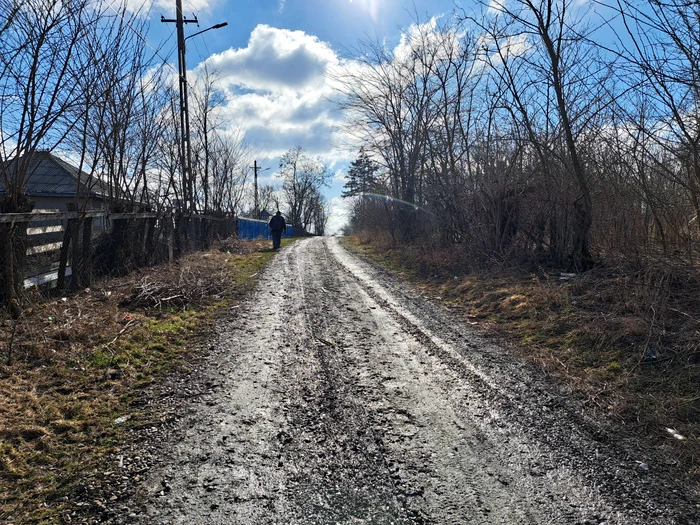
The streets are deserted PHOTO Cosmin Zamfirache
“Yes, what are you supposed to do here, little brother? Either you can’t find a job, or he laughs at you. Low salary and high demands. Fratimi went to Germany, she knows how to lay tiles, tiles, makes a doll’s house. She earns a pittance. Here there was water, straw and beating. I’m lucky with the animals, I give milk to the processor, I manage”says another villager. Elderly people say the effect of this exodus is dramatic. They can’t get their kids to come home, and they don’t want to.
“My heart is missing them, but I love them so much that I want them to stay there. Here, mother, you have nothing to live for. There is no work. The first time he came, he did it around the house, but after that he had no money to do. He hired him, but he received little money compared to there in England. So he left again. What to do with him? He comes every year, but only to see us. That’s his life. The children go to school there”confesses an elderly villager. The effects can be seen with the naked eye, depopulation, the lack of labor force, the emphasis of problems on didactic norms. At the moment the big farmers have serious problems in finding shepherds and employees for the agricultural work. Tractor drivers are a rarity, especially since most of the qualified ones prefer to go abroad.
