
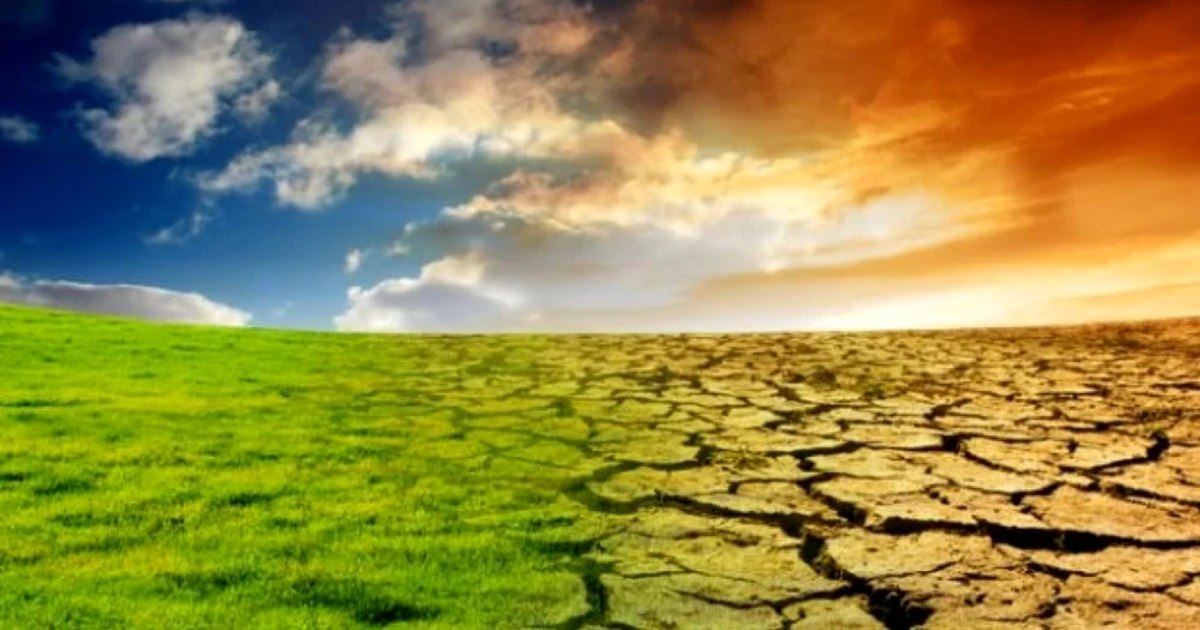
The means to stop catastrophic global warming exist, the UN chief says, but political courage is needed to end the world’s dependence on fossil fuels.
Photo: green-report.ro
The huge cuts in carbon dioxide emissions now needed to end the climate crisis mean it has arrived “the crucial moment”, according to the UN responsible for the environment.
The planet has entered an irreversible course of catastrophic warming. The current plans and policies of countries will lead to a temperature rise of 2.6 to 3.1 degrees Celsius this century, with zero chance of limiting the temperature increase to the originally set target of 1.5 degrees C agreed in Paris in 2015 , according to a UN report, theguardian.com writes.
According to the report, the current carbon dioxide reduction pledges made by countries for 2030 are not being met, and even if they were, the temperature rise would only be limited to a still disastrous 2.6C to 2.8C. There is no time for “words in the wind”, says the report, which urges nations to act at the Cop29 summit in November.
Keeping the international target of 1.5°C is technically possible, the report says, but emissions need to fall by 7.5% annually by 2035. This means stopping emissions equivalent to those of the EU every year for a decade. Delaying emission reductions only means that more drastic reductions will be needed in the future.
Unep said countries must collectively commit to reducing annual greenhouse gas emissions by 42 percent by 2030 and 57 percent by 2035 in their future UN commitments, called nationally determined contributions, which must presented in February. Without these pledges and swift action to back them up, the 1.5°C target would have disappeared, the UN said.
However, Unep chief Inger Andersen said it was wrong to focus only on whether or not to stick to the 1.5°C target, as every fraction of a degree of global warming avoided would save lives, damage and costs: “Don’t focus too much on a magic number. We have to keep the temperature as low as possible.”
The funding and technology to reduce emissions exists, Andersen said, but it’s needed “political courage”, especially from the G20 countries (excluding the African Union), which generate 77% of global emissions.
Andersen said the world’s nations made firm climate pledges at the 2015 Paris summit.Now is the time to live up to those promises – it’s climate crisis time. We need global mobilization on an unprecedented scale and pace, starting right now, or the 1.5C goal will soon be dead and the “well below 2C” goal will take its place in the intensive care unit .”
The last two annual reports of Unep highlighted “the window that closes” for action and “broken record” of missed promises. “Now we say, this is itshe said.
“The annoying thing is that technology is within everyone’s reach, and so are jobs and opportunities for economic development,” Andersen stated. “It just takes political courage and strong leadership.”
UN Secretary-General António Guterres said: “We play with fire, but we can no longer play with time. We don’t have time.”
He claimed that global warming has supercharged monstrous hurricanes, caused biblical floods, turned forests into smokestacks and cities into saunas.
“Governments need to wean us off our dependence on fossil fuels: showing how they will phase them out – fast and fair”
he said, adding that fossil fuel taxes could help pay for climate action.
The Unep report found that a faster roll-out of solar and wind power could deliver 27% of the emissions reductions needed. “That’s a huge number, and this is cheap, proven technology – it’s not a gamble to invest in,” Andersen stated.
Halting forest destruction could bring an additional 20 percent reduction, the report said. Most of the rest could come from energy efficiency and the electrification of buildings, transportation and industry, as well as reducing methane emissions from fossil fuel plants, which Andersen described as “not difficult at all.”
According to the report, the investment needed to reduce emissions to net zero is estimated at $1-2 billion per year, about 1% of the value of the global economy and financial markets. “We’re talking about a few percentage points that would be incremental in terms of renewing aging infrastructure” in developed countries, Andersen said. But developing countries would need funding from rich countries, a topic high on the Cop29 agenda.
The global geopolitical situation was difficult, Andersen acknowledged, with conflicts in the Middle East and Ukraine and tensions between Western countries and Russia and China. But she said: “If there is a space where the world has been able to meet, it is indeed the space of the environment.”
She cited a recent G20 meeting of environment and climate ministers. “They’re not the best of friends, all of them, and yet they managed to have a good communication.” She said there had been significant changes in green policy in the US, China, Germany, India and Brazil, but much more effort was needed.
“The faster we move towards a low-carbon, sustainable and prosperous future, the faster we’ll get there – which will save lives, save money and protect the planetary systems we all depend on.” she said.
“World leaders continue to bide their time protecting the interests of the fossil fuel industry while people are suffering right now. At Cop29, leaders must answer and act on their fair share of responsibility – especially the wealthier nations that have fueled this crisis for decades,” said Harjeet Singh of the Fossil Fuel Non-Proliferation Treaty Initiative.
