
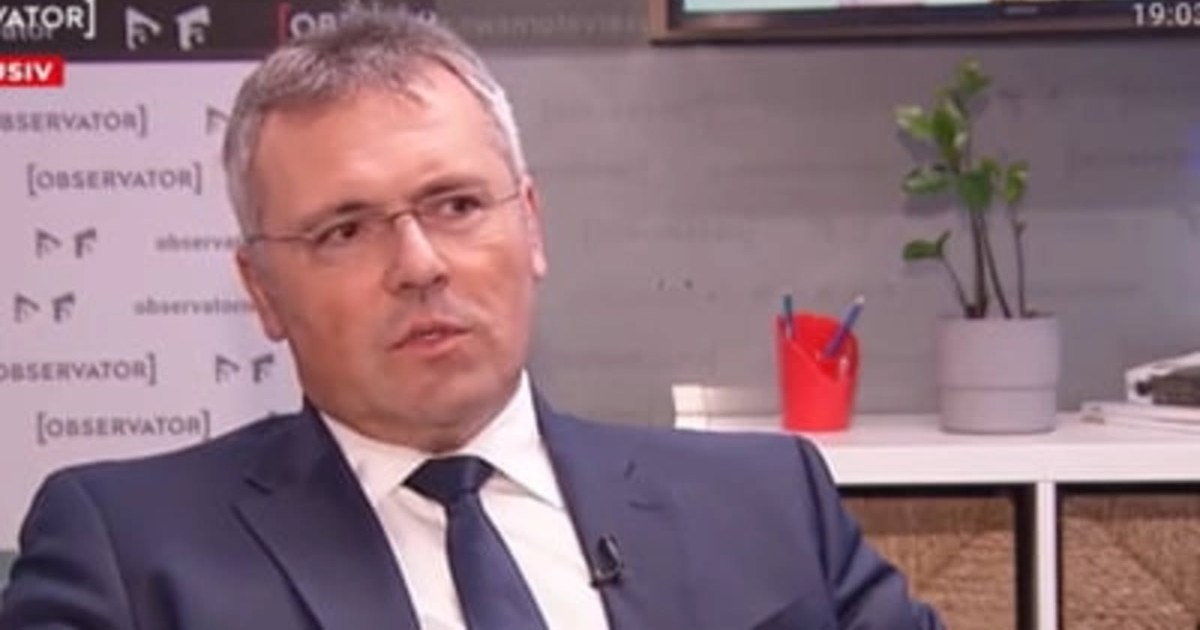
Claudiu Sandu, vice-president of the Superior Council of Magistrates, criticized the way the Government is managing the magistrates’ pension reform project, arguing that the proposed changes are minor and that the responsibility for the delay cannot be placed on the SCM.
The Vice-President of the CSM criticizes the Government’s project regarding magistrates’ pensions PHOTO: Archive
Asked if he supports the proposals in the project, including increasing the transition period to 15 years and setting the pension at 70% of the last net income, Claudiu Sandu rejected the idea that the project would represent a real reform. “As I said before, these provisions in this draft law are not compatible with the proposals we have. (…) In reality there is no big difference between the old project and the new project. (…) It is just another form of the project“said Sandu on B1 TV.
He admitted that extending the phase-in period “it’s a good thing“, but emphasized that no agreement was reached with the Government regarding the amount of the pension: “We have not found a way to agree with the Romanian Government“.
About the deadline and PNRR funds: “A frivolous thing”
Asked about the pressure of the November 28 deadline, after which Romania would risk losing 238 million euros from the PNRR, Sandu categorically rejected the idea that the CSM would be responsible for possible delays.
“I think it is a frivolous thing to say that 238 million of the PNRR will be lost because of the magistrates, given that, until this moment, the project has not been entered into the CSM”he said.
He stated that the institution needs “of 2-3 days” for internal consultations and that an opinion could be issued next week: “A possible opinion will be given next week”.
“The opinion must agree with the opinion of the magistrates”
Sandu emphasized that the CSM must follow the administrative procedures, and the final decision cannot be taken without consulting the professional body.
“It is absolutely normal to ask our colleagues what they think about this new project. And the opinion must agree with the opinion that the magistrates will express“, he explained.
The Vice-President of the CSM stated that he hopes that the opinion will be issued before the deadline, but warned that the Government will still need time to assume responsibility in Parliament.
Why are the magistrates unhappy
Asked what would please the magistrates, Sandu explained that the CSM proposed a version closer to that of other categories of civil servants with service pensions.
“We put forward a proposal (…) to obtain, like the other civil servants who have a service pension, a pension of 65% of the gross. According to the project advanced by the Government, this pension is 55% of the grosshe said.
Sandu warned that the current form will create absurd situations: “There will be situations (…) where seconded police workers from the DNA will have higher pensions than prosecutors from the DNA and at a younger age“.
“Society’s nervousness comes from the activity of the judiciary, not from the value of pensions”
Asked what would satisfy the demands of the magistrates, Sandu explained the proposal submitted to the Government: “I advanced a reasonable proposal (…) to obtain a pension of 65% of the gross. (…) According to the project advanced by the Government, this pension is 55% of the gross“.
He considers it unfair that the magistrates, “the only profession that has constitutional protection”to have the lowest percentage compared to other categories with service pensions. Sandu also gave an example of the anomaly that would occur: “There will be unpleasant situations where seconded DNA police workers will have higher pensions than DNA prosecutors and at a younger age“.
“Discrimination is created between the same professional category”
The vice-president of the CSM insisted that the dissatisfaction of the magistrates is not related to the situation of pensions already in payment, but to the long-term effects of the reform on those who remain active: “In a way, the government is taking revenge on the magistrates, on those who remain active, by halving their pensions”.
He warned that the reform would create two deeply inequitable categories: “We will have a category of retirees who will have pensions higher than their salaries (…) and a category of working magistrates, who will retire much later, at 65, with half the pension that retired magistrates already have at 48“.
Sandu concluded that, beyond public emotion, any man put in such a situation would “unsatisfied to say the least“: “If we were to move past this hate campaign against the magistrates, we could conclude that any citizen in the same situation would at least be dissatisfied.”
