
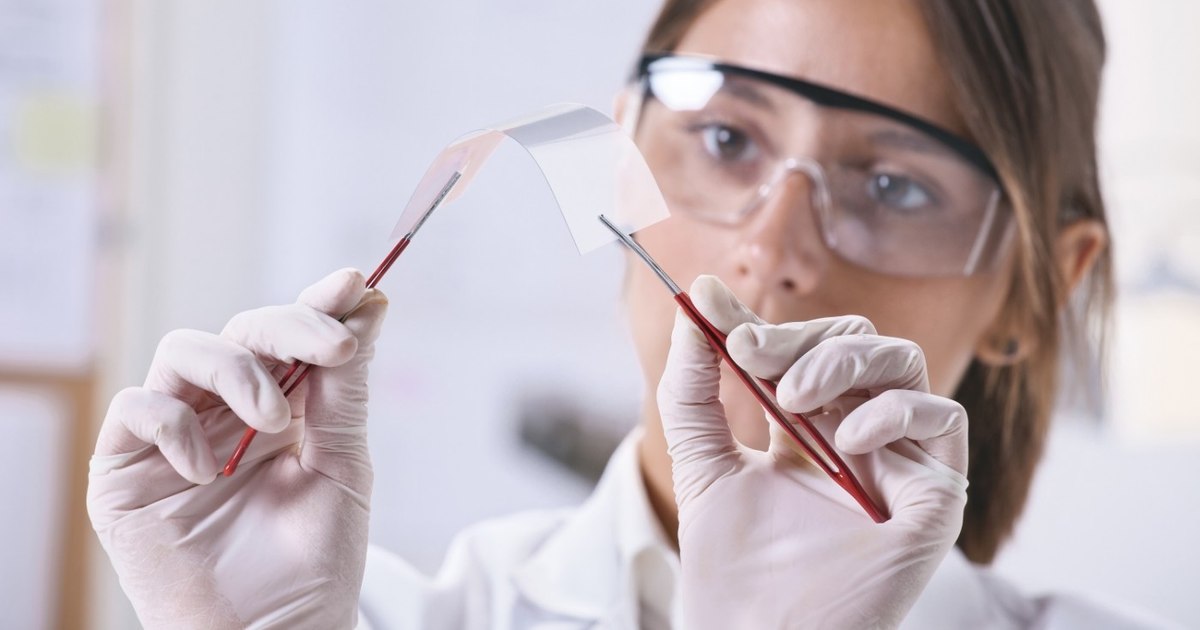
In 2004, scientists at the University of Manchester first discovered graphene — the supermaterial composed of single-layer carbon atoms arranged in a hexagonal honeycomb lattice, according to sciencealert.com.
Graphene sheet. SHUTTERSTOCK PHOTO
Since then, it has become extremely useful, being used in numerous applications due to its properties. Among scientists, about 1.9% of the carbon in the interstellar medium (ISM) is believed to exist in the form of graphene.
Scientists say this material could exist in large quantities on the surface of the Moon. In a recent study, researchers from the Chinese Academy of Sciences (CAS) concluded that they have found graphene on the Moon.
These findings could help scientists understand how the Moon formed and could lead to new methods of making graphene, with applications in fields such as electronics, energy storage, construction and supermaterials.
They could also prove useful for future missions that will need permanent infrastructure on the Moon’s surface.
These observations are consistent with the analysis of one of the Apollo 17 samples that showed the presence of graphite. For their study, the research team performed a spectroscopic analysis of an olive pit-shaped sample picked up by the Chang’e 5 mission in 2020.
This was China’s third robotic mission to reach the lunar surface and return with a sample from there.
After further analysis, using state-of-the-art technologies, they confirmed that graphene flakes, two to seven layers thick, were found in the sample.
Graphene is highly valued in materials science for its unique optical, electrical, and mechanical properties. The researchers believe their findings could pave the way to cost-effective production methods and wider applications of graphene.
“Mineral-catalyzed formation of natural graphene sheds light on the development of inexpensive and scalable methods for the synthesis of high-quality graphene“, states the quoted source. “Thus, a new lunar exploration program can be advanced and some future discoveries can be expected”, the researchers said.
